

Key Findings
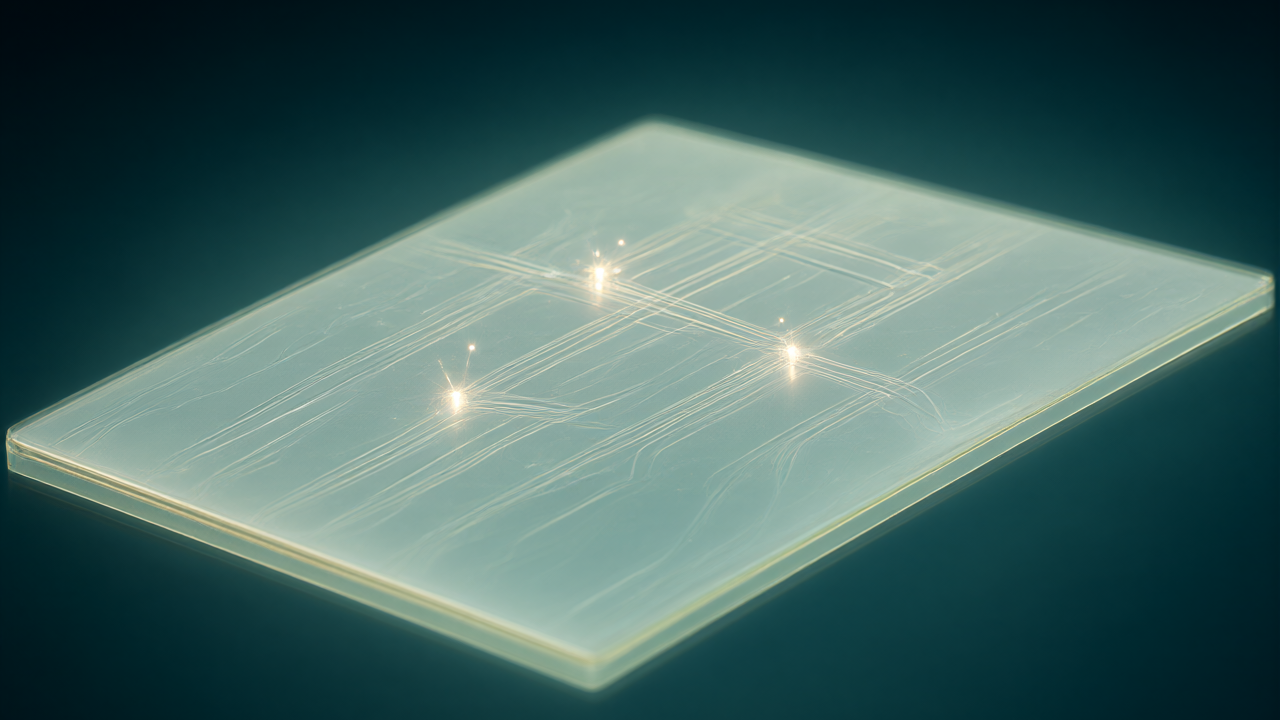
NVision has published peer-reviewed research in Nature demonstrating the first individually addressable organic molecular spin-photon interface. To commercialize this breakthrough, NVision is partnering with HyperLight Corporation to integrate these molecular qubits as thin films directly onto HyperLight’s thin-film lithium niobate (TFLN) photonic integrated circuits (PICs). The companies aim to deliver the first prototype integrated chips in Q4 2026.
Technical Details
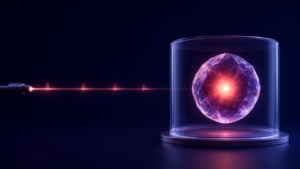
The architecture utilizes engineered carbene molecules that function at cryogenic temperatures between 2K and 4K. These molecules emit photons at precise optical frequencies, allowing for direct intra-chip and inter-chip quantum entanglement. Key technical specifications include:
- Connectivity: Optical links decouple qubits from local spatial constraints, reducing crosstalk and thermal bottlenecks compared to monolithic architectures.
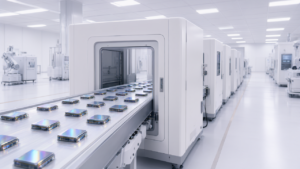
- Manufacturing: Molecular qubits are deposited as thin films, similar to OLED materials, onto TFLN Chiplet™ technology.
- Resilience: The platform is designed to tolerate up to 70% photon loss, allowing it to operate with standard silicon photonics.
- Development: The final carbene system was selected after computational screening of over 150 candidate molecules and the laboratory synthesis of 40.
Background & Context
Previously, molecular spins could not be individually and coherently controlled, which prevented their use as true qubits. By achieving single-molecule level control, NVision moves its Photonic Integrated Quantum Circuits (PIQC) platform from foundational physics into hardware development. This approach avoids the need for multi-billion-dollar proprietary fabrication facilities by utilizing existing foundry infrastructure.
Significance & Outlook
The partnership establishes a path toward high-density, chip-scale quantum connectivity. NVision targets a live demonstration of on-chip performance by the end of 2026. The long-term commercial roadmap specifies a scale-up to 1,000 physical qubits, eventually progressing to 1,000 logical, fault-tolerant qubits on a chip by 2030, housed within a deployable data-center form factor.
Source: https://thequantuminsider.com/2026/10/28/nvision-nature-molecular-qubits-hyperlight/
Get our weekly technology intelligence — free
Receive an infographic that lets you judge at a glance whether each field’s analysis report is worth reading.
Subscribe Free — Weekly Tech Intelligence
By subscribing, you’ll receive Troy-Technical’s weekly technology intelligence newsletter.
- Your email and selected fields are used only to deliver the newsletter.
- We never share your information with third parties.
- You can unsubscribe anytime via the link in each email.
See our Privacy Policy for details.
Takes about a minute · Unsubscribe anytime