Key Findings
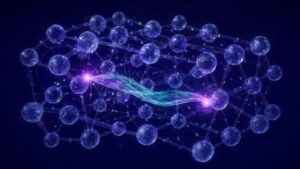
Argonne National Laboratory in the United States announced its latest research at ISC High Performance 2026, showcasing strategic integration of Artificial Intelligence (AI), High-Performance Computing (HPC), and quantum computing to dramatically accelerate materials and molecular discovery. The presentation specifically highlighted the efficiency of agent-AI workflows and the potential for new scientific discoveries through the collaboration of quantum chemistry calculations with HPC and AI.
Technical / Clinical Details
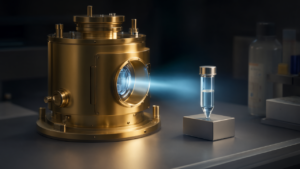
Argonne researchers have developed agent-AI workflows, systems where AI agents autonomously form scientific hypotheses, execute simulations, analyze data, and plan the next experimental or computational steps. This workflow enables efficient exploration of complex material design spaces and molecular structural spaces. Furthermore, their research focuses on integrating the immense computational power of HPC and the pattern recognition and predictive capabilities of AI with quantum chemistry calculations. For example, quantum chemistry data generated by first-principles calculations trains AI models, leading to faster and more accurate molecular dynamics simulations and material property predictions. This has the potential to shorten traditional material development cycles from years to months, with applications in screening new drug candidates and optimizing functional materials.
Background & Context
In materials science and molecular chemistry, the discovery of new compounds and materials is a driving force for innovation across numerous industries, including pharmaceuticals, energy, electronics, and environmental technologies. However, these discovery processes rely on extensive experimental trial-and-error and computationally intensive simulations, making them very time-consuming and costly. While HPC enables large-scale simulations, exploring the design space remains a bottleneck. AI, by learning patterns from data and making predictions, streamlines this exploration process. Argonne National Laboratory’s initiative aims to push the boundaries of scientific discovery by combining the strengths of these three technologies (AI, HPC, and quantum), building a next-generation research infrastructure with an eye toward advancements in quantum computing.
Strategic Significance & Outlook
Argonne National Laboratory’s integration of AI, HPC, and quantum technologies is paramount in shaping the future of materials and molecular science. This approach will not only dramatically increase the rate of discovery for new materials and molecules but will also fundamentally change the efficiency of their design and optimization processes. In the future, this integrated platform may evolve into self-learning autonomous discovery systems, potentially realizing ‘materials factories’ that autonomously devise, execute, and learn from experiments based on human-defined objectives. This is expected to lead to the rapid emergence of innovative solutions for society’s most pressing challenges, such as new catalysts for climate change mitigation, treatments for intractable diseases, and high-performance batteries, at a pace previously unimaginable.
Source: https://www.anl.gov/cels/article/argonne-at-isc-2026
Get our weekly technology intelligence — free
Receive an infographic that lets you judge at a glance whether each field’s analysis report is worth reading.
Subscribe Free — Weekly Tech Intelligence
By subscribing, you’ll receive Troy-Technical’s weekly technology intelligence newsletter.
- Your email and selected fields are used only to deliver the newsletter.
- We never share your information with third parties.
- You can unsubscribe anytime via the link in each email.
See our Privacy Policy for details.
Takes about a minute · Unsubscribe anytime