


Key Findings
The study demonstrates a practical strategy for producing ultrathin lithium metal anodes that maintain high energy-storage performance while reducing unnecessary mass. Using a 20 μm-equivalent lithium anode with high-loading nickel-rich cathodes, the team achieved a gravimetric energy density of 504 Wh kg⁻¹ and a volumetric energy density of 1071 Wh L⁻¹. Additionally, cells utilizing a 10 μm-equivalent anode paired with a lithium iron phosphate (LFP) cathode maintained stable performance for over 260 cycles with a Coulombic efficiency exceeding 99.8%.
Technical Details
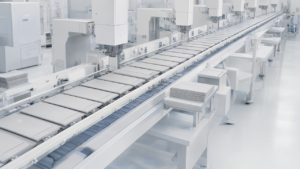
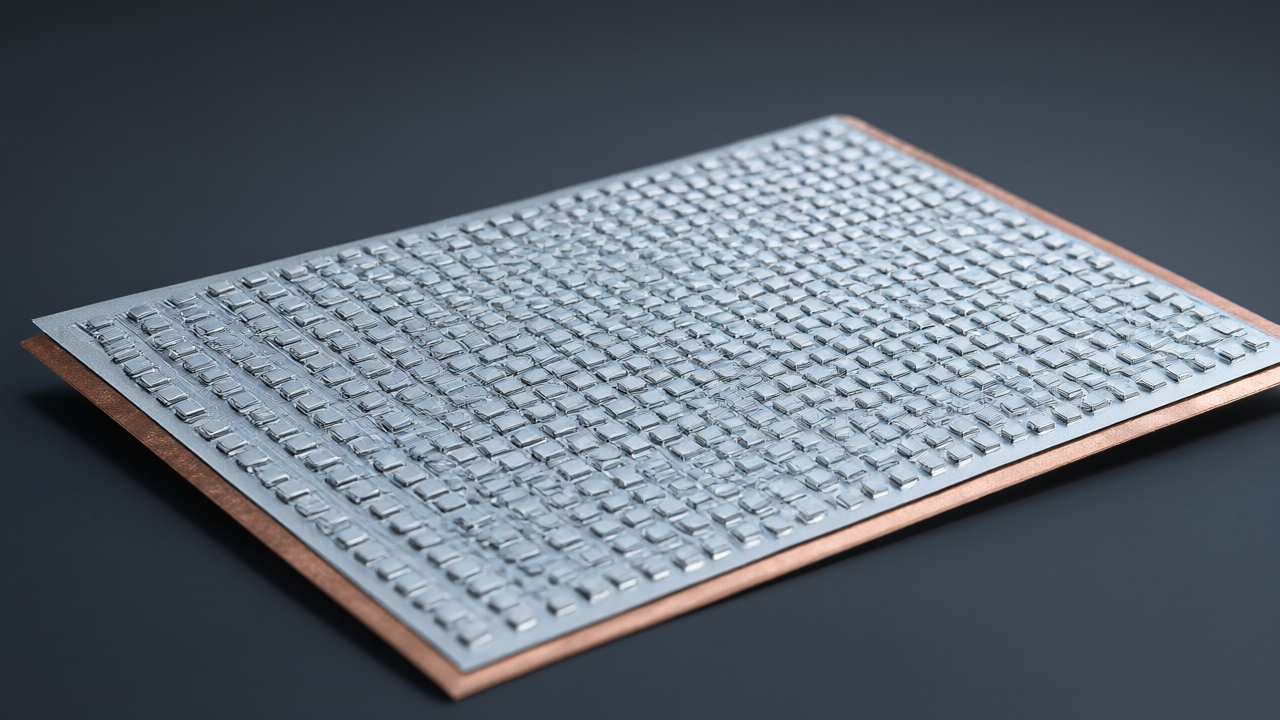
To solve the poor wettability of molten lithium on copper current collectors, researchers employed a mask-assisted screen-printing method. This process creates regularly arranged, isolated lithium microdiscs rather than a continuous film, allowing for precise control over lithium deposition. The team fabricated arrays with equivalent thicknesses of 10, 20, and 28 μm, demonstrating large-area production of approximately 30 × 10 cm².
To enhance interface stability, magnesium bis(trifluoromethanesulfonyl)imide, Mg(TFSI)₂, was introduced into the molten lithium. This additive reacts to form lithium–magnesium alloys and inorganic compounds, including LiF, Li₃N, and Li₂S. These components create an inorganic-rich solid electrolyte interphase (SEI) that suppresses irregular lithium growth and reduces active lithium loss during cycling.
Background & Context
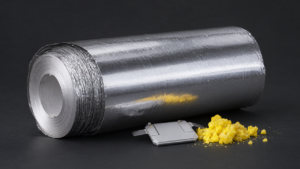
Lithium metal is a promising anode material due to its low electrochemical potential and high theoretical capacity. However, conventional batteries rely on thick lithium foils that increase weight and limit energy density. While thinner anodes are preferable, they are difficult to produce reliably and are more sensitive to lithium loss during repeated charging and discharging.
Significance & Outlook
The patterned array structure provides mechanical advantages by accommodating volume changes during battery operation, which reduces mechanical stress and improves structural stability. These benefits extend to solid-state battery systems; when used with an in situ polymerized gel electrolyte, the reinforced interface and microdisc spacing promote more stable contact and uniform lithium deposition. This approach provides a scalable path toward lightweight, high-performance anodes for both liquid- and solid-state batteries.
Source: https://www.miragenews.com/screen-printed-arrays-tackle-lithium-metal-1772337/
Get our weekly technology intelligence — free
Receive an infographic that lets you judge at a glance whether each field’s analysis report is worth reading.
Subscribe Free — Weekly Tech Intelligence
By subscribing, you’ll receive Troy-Technical’s weekly technology intelligence newsletter.
- Your email and selected fields are used only to deliver the newsletter.
- We never share your information with third parties.
- You can unsubscribe anytime via the link in each email.
See our Privacy Policy for details.
Takes about a minute · Unsubscribe anytime