


Key Findings
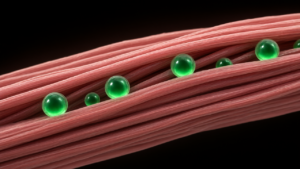
The study identifies a direct structure-function relationship between virus-like topography, biodegradable silica chemistry, and mRNA delivery efficiency. The primary result indicates that increasing the length and number of spikes on the VLPSi surface significantly improves cellular uptake efficiency and subsequent mRNA expression.
Technical Details
The developed platform utilizes tetrasulfide-incorporated virus-like porous silica (VLPSi) nanoparticles. By systematically tuning synthesis parameters, the researchers produced a series of nanoparticles with distinct morphologies and architectures to evaluate the specific effects of particle morphology and tetrasulfide on delivery. The performance of these nanoparticles was optimized through the evaluation of:
- Cellular uptake efficiency
- Cytotoxicity
- Transfection performance using various lipid and mRNA payloads across multiple cell types
Mechanistically, the enhancement in delivery is attributed to the combined effect of the surface nanospikes and the intracellular degradation of the tetrasulfide.
Background & Context
Lipid nanoparticles (LNPs) are currently the most studied nanocarriers for mRNA delivery. However, their broader application is hindered by several technical bottlenecks, including suboptimal cellular uptake, low delivery efficacy, and poor stability. The VLPSi platform was designed as a safe and efficient alternative or enhancement to LNP-mediated delivery to address these specific limitations.
Significance & Outlook
The VLPSi nanoparticles significantly enhance the stability of mRNA compared to existing methods. By providing a bioinspired nanoplatform that is both structurally tunable and biodegradable, this research offers a highly effective method for improving the delivery of genetic payloads. This framework establishes a basis for using biodegradable silica chemistry and virus-like morphology to optimize the transport of mRNA into cells.
Source: https://www.biorxiv.org/content/10.64898/2026.11.03.763884v1
Get our weekly technology intelligence — free
Receive an infographic that lets you judge at a glance whether each field’s analysis report is worth reading.
Subscribe Free — Weekly Tech Intelligence
By subscribing, you’ll receive Troy-Technical’s weekly technology intelligence newsletter.
- Your email and selected fields are used only to deliver the newsletter.
- We never share your information with third parties.
- You can unsubscribe anytime via the link in each email.
See our Privacy Policy for details.
Takes about a minute · Unsubscribe anytime