


Key Findings
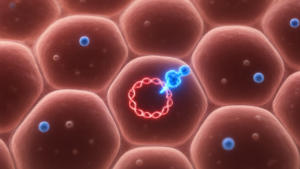
Fluorescence correlation spectroscopy (FCS) has been identified as a reliable method for determining RNA payload in lipid nanoparticles (LNPs), as it remains independent of fluorophore properties that may change during the encapsulation process. In tests using eGFP coding mRNA, the mRNA payload increases in relation to LNP size following a power law with an exponent 1.3. Additionally, the study found that when coencapsulating siRNA and mRNA, the siRNA fraction within the LNPs exceeds the fraction present in the initial RNA mixture.
Technical Details
The researchers employed two primary imaging and spectroscopy techniques to analyze the vectors:
- Total Internal Reflection Fluorescence (TIRF) microscopy: Used to determine mRNA and siRNA/mRNA codelivered payloads.
- Fluorescence Correlation Spectroscopy (FCS): Used for precise payload determination.
- Cryogenic Electron Microscopy (Cryo-EM): Used to observe structural characteristics, revealing that blebs occur more frequently in smaller LNPs.
The study varied the PEG-lipid fraction relative to the reference ONPATTRO formulation to observe changes in payload and size. The results regarding siRNA/mRNA coencapsulation suggest that the process is competitive and limited by nucleic acid diffusion.
Background & Context
Lipid nanoparticles are currently the most promising vectors for delivering nucleic acids to mammalian cells. As delivery strategies evolve to include multiple nucleic acid species, there is an increasing need for reliable methods to determine LNP size and the exact amount of RNA payload being delivered.
Significance & Outlook
These findings emphasize that particle size and encapsulation kinetics are critical factors in controlling the loading and composition of RNA payloads. By providing a reliable quantification method via FCS, this research offers a pathway to better control the composition of advanced LNP-based delivery systems.
Source: https://www.biorxiv.org/content/10.64898/2026.11.05.763588v1
Get our weekly technology intelligence — free
Receive an infographic that lets you judge at a glance whether each field’s analysis report is worth reading.
Subscribe Free — Weekly Tech Intelligence
By subscribing, you’ll receive Troy-Technical’s weekly technology intelligence newsletter.
- Your email and selected fields are used only to deliver the newsletter.
- We never share your information with third parties.
- You can unsubscribe anytime via the link in each email.
See our Privacy Policy for details.
Takes about a minute · Unsubscribe anytime