


Key Findings
Cell-resolved pharmacodynamic profiling reveals that the activity of chemically conjugated ASOs varies significantly by tissue and conjugate chemistry. Palmitate conjugation produced the broadest extrahepatic activity and demonstrated pronounced whole-tissue activity in the heart and skeletal muscle. Crucially, cell-resolved analysis identified preferential palmitate-ASO activity specifically within PDGFRα⁺ skeletal-muscle populations, a detail not fully captured by whole-tissue measurements.
Technical Details
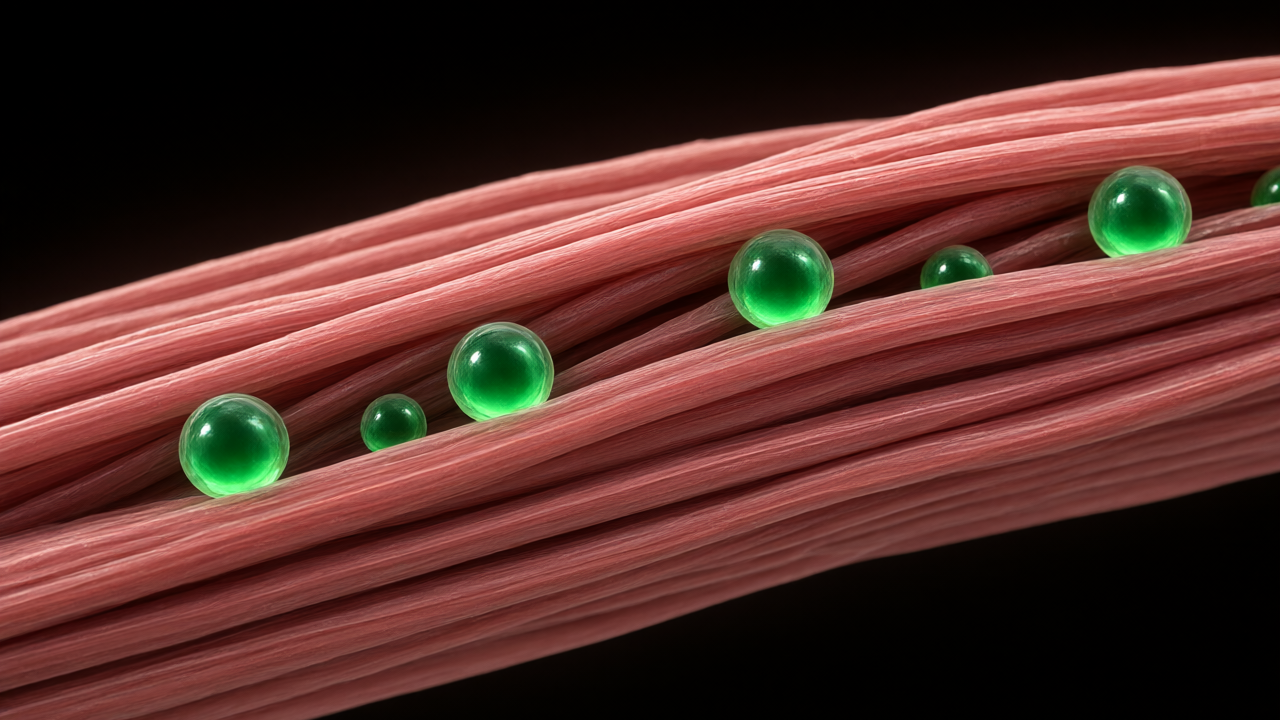
The study employed a platelet-derived growth factor receptor alpha-enhanced green fluorescent protein (PDGFRα-eGFP) mouse model to assess in vivo uptake in PDGFRα-expressing (GFP⁺) cells. This model serves as a tool for evaluating ASO activity within mesenchymal stromal and progenitor populations, primarily tissue fibroblasts. The researchers used the knockdown of metastasis-associated lung adenocarcinoma transcript 1 (Malat1) as the pharmacodynamic readout. Following subcutaneous administration, Malat1 levels were quantified and compared between whole tissues and cell-sorted PDGFRα⁺/GFP⁺ and PDGFRα⁻/GFP⁻ populations.
Safety Assessment
Preliminary safety evaluations indicated conjugate-dependent differences in toxicity:
- Tocopherol-ASO treatment in male mice resulted in body-weight loss and ALT elevation.
- Spleen enlargement was observed in both sexes.
Background and Significance
While chemical conjugation is used to modulate ASO pharmacology and improve organ-specific delivery, traditional whole-tissue measurements provide limited information regarding which specific cell types are being targeted. By implementing a cell-resolved assessment, this research provides an in vivo modelling system capable of distinguishing activity between different cell populations within the same organ. This approach demonstrates the advantages of cell-resolved profiling over whole-tissue measurements for the precise evaluation of ASO conjugate efficacy and distribution.
Source: https://www.biorxiv.org/content/10.64898/2026.10.30.762893v1
Get our weekly technology intelligence — free
Receive an infographic that lets you judge at a glance whether each field’s analysis report is worth reading.
Subscribe Free — Weekly Tech Intelligence
By subscribing, you’ll receive Troy-Technical’s weekly technology intelligence newsletter.
- Your email and selected fields are used only to deliver the newsletter.
- We never share your information with third parties.
- You can unsubscribe anytime via the link in each email.
See our Privacy Policy for details.
Takes about a minute · Unsubscribe anytime