

Key Findings
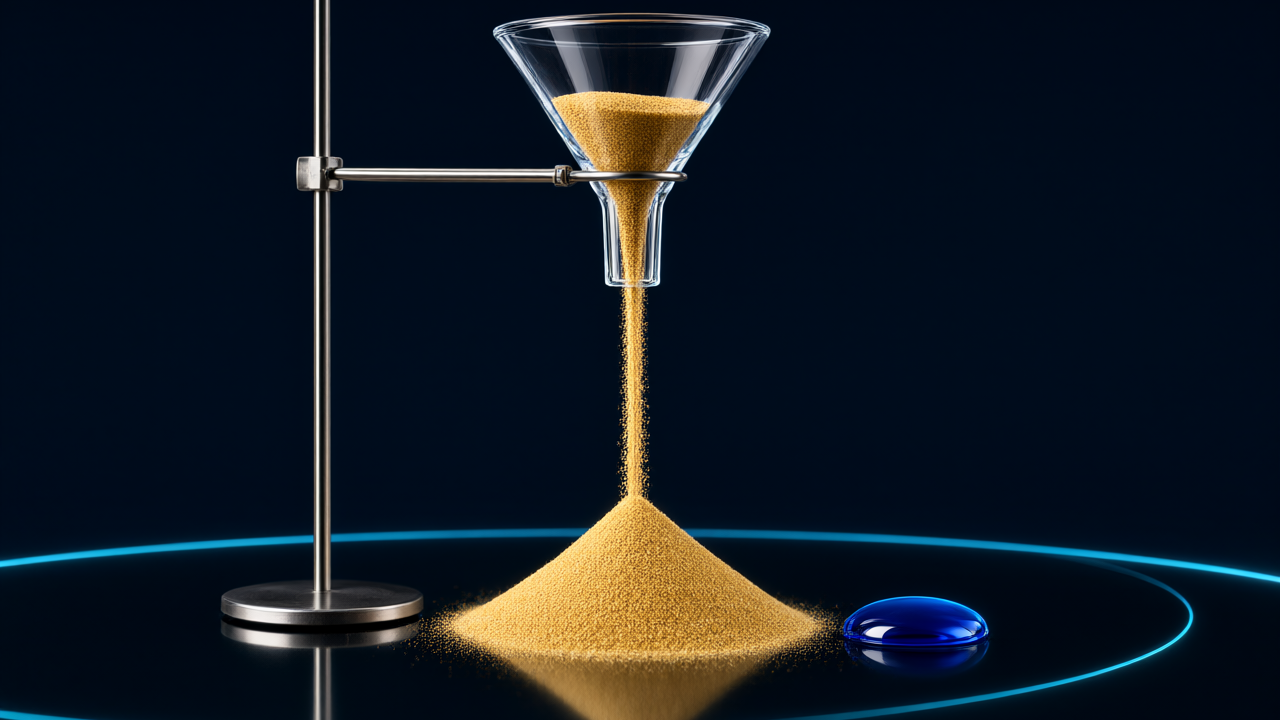
WorldParticle is a unified artificial intelligence architecture that simulates the behavior of various substances without requiring separate, hand-coded solvers for each material. Unlike traditional simulators that rely on specific equations for flowing water or protein folding, this deep-learning system can model multiple physical phenomena within a single framework. This allows for the simulation of coupled processes, such as fluid sloshing against a deformable solid, which typically requires two separate simulators.
Technical Details
The system utilizes a Lagrangian representation, breaking objects into thousands or millions of tiny three-dimensional particles. The process operates as follows:
- Input: The neural network takes the 3D positions and physical properties of particles as inputs.
- Prediction: It predicts the positions and properties for the next frame in one-second increments, effectively predicting particle movement one step at a time.
- Force Integration: WorldParticle separates external forces (such as impulse forces from an ocean wave hitting a seawall) before the simulation step and integrates them back afterward to correct particle predictions.
By learning underlying dynamics rather than being programmed with fixed equations, the model can adapt to forces, materials, and environments not encountered during its training phase.
Background & Context
The research was a collaborative effort involving MIT, the University of British Columbia (UBC), Georgia Tech, Inria, Meta, and several other universities. The team drew inspiration from “world models,” AI systems that learn physical rules to predict environmental changes over time. The work will be presented at the ACM SIGGRAPH Conference and Exhibition on Computer Graphics and Interactive Techniques in Asia.
Significance & Outlook
The researchers describe this as a first step toward a “GPT moment for simulation,” aiming for a foundation model that works out of the box for any scenario. Potential applications include studying how granular materials like soil move when touched by soft robots or analyzing how oil impacts elastic valves in storage tanks. Long-term, the system is intended to help scientists discover new materials and explore physical processes that are currently inaccessible via existing simulation methods.
Source: https://news.mit.edu/2026/single-ai-model-simulates-many-substances-behavior-1109
Get our weekly technology intelligence — free
Receive an infographic that lets you judge at a glance whether each field’s analysis report is worth reading.
Subscribe Free — Weekly Tech Intelligence
By subscribing, you’ll receive Troy-Technical’s weekly technology intelligence newsletter.
- Your email and selected fields are used only to deliver the newsletter.
- We never share your information with third parties.
- You can unsubscribe anytime via the link in each email.
See our Privacy Policy for details.
Takes about a minute · Unsubscribe anytime