
Key Findings
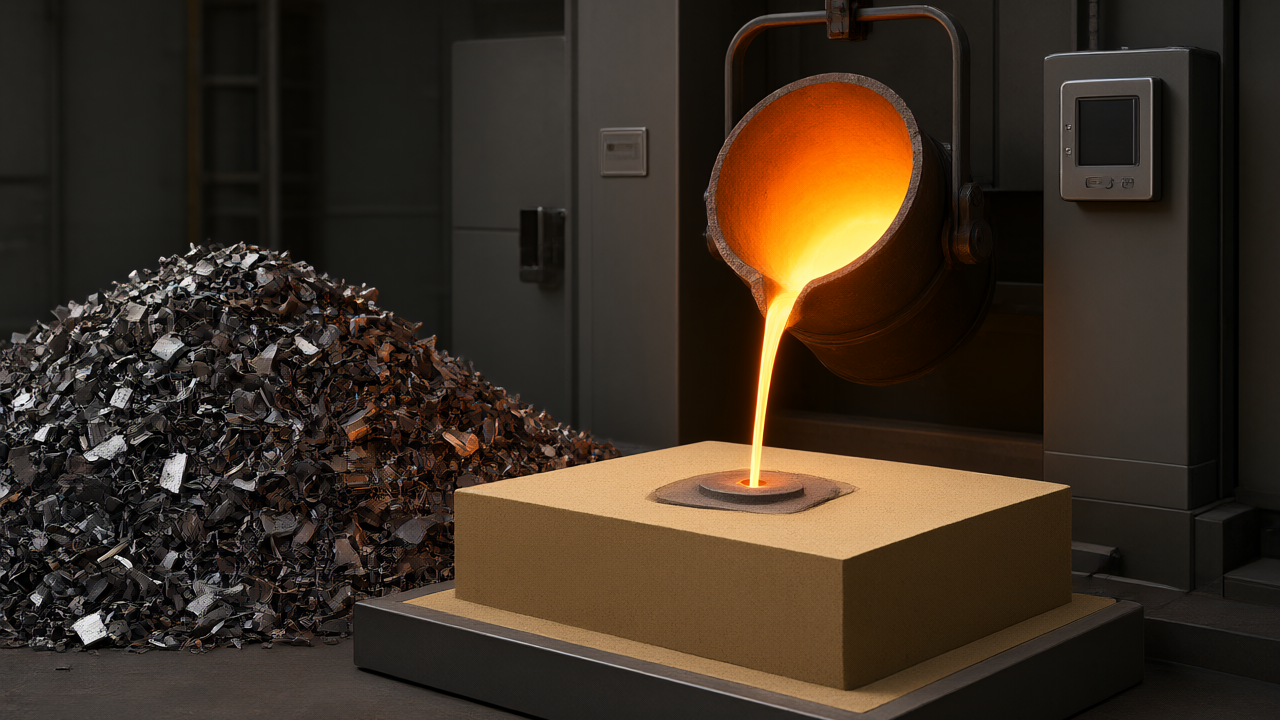
Researchers have developed a machine-learning strategy that transforms impurities in metal scrap into advantages, creating “dirty alloys” with enhanced mechanical properties. Using ductile iron as a model material, the team identified 14 new alloys that outperformed existing recycled-iron datasets. Specifically, tensile strength increased by up to 15.2 percent at comparable elongation, or elongation at fracture increased by up to 73.2 percent at comparable tensile strength. Additionally, production costs were 8.1 percent lower than conventional methods that blend scrap with virgin iron.
Technical Details
The ML framework links alloy composition and processing conditions directly to performance, bypassing heavy reliance on microstructural features. The process utilizes a tree-search algorithm to generate candidates by varying composition and parameters such as temperature and time. Neural-network models then predict tensile strength and elongation to optimize the strength-ductility trade-off. A second model, trained on a larger composition-property dataset, screens these candidates before physical manufacturing and testing. Experimental results are fed back into the database to iteratively refine the predictive model.
Background and Context
Global metal production reaches approximately two billion tonnes annually, with primary raw materials contributing an estimated 40 percent of industrial greenhouse gas emissions and 10 percent of global energy consumption. While recycling reduces this impact, variations in scrap composition typically compromise mechanical properties. The conventional industry response is to dilute impurities with virgin materials, which increases energy consumption and CO2 emissions.
Significance and Outlook
This research demonstrates that alloys made entirely from scrap can exceed the properties of those made via primary synthesis. The framework is potentially extensible to recycled aluminium, copper, and steel alloys for use in energy, transport, and industrial manufacturing. Future developments may include integrating multi-agent AI systems with automated experimental platforms to create an autonomous cycle of design, process control, and interpretation.
Source: https://www.mpg.de/27038557/turning-scrap-impurities-into-enhanced-alloys?c=2249
Get our weekly technology intelligence — free
Receive an infographic that lets you judge at a glance whether each field’s analysis report is worth reading.
Subscribe Free — Weekly Tech Intelligence
By subscribing, you’ll receive Troy-Technical’s weekly technology intelligence newsletter.
- Your email and selected fields are used only to deliver the newsletter.
- We never share your information with third parties.
- You can unsubscribe anytime via the link in each email.
See our Privacy Policy for details.
Takes about a minute · Unsubscribe anytime