


Key Findings
The developed all-optical photonic memristors demonstrate three-bit multilevel non-volatile optical memory capacity, supporting eight distinct states. Performance metrics include optical switching speeds in the submicrosecond regime and switching energy requirements on the order of hundreds of femtojoules per bit. These devices maintain stable data retention across extended operational cycling.
Technical Details
To achieve these results, researchers utilized an oxygen-ion implantation process compatible with standard complementary metal–oxide–semiconductor (CMOS) manufacturing lines. This process modifies the thin-film lithium niobate to create two spatially separated layers: an oxygen-doped layer and an adjacent defect-rich layer. These microstructural zones enable all-optically controlled refractive index modulation via internal photorefractive mechanisms.
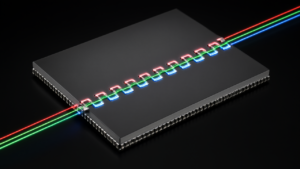
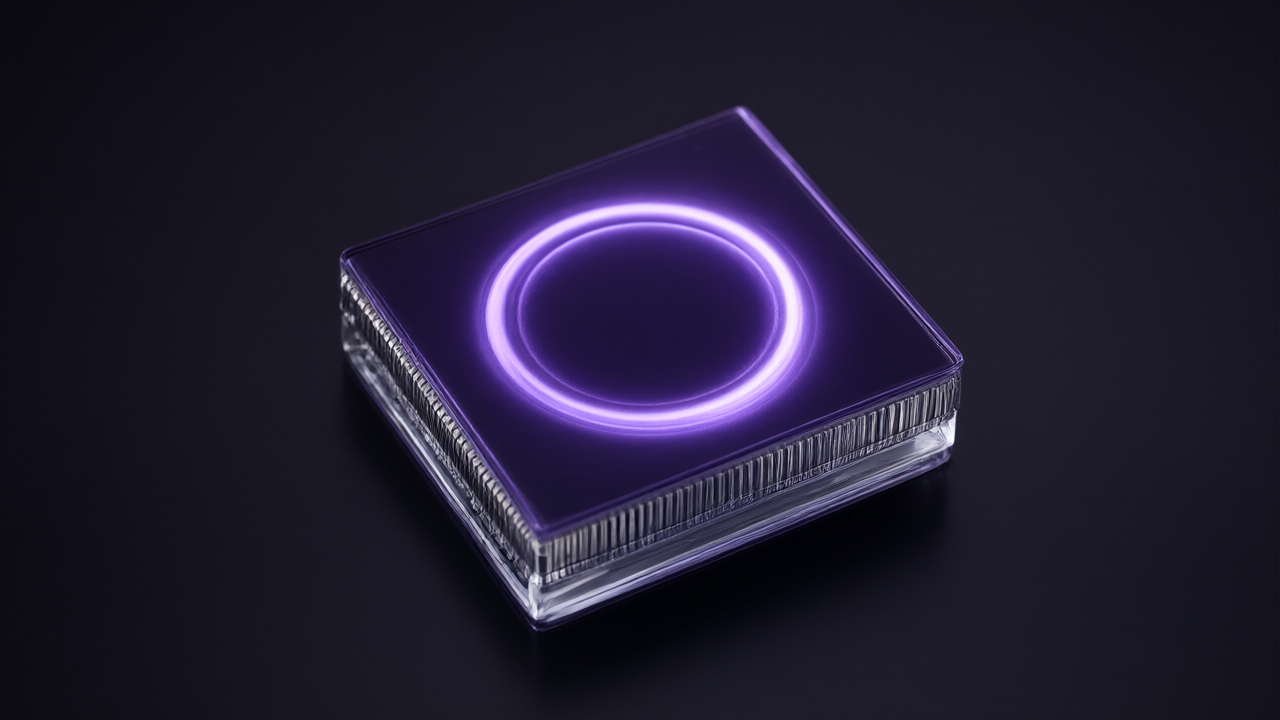
The operational capabilities were validated using an oxygen-implanted thin-film lithium niobate micro-ring resonator. Optical transmission measurements confirmed all-optically controlled shifts in the resonance transmission spectra, which enabled the multilevel non-volatile tuning.
Background and Context
Traditionally, integrating memristive optical functionality into conventional optical waveguide platforms has required heterogeneous integration techniques, involving complex multi-material assembly. This research investigated whether the host waveguide material—thin-film lithium niobate—could be modified directly to support non-volatile, all-optical memristive state switching, thereby creating a homogeneous alternative.
Significance and Outlook
The use of thin-film lithium niobate and oxygen-ion implantation ensures the platform is homogeneous, scalable, and programmable, as both are compatible with wafer-scale and CMOS processing standards. By eliminating the need for heterogeneous integration while maintaining low energy consumption and rapid response times, this platform provides a practical foundation for integrated photonic circuits and future large-scale photonic neural networks.
Get our weekly technology intelligence — free
Receive an infographic that lets you judge at a glance whether each field’s analysis report is worth reading.
Subscribe Free — Weekly Tech Intelligence
By subscribing, you’ll receive Troy-Technical’s weekly technology intelligence newsletter.
- Your email and selected fields are used only to deliver the newsletter.
- We never share your information with third parties.
- You can unsubscribe anytime via the link in each email.
See our Privacy Policy for details.
Takes about a minute · Unsubscribe anytime