

Key Findings
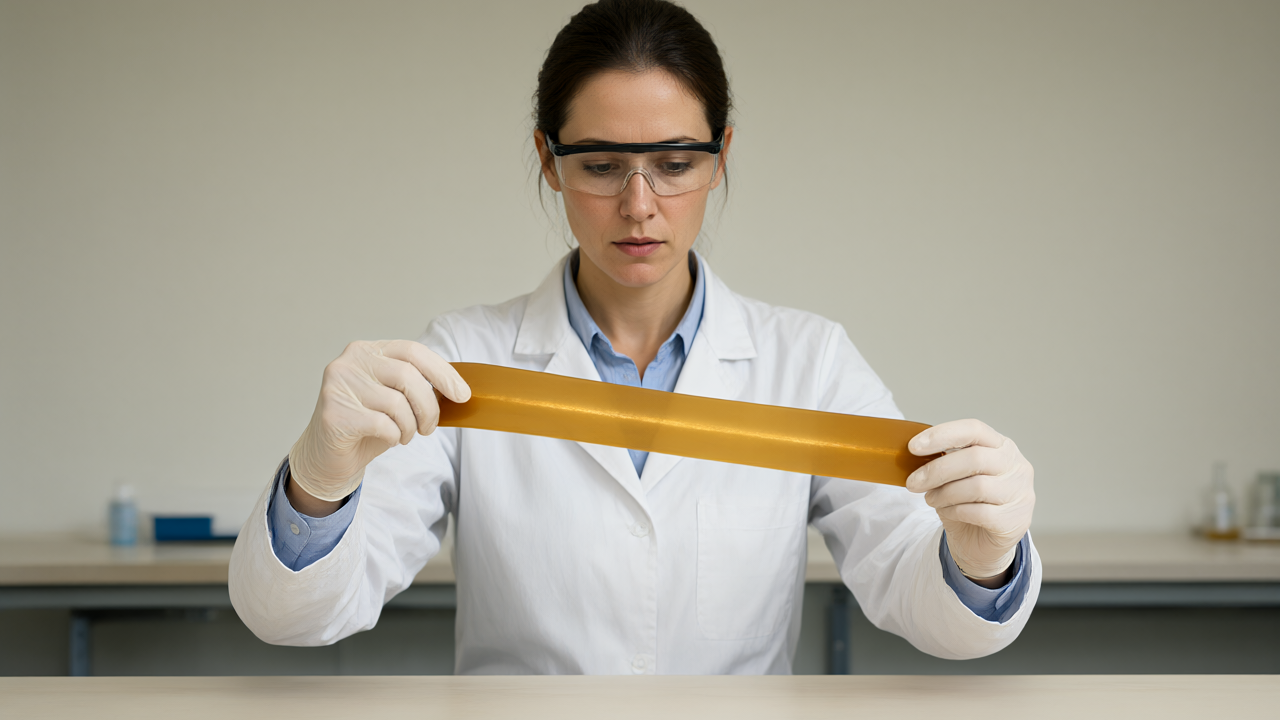
The PU-S elastomer achieves a tensile strength of 23.7 MPa and an elongation at break of 1080%, while maintaining a toughness recovery efficiency of 92% after 24 hours of healing at 25 °C. In contrast, the control sample (PU-O) achieved only 27% healing efficiency under the same conditions, increasing to 52% only after heating to 50 °C. Additionally, the material demonstrates high recyclability, retaining approximately 90% of its tensile strength after three recycling cycles.
Technical Details
The “S-for-O” substitution strategy replaces traditional urea chain extenders (CH₂) with sulfur-containing thiourea analogues (TCH₂). Due to the larger atomic radius and lower electronegativity of sulfur, this substitution creates a disordered, asymmetric multi-point hydrogen bond network, preventing the formation of highly crystalline hard domains. Key technical evidence includes:
- Hydrogen Bond Dynamics: FT-IR spectroscopy shows the proportion of hydrogen-bonded carbonyl groups in PU-S decreased to 60.8%, compared to 75.7% in PU-O.
- Activation Energy: Stress relaxation experiments reveal an activation energy of 41.8 kJ/mol for PU-S, significantly lower than the 106.7 kJ/mol found in PU-O.
- Binding Energy: DFT calculations indicate the binding energy of the thiourea-thiourea (TCH-TCH) dimer is -13.05 kcal/mol, less than half that of the urea-urea (CH-CH) dimer (-29.61 kcal/mol).
- Rheology: At 25 °C, G’ and G” of PU-S cross over in the low-frequency region, confirming dynamic hydrogen bond exchange.
Background & Context
Polyurethane (PU) elastomers are valued for their tunable hard-soft segment structures, making them recyclable alternatives to bulk plastics. However, a contradiction exists: high strength typically requires dense, strong hydrogen bonds that create rigid microdomains, which restrict the chain segment migration necessary for room-temperature self-healing. Most high-strength PU elastomers therefore require external stimuli to heal.
Significance & Outlook
By regulating hydrogen bond dynamics through molecular design, this research overcomes the bottleneck of traditional high-strength elastomers. The ability to achieve high mechanical properties and rapid, stimulus-free healing at room temperature provides new insights for the development of sustainable, high-performance flexible electronics.
Source: https://www.miragenews.com/sulfur-for-oxygen-substitution-boosts-self-1774522/
Get our weekly technology intelligence — free
Receive an infographic that lets you judge at a glance whether each field’s analysis report is worth reading.
Subscribe Free — Weekly Tech Intelligence
By subscribing, you’ll receive Troy-Technical’s weekly technology intelligence newsletter.
- Your email and selected fields are used only to deliver the newsletter.
- We never share your information with third parties.
- You can unsubscribe anytime via the link in each email.
See our Privacy Policy for details.
Takes about a minute · Unsubscribe anytime