


Key Findings
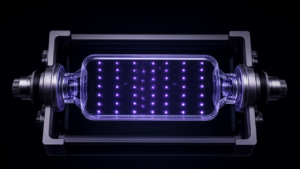
The study demonstrates the successful coexistence of entanglement-based quantum keys and classical data signals within a single 18-km hollow-core fiber (HCF) link. During 24 hours of continuous operation, the system maintained an average secret key rate (SKR) of 10.56 kbps. The quantum channel operated alongside bidirectional received power of 0 dBm, which corresponds to a theoretical classical data capacity of up to 2.3 Tbps.
Technical Details
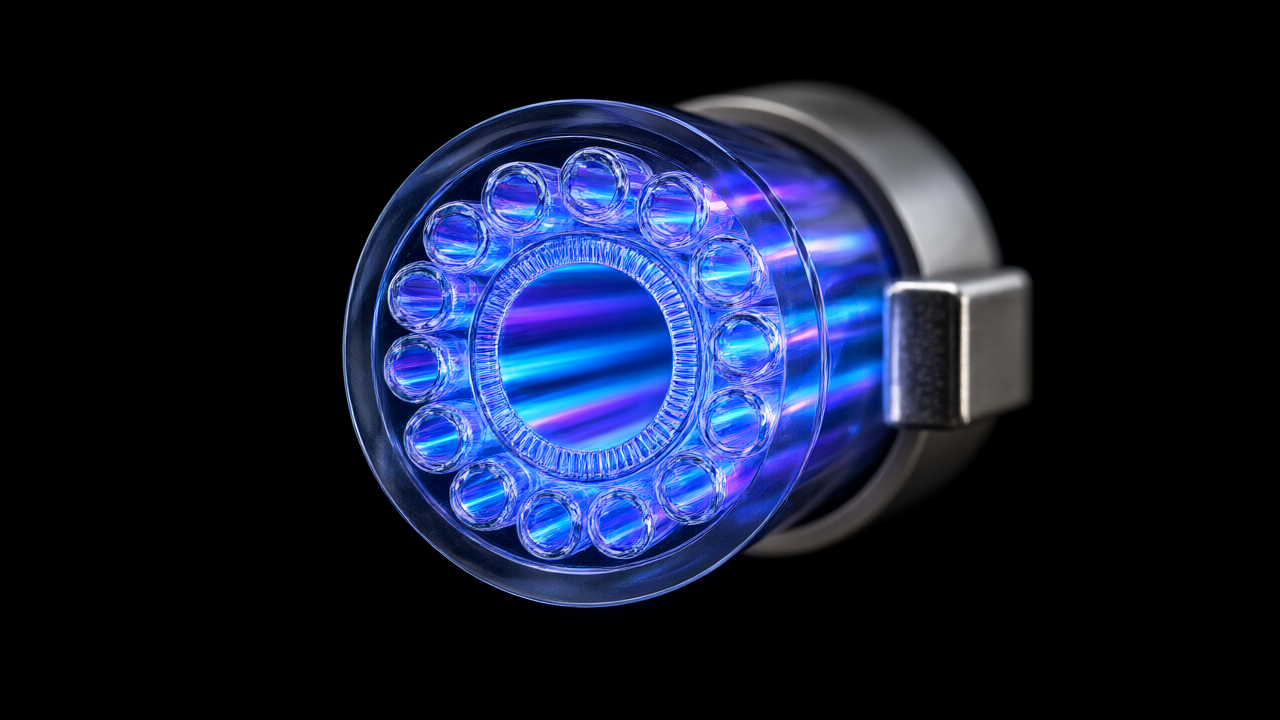
The implementation utilizes time-encoded high-dimensional quantum key distribution (HD-QKD). By guiding light predominantly in air rather than a solid core, the HCF architecture provides intrinsically ultra-low nonlinearity. This physical property strongly suppresses nonlinear noise, specifically Raman scattering and four-wave mixing, which typically interfere with quantum signals when multiplexed with classical data.
Background and Context
Integrating quantum information and classical signals into a single fiber is critical for leveraging existing optical fiber infrastructure for future quantum networks. Traditional pure silica core fibers (PSCFs) are fundamentally limited by high nonlinearity, which generates substantial noise that degrades quantum signal integrity. HCFs serve as an alternative medium to mitigate these nonlinear effects, allowing for more efficient multiplexing of quantum and classical channels.
Significance and Outlook
The results indicate significantly improved performance compared to PSCF-based systems. Theoretical analysis suggests that by employing state-of-the-art low-loss HCFs, secret key rates could exceed 135 kbps over transmission distances greater than 200 km. This demonstration highlights the potential of HCFs to support scalable quantum-classical coexistence compatible with established fiber-optic network architectures.
Source: https://doi.org/10.1038/s41534-026-01417-6
Get our weekly technology intelligence — free
Receive an infographic that lets you judge at a glance whether each field’s analysis report is worth reading.
Subscribe Free — Weekly Tech Intelligence
By subscribing, you’ll receive Troy-Technical’s weekly technology intelligence newsletter.
- Your email and selected fields are used only to deliver the newsletter.
- We never share your information with third parties.
- You can unsubscribe anytime via the link in each email.
See our Privacy Policy for details.
Takes about a minute · Unsubscribe anytime