Key Findings
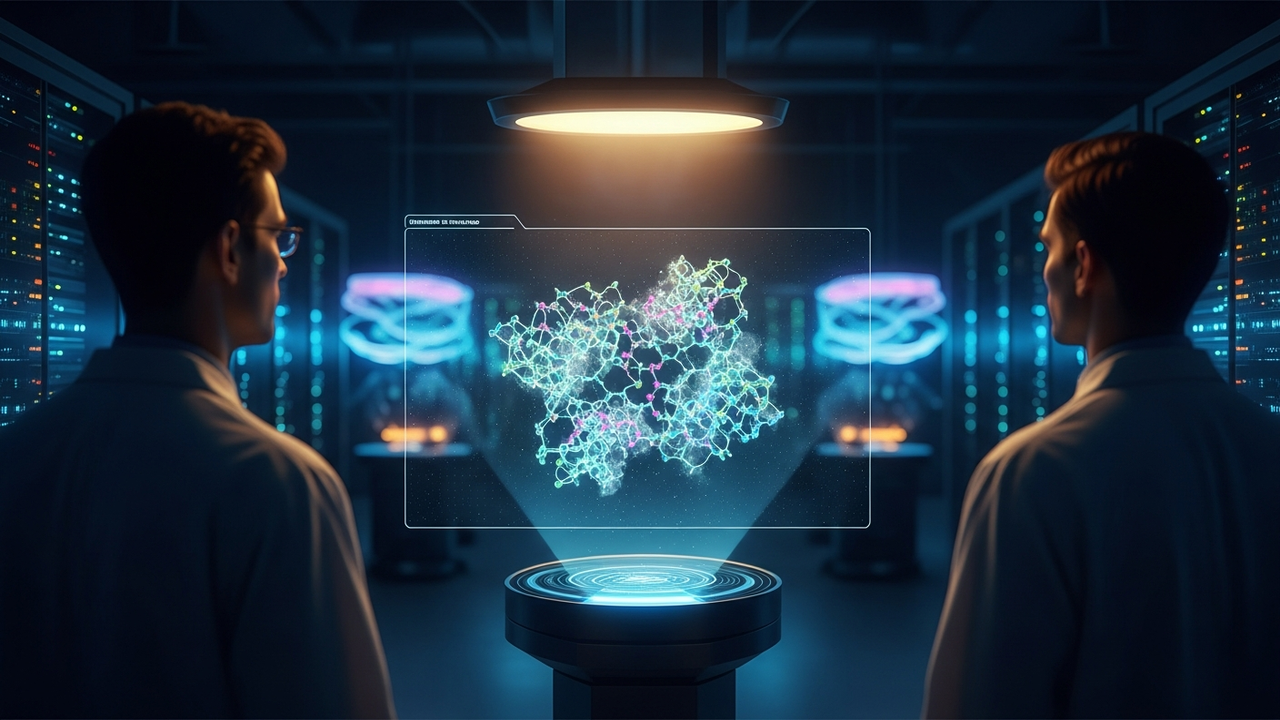
The BIO 2026 AI Summit emphatically highlighted quantum computing as an imminent reality for the drug discovery sector, designating 2025-2026 as a pivotal turning point for biopharma quantum applications. A prominent key achievement cited at the summit was the successful simulation of the electronic structure of a relatively large 303-atom Trp-cage protein by IBM and Cleveland Clinic in March 2026, finalizing a hybrid quantum-classical workflow. This technical breakthrough significantly enhances molecular simulation capabilities and holds immense potential to accelerate next-generation drug discovery processes.
Technical / Clinical Details
Simulating the electronic structure of a Trp-cage protein is crucial for understanding the chemical properties and reactivity of complex molecules. The scale of 303 atoms represents a domain in quantum chemistry calculations that is extremely challenging for classical methods, and this success demonstrates the efficacy of hybrid quantum-classical workflows. In this workflow, classical supercomputers handle parts of the task, while the quantum computer tackles the most computationally intensive portions, such as calculating electron correlation energy. This synergistic approach leverages the strengths of both systems, enabling the prediction of complex molecular behavior with unprecedented accuracy and speed. This technology has direct applications in designing novel drug candidates, understanding drug-target interactions, and predicting side effects, potentially revolutionizing the efficiency of the drug discovery process.
Background & Context
The pharmaceutical industry faces significant challenges in the form of increasing time and cost for new drug development. Molecular simulation plays a vital role in the early stages of drug discovery, but its computational limits have been a bottleneck for innovation. Quantum computing is anticipated as a next-generation technology to break through these computational barriers, enabling faster and more accurate molecular simulations. The partnership between IBM and Cleveland Clinic is a prime example, reflecting a global trend of academic and industrial collaboration to apply quantum technology in the biopharmaceutical sector. The emergence of such successful cases clearly indicates quantum computing’s transition from theoretical possibility to concrete industrial application.
Strategic Significance & Outlook
The success of IBM and Cleveland Clinic in simulating the electronic structure of a Trp-cage protein demonstrates the profound impact quantum computing will have on pharmaceutical R&D. Moving forward, this hybrid quantum-classical workflow is expected to broaden its application to the simulation of larger and more complex biomolecules. This will enable pharmaceutical companies to significantly accelerate the processes of drug candidate discovery, optimization, and toxicity assessment, ultimately leading to the faster delivery of safer and more effective treatments to patients. As highlighted by the BIO 2026 AI Summit, quantum drug discovery is no longer a distant future technology but is becoming an urgent reality that will shape the pharmaceutical industry’s competitiveness, with further breakthroughs strongly anticipated in this field.
Source: https://www.geneonline.com/2026-bio-ai-summit-kickoff-session-benchling/
Get our weekly technology intelligence — free
Receive an infographic that lets you judge at a glance whether each field’s analysis report is worth reading.
Subscribe Free — Weekly Tech Intelligence
By subscribing, you’ll receive Troy-Technical’s weekly technology intelligence newsletter.
- Your email and selected fields are used only to deliver the newsletter.
- We never share your information with third parties.
- You can unsubscribe anytime via the link in each email.
See our Privacy Policy for details.
Takes about a minute · Unsubscribe anytime