


Key Findings
The research team observed three primary physical phenomena when investigating how quantum systems evolve following sudden changes. First, they identified long-lived prethermal states where the system maintained stable patterns longer than expected. Second, they documented “resonant melting,” where these prethermalization patterns broke down at predictable points. Third, in two-dimensional arrays, the team discovered a first-order dynamical phase transition that has no direct equilibrium counterpart, meaning the abrupt change occurs in how the matter evolves over time rather than in its state of matter.
Technical Details
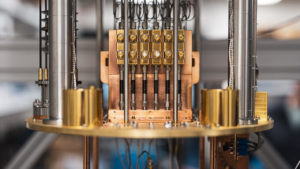
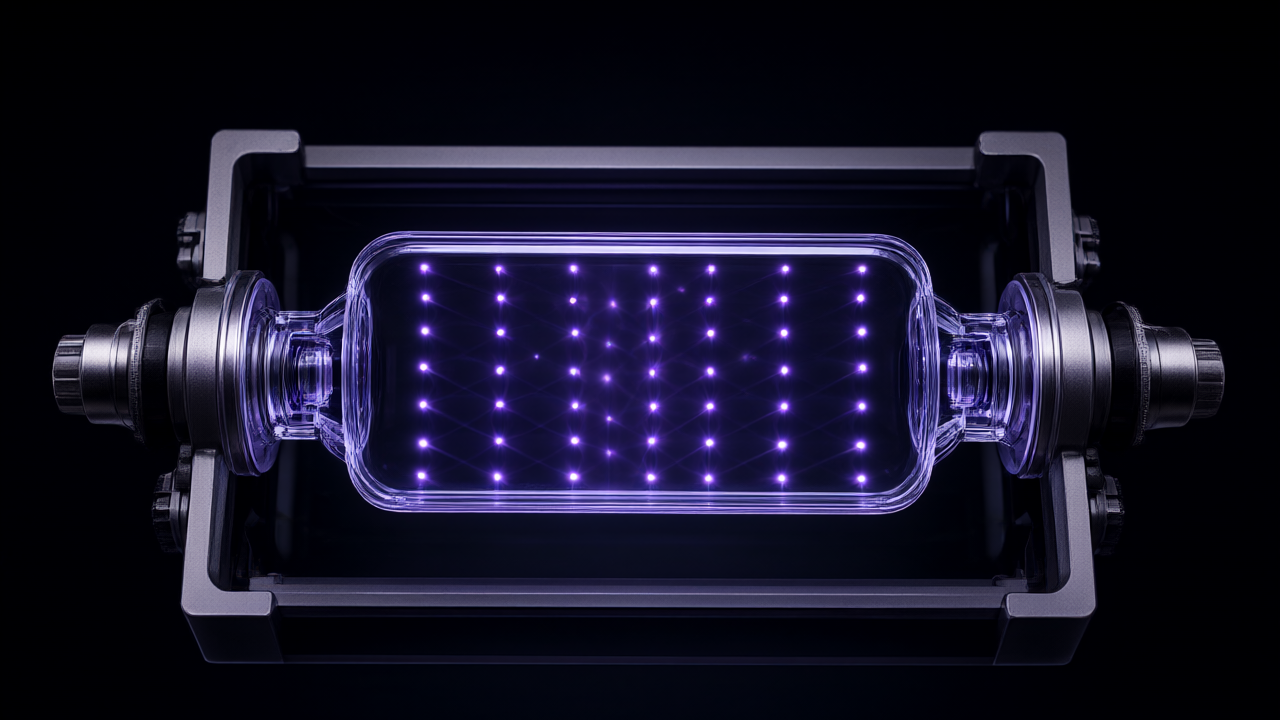
The experiments utilized Aquila, QuEra’s analog neutral-atom quantum computer, accessed via Amazon Braket. The team tested various array shapes and sizes, ranging from chains of up to 52 atoms to two-dimensional grids of up to 180 atoms. The process involved initializing atomic qubits into their lowest-energy state, applying a laser field for a few millionths of a second, and measuring every qubit.
To validate these results, the team integrated quantum experiments with classical calculations performed on NERSC’s Perlmutter supercomputer. Using QuEra’s open-source Bloqade software, NERSC ran exact classical calculations on small probing systems to provide a baseline of confidence for the results observed at larger scales on Aquila.
Background & Context
This study is part of a broader collaboration between QuEra and U.S. Department of Energy National Labs. Earlier this year, a separate collaboration between QuEra and Los Alamos National Lab published results regarding a quantum error correction architecture called Transversal STAR. The use of a programmable quantum computer in this study allowed the team to sidestep the scaling issues associated with classical simulations, which struggle with the rapid growth of quantum entanglement over time.
Significance & Outlook
The ability to model the evolution of larger quantum systems provides critical data for materials science. QuEra intends to apply the experience gained from operating the research-grade Aquila machine to the development of Libra, its first fault-tolerant quantum computer, which is expected to be available on Amazon Braket in 2028.
Source: https://thequantuminsider.com/2026/11/18/quera-berkeley-lab-study-quantum-dynamics-aquila/
Get our weekly technology intelligence — free
Receive an infographic that lets you judge at a glance whether each field’s analysis report is worth reading.
Subscribe Free — Weekly Tech Intelligence
By subscribing, you’ll receive Troy-Technical’s weekly technology intelligence newsletter.
- Your email and selected fields are used only to deliver the newsletter.
- We never share your information with third parties.
- You can unsubscribe anytime via the link in each email.
See our Privacy Policy for details.
Takes about a minute · Unsubscribe anytime