Key Findings
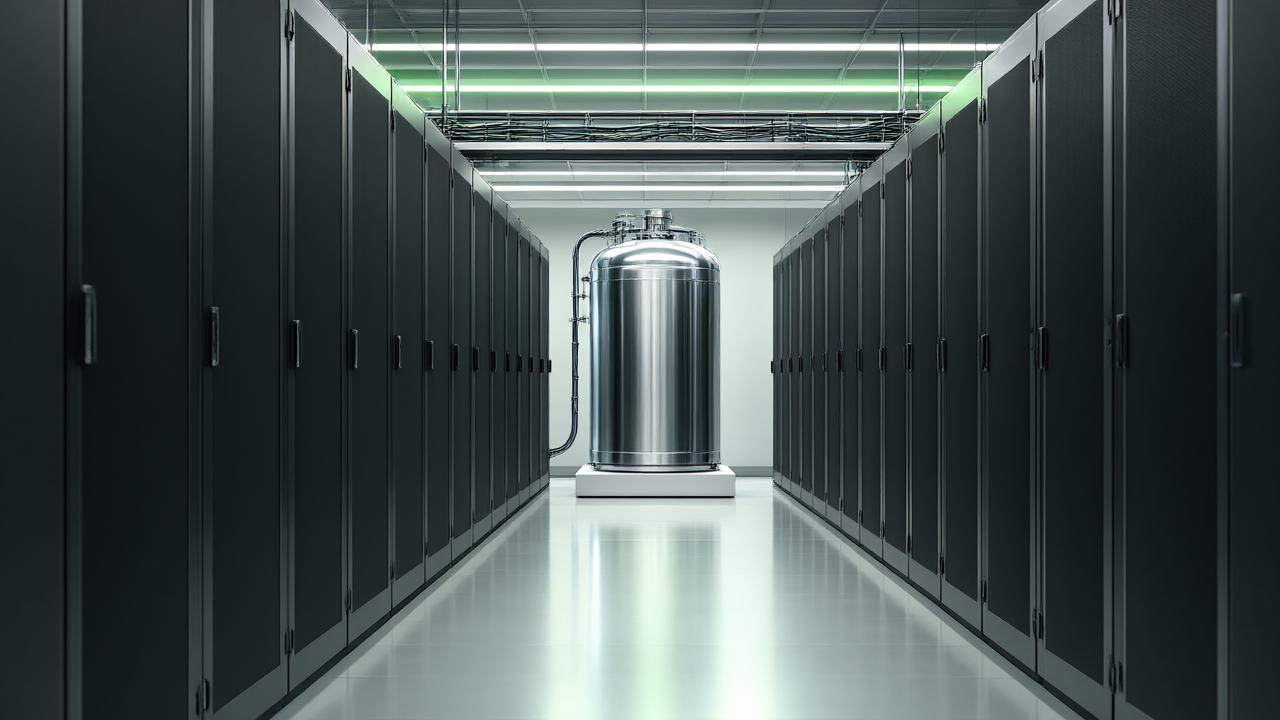
At the SC26 conference in Chicago, IBM, NVIDIA, and Fermilab announced a modular quantum-classical co-design platform and the integration of native quantum resource scheduling into Slurm 26.11. This collaboration focuses on physically co-locating NVIDIA DGX B200 systems with IBM Quantum Nighthawk processors, managed via Fermilab’s HEPCloud infrastructure. Additionally, NVIDIA released CUDA-Q QEC 0.9.0, featuring the TCBP-JOBS algorithm for GPU-accelerated quantum error correction (QEC).
Technical Details
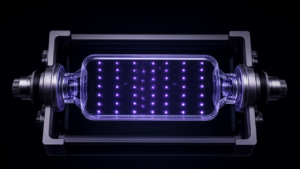
The co-design platform will initially emulate inter-module communication to analyze routing errors, latency, and classical feedback. Future phases will integrate Fermilab’s ultracoherent superconducting radio-frequency (SRF) cavity hardware to serve as quantum memories and entanglement buffers. Regarding QEC, the TCBP-JOBS algorithm combines Trajectory-Calibrated Belief Propagation with Jittered Ordered Statistics Decoding Beam Search. At physical error rates of 0.1% to 0.4%, it achieves millisecond-scale serial latencies, specifically 4.08 ms for 12-round gross-code memory and 13.5 ms for logical lattice surgery at 0.2% error.
Other technical releases include:
- CUDA-Q QEC 0.9.0: Includes a containerized Decoding Server and Relay-BP kernels that are 1.3x to 3.2x faster.
- Slurm 26.11: Integrates the Quantum Resource Management Interface (QRMI) and Quantum Device Management Interface (QDMI) into the Hierarchical Resources (HRES) scheduler.
- Pelagos: An open-source GPU simulation suite developed by IBM and AMD.
Background & Context
The integration into Slurm 26.11 aims to remove custom middleware for approximately 30 supercomputing centers globally that operate more than 50 quantum processors. By treating QPUs as shared multi-node resources rather than node-local accelerators, HRES allows administrators to manage quantum hardware under standard cluster policies alongside CPUs and GPUs.
Significance & Outlook
This ecosystem expansion enables high-performance hybrid workflows for studying lattice gauge theories and nuclear physics. The combination of GPU-accelerated decoders and standardized scheduling reduces the overhead of managing multi-node QPU resources, while the co-location of high-end GPUs and quantum processors addresses the latency requirements of feed-forward operations in neutral-atom and trapped-ion systems.
Get our weekly technology intelligence — free
Receive an infographic that lets you judge at a glance whether each field’s analysis report is worth reading.
Subscribe Free — Weekly Tech Intelligence
By subscribing, you’ll receive Troy-Technical’s weekly technology intelligence newsletter.
- Your email and selected fields are used only to deliver the newsletter.
- We never share your information with third parties.
- You can unsubscribe anytime via the link in each email.
See our Privacy Policy for details.
Takes about a minute · Unsubscribe anytime