Key Findings
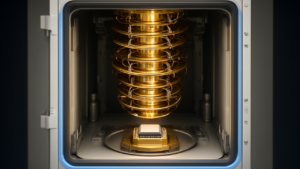
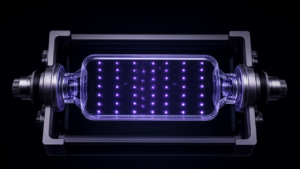
Researchers at the University of Osaka’s D3 Center and Center for Quantum Information and Quantum Biology (QIQB) have created SEAFOOD (Supercomputing Entangled by Ambitious Fusion of OQTOPUS and OCTOPUS at D3C). This hybrid computing infrastructure integrates domestically built superconducting quantum processors with the university’s OCTOPUS supercomputer across separate campuses. It marks the first time a Japanese-developed quantum computer and an on-campus supercomputer have been integrated at a single academic institution in Japan.
Technical Details
The SEAFOOD architecture employs a three-layer stack to partition workloads, ensuring each processor executes mathematical routines optimized for its specific hardware design. This approach addresses the high computational cost of simulating strongly correlated electronic structures on classical clusters and the noise and qubit count constraints of current quantum processors.
In a Quantum-Selected Configuration Interaction (QSCI) demonstration, the system functioned as follows:
- The quantum processor was used to sample dominant electron configurations.
- The high-memory compute nodes of the OCTOPUS supercomputer constructed and diagonalized the resulting subspace Hamiltonian.
Background & Context
The project was led by Professor Susumu Date (D3 Center) and Associate Professor Hiroshi Ueda (QIQB). Development was supported by several Japanese initiatives, including JST Moonshot Goal 6, MEXT Q-LEAP, JST COI-NEXT, CSTI SIP, and NEDO’s Post-5G quantum-supercomputer hybrid platform program. The project also utilizes the open-source OQTOPUS software stack and QSCI methodology published in Physical Review Research.
Significance & Outlook
SEAFOOD is scheduled to enter formal operation in December 2026. In fiscal year 2027, the D3 Center will provide trial access to up to 10 research teams via a proposal-based program. This phase is intended to refine hybrid job scheduling before the platform opens for broader external access through Japan’s nationwide JHPC-quantum initiative.
Get our weekly technology intelligence — free
Receive an infographic that lets you judge at a glance whether each field’s analysis report is worth reading.
Subscribe Free — Weekly Tech Intelligence
By subscribing, you’ll receive Troy-Technical’s weekly technology intelligence newsletter.
- Your email and selected fields are used only to deliver the newsletter.
- We never share your information with third parties.
- You can unsubscribe anytime via the link in each email.
See our Privacy Policy for details.
Takes about a minute · Unsubscribe anytime