


Key Findings
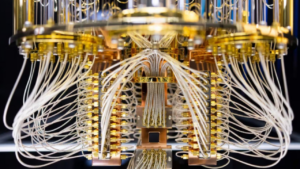
Google Quantum AI has demonstrated that quantum measurement contextuality persists at a many-body scale on superconducting processors. Using Willow processors with 72 and 105 qubits, the team moved contextuality testing from small few-particle systems to large two-dimensional qubit arrays. The experiments revealed that contextuality yields measurable computational separations in tasks with bounded resources.
Technical Details
To verify contextuality without disturbing the quantum register during the state-independent Kochen-Specker-Bell test, researchers employed a resettable ancilla qubit and calibrated virtual-Z phase rotations. This setup allowed for 540 consecutive quantum nondemolition (QND) measurements per run. The team utilized two primary methods for scaling:
- Randomized breadth-first-search Greenberger-Horne-Zeilinger (GHZ) state preparation, which sustained contextuality up to 71 qubits.
- Constant-depth four-layer controlled-Z circuits, which solved 2D hidden linear function instances across grids of up to 105 qubits.
Background and Context
Measurement contextuality differs from entanglement in that it captures the principle that quantum observables do not have predetermined values independent of the compatible measurements performed alongside them. While the Clifford-based test circuits used in this research remain efficiently simulable classically via tools such as Stim, the study probes the theoretical resource linked to non-Clifford magic states essential for fault-tolerant computing.
Significance and Outlook
The researchers noted that contextuality tasks serve as a sensitive hardware diagnostic for structured applications, including materials science and molecular simulations in chemistry. Because hidden-function and structured parity tests require exact multi-qubit phase agreement, they can expose small coherent over-rotations. This provides a fixed physical ceiling for calibrating future processors, as these errors are often averaged out during random-circuit sampling.
Get our weekly technology intelligence — free
Receive an infographic that lets you judge at a glance whether each field’s analysis report is worth reading.
Subscribe Free — Weekly Tech Intelligence
By subscribing, you’ll receive Troy-Technical’s weekly technology intelligence newsletter.
- Your email and selected fields are used only to deliver the newsletter.
- We never share your information with third parties.
- You can unsubscribe anytime via the link in each email.
See our Privacy Policy for details.
Takes about a minute · Unsubscribe anytime