

Key Findings
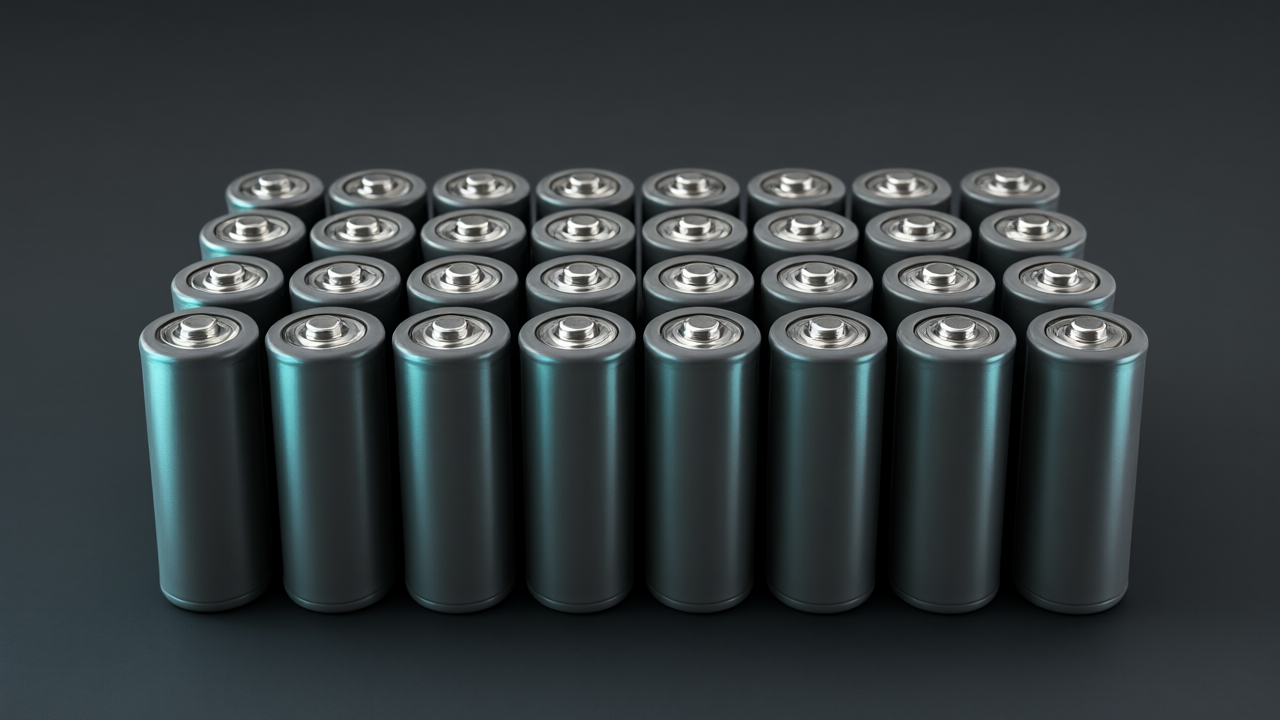
The developed composite coating, specifically the EP/20RMH@AP-Fe1/PEPA4 formulation, significantly improves the thermal safety of lithium-ion batteries (LIBs). In thermal runaway propagation tests, the coating delayed the onset of thermal runaway at the directly heated Position-1 battery by 465 s and lowered the peak temperature of the adjacent Position-2 battery by 272 °C compared to uncoated cells. Additionally, the coating achieved a UL-94 V-0 classification and a limiting oxygen index (LOI) of 28.0 %.
Technical Details
The coating utilizes an epoxy resin (EP) matrix integrated with two complementary flame retardants: a biomass-based supramolecular magnesium hydroxide rod-crystal (RMH@AP-Fe) and a cage-like small-molecular charring agent called pentaerythritol phosphate (PEPA). While RMH@AP-Fe provides good interfacial compatibility with the EP matrix, it lacks sufficient char-forming efficiency on its own. The combination of both agents creates a composite intumescent flame-retardant system (RMH@AP-Fe/PEPA) that enhances char quality and creates a continuous protective barrier during combustion.
Smoke suppression performance was a primary result of this formulation:
- Total smoke production decreased by 76.4 % compared to pure EP.
- Peak smoke production rate decreased by 48.1 % compared to pure EP.
Background & Context
Epoxy resins are widely used in new energy vehicle components, such as insulating parts and battery protection housings, due to their electrical insulation, adhesion, and mechanical strength. However, their carbon- and hydrogen-rich chemical structure typically leads to rapid flame spread and the emission of dense, toxic smoke during fire events.
Significance & Outlook
The reduction in smoke and toxic gas release is critical for battery fire scenarios, as it extends evacuation time and minimizes secondary hazards. By providing effective thermal insulation, ablation resistance, and fire retardancy, this composite coating offers a multifunctional strategy for improving the safety of energy storage systems and electromobility applications.
Get our weekly technology intelligence — free
Receive an infographic that lets you judge at a glance whether each field’s analysis report is worth reading.
Subscribe Free — Weekly Tech Intelligence
By subscribing, you’ll receive Troy-Technical’s weekly technology intelligence newsletter.
- Your email and selected fields are used only to deliver the newsletter.
- We never share your information with third parties.
- You can unsubscribe anytime via the link in each email.
See our Privacy Policy for details.
Takes about a minute · Unsubscribe anytime