


Key Findings
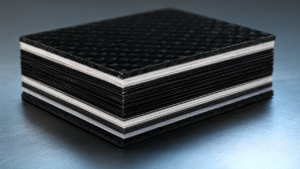
Nissan and Food Ribbon announced on November 17, 2026, the joint development of automotive exterior components utilizing Natural Fiber Reinforced Plastics (NFRP) made from pineapple leaf fibers. This development marks the first time such materials have been applied to automotive exterior parts, achieving tensile strength that exceeds that of conventional hemp-based natural fiber materials.
Technical Details
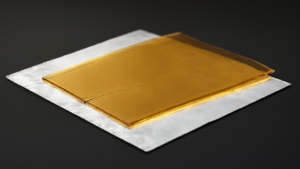
The development team established a world-first technical process to convert fibers extracted from pineapple leaves into flat yarns, which are then woven into fabrics for use as composite materials. As part of the intellectual property arrangement, Nissan has licensed the following manufacturing know-how to Food Ribbon:
- Production of flat yarns and woven fabrics from extracted pineapple leaf fibers.
- Manufacturing of prepregs (molding intermediate materials) created by impregnating the fibers with resin.
Background and Context
The project addresses the environmental issue of pineapple leaf waste, which exceeds 50 million tons annually according to 2024 FAO statistics. From a regulatory perspective, certain racing categories using modified sports cars mandate that exterior part modifications be made exclusively from natural fiber reinforced plastics. However, existing natural fiber materials have faced challenges regarding cost and stable procurement due to limited supply sources.
This initiative aligns with the “Nissan Green Program 2030,” a mid-term environmental action plan focused on researching sustainable materials that are lightweight, low-cost, and have a low environmental impact.
Significance and Outlook
The resulting material is characterized as being lightweight and environmentally friendly, with potential applications extending beyond the automotive sector. The developed exterior parts will be exhibited at the “sampe Japan Advanced Materials Technology Exhibition 2026.”
Source: https://msrweb.jp/article/11863/
Get our weekly technology intelligence — free
Receive an infographic that lets you judge at a glance whether each field’s analysis report is worth reading.
Subscribe Free — Weekly Tech Intelligence
By subscribing, you’ll receive Troy-Technical’s weekly technology intelligence newsletter.
- Your email and selected fields are used only to deliver the newsletter.
- We never share your information with third parties.
- You can unsubscribe anytime via the link in each email.
See our Privacy Policy for details.
Takes about a minute · Unsubscribe anytime