Key Findings
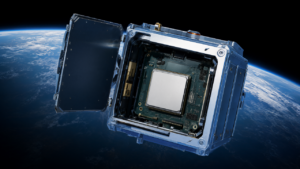
Elethron, a UK-based company, and ATMOS Space Cargo, from Germany, have announced the completion of a joint engineering collaboration focused on integrating Elethron’s microgravity materials processing laboratory into ATMOS’s reusable orbital transfer and re-entry vehicle, PHOENIX. This groundbreaking partnership, backed by the UK Space Agency, is designed to harness the unique advantages of a microgravity environment to propel research and development (R&D) and production of advanced materials in space, particularly for semiconductors, quantum technologies, and other high-value applications.
Technical / Clinical Details
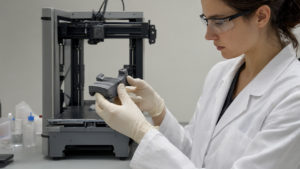
Elethron’s microgravity materials processing lab is engineered to precisely control crystal growth processes and material homogeneity in the absence of gravity. The PHOENIX vehicle provides a reusable platform capable of transporting payloads to orbit, conducting experiments, and then safely returning them to Earth. This integrated system will enable researchers and companies to manufacture materials with crystal qualities and uniformities that are difficult or impossible to achieve on Earth. In microgravity, gravitational settling and convection effects are eliminated, allowing for the growth of more perfect single crystals and composite materials with highly uniform structures. This promises applications such as enhanced performance in semiconductor materials, the creation of ultra-high-purity materials essential for quantum computing and sensors, and the development of novel specialized alloys.
Background & Context
In the field of advanced materials, precise control over microstructure and purity is critical for achieving superior performance. Microgravity materials processing has long been recognized as an innovative solution to these challenges. The semiconductor industry, for instance, requires ever-improving crystal quality for wide-bandgap semiconductors like silicon carbide and gallium nitride to enable more powerful chips. Similarly, the advancement of quantum technologies depends on ultra-high-purity materials with specific physical properties. This collaboration between the UK and Germany represents a significant step for Europe in pioneering the frontier of in-space manufacturing. Government support is crucial in stimulating private investment in this high-risk, high-reward sector, thereby bolstering international competitiveness.
Strategic Significance & Outlook
The collaboration between Elethron and ATMOS Space Cargo paves the way for the commercial viability of advanced materials production in space. The combination of reusable transport systems like PHOENIX with dedicated microgravity labs means that researchers and businesses can more easily access the space environment to develop products with material properties unattainable on Earth. This has the potential to introduce revolutionary impacts across various industries, including semiconductors, electronics, aerospace, and defense. In the long term, in-space materials production is expected to complement terrestrial manufacturing processes, establishing new supply chains that deliver superior products for specific niche markets and high-performance applications. This initiative will foster diversification of the space economy and serve as a foundation for generating new technological breakthroughs.
Source: https://www.semiconductor-today.com/news_items/2026/jun/elethron-180626.shtml
Get our weekly technology intelligence — free
Receive an infographic that lets you judge at a glance whether each field’s analysis report is worth reading.
Subscribe Free — Weekly Tech Intelligence
By subscribing, you’ll receive Troy-Technical’s weekly technology intelligence newsletter.
- Your email and selected fields are used only to deliver the newsletter.
- We never share your information with third parties.
- You can unsubscribe anytime via the link in each email.
See our Privacy Policy for details.
Takes about a minute · Unsubscribe anytime