Key Findings
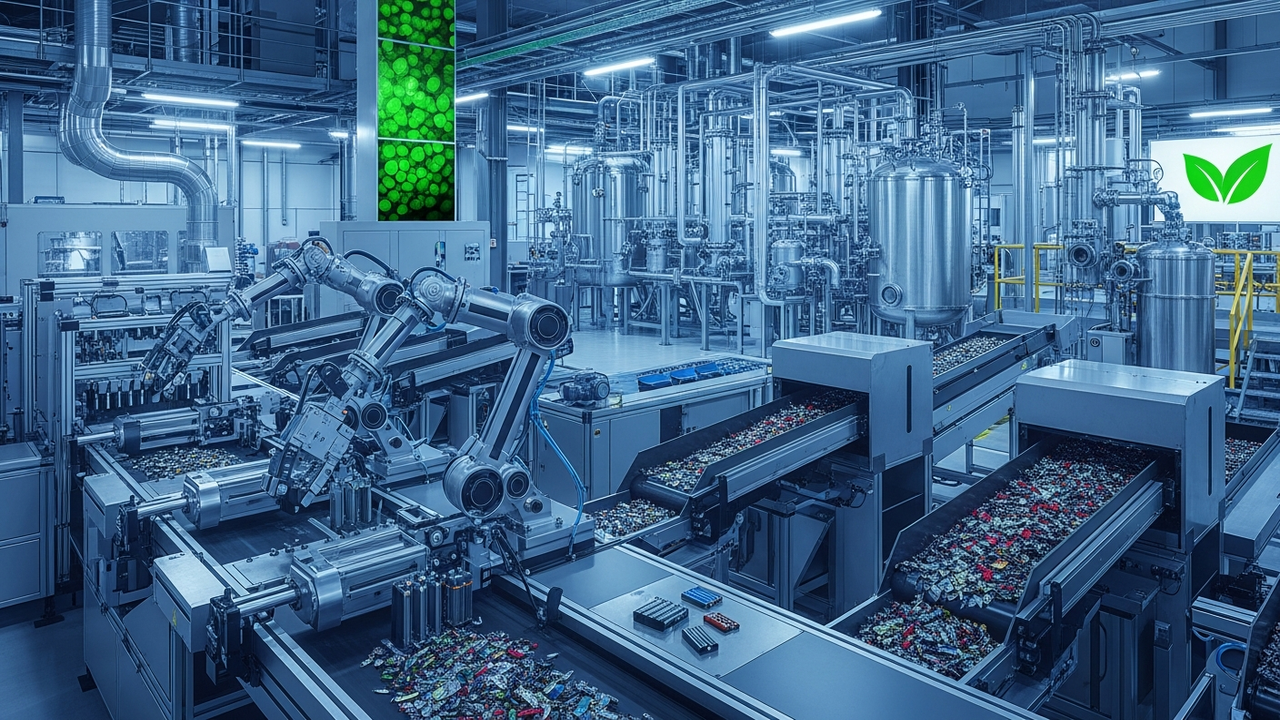
Driven by the rapid proliferation of electric vehicles (EVs) and renewable energy storage systems, global investment in battery recycling plants is expanding significantly. This article outlines the primary considerations for establishing a battery recycling plant from scratch, emphasizing the critical importance of prioritizing the maximization of recovery efficiency over simply pursuing processing capacity. Furthermore, it highlights the indispensable need to integrate automation technologies to ensure plant safety and reduce labor requirements, thereby enhancing the sustainability and economic viability of recycling operations.
Technical Details
Establishing a battery recycling plant involves a series of critical technical and operational decisions that directly impact the plant’s efficiency, profitability, and environmental compliance.
- Identifying Battery Types: The first step is to clearly define the types of batteries to be processed (e.g., lithium-ion, lead-acid, nickel-metal hydride). Each battery chemistry requires distinct recycling technologies and equipment. Lithium-ion batteries, with their high energy density and diverse compositions, typically demand more complex processing.
- Site Selection and Environmental Compliance: The plant’s location must be chosen considering raw material sources (spent batteries), access to markets for recovered materials, and, crucially, strict adherence to environmental regulations. Given the handling of hazardous substances, meeting local environmental protection standards is paramount.
- Equipment Selection: Essential equipment includes safe battery discharge devices, shredders, crushers, separation units, and reactors or refining apparatus for hydrometallurgical or pyrometallurgical processes. Optimizing the entire recycling process requires selecting appropriately sized equipment and ensuring seamless integration between each stage.
- Prioritizing Recovery Efficiency: Battery recycling aims not just to process waste but to recover valuable metals like cobalt, nickel, and lithium to the maximum extent possible. Therefore, selecting technologies and processes that maximize material-specific recovery rates, rather than just throughput capacity, is vital.
- Automation and Safety: Battery dismantling and processing are inherently hazardous tasks. The implementation of automated systems is strongly recommended to ensure worker safety, reduce human error, and improve process consistency and efficiency.
Meticulous planning across these elements is crucial for building a sustainable and economically viable recycling plant.
Background & Industry Context
As EV adoption accelerates globally and demand for large-scale battery storage for renewable energy systems surges, the volume of spent batteries is rapidly increasing. Consequently, battery recycling has emerged as an indispensable industry for ensuring a stable supply of critical raw materials, reducing environmental impact, and achieving a circular economy. Governments worldwide are actively promoting the development of recycling infrastructure through enhanced regulations and subsidies, stimulating private investment in this sector.
Strategic Significance & Outlook
Addressing these key considerations in establishing battery recycling plants is vital for ensuring the sustainable growth of the recycling industry. Improvements in recovery efficiency, strict environmental compliance, and enhanced safety and efficiency through automation will boost the market competitiveness of recycled battery materials. This will encourage greater use of recycled content in new battery production. As a result, dependence on primary mining for scarce metals will decrease, and a more environmentally friendly and resilient battery supply chain will be established. The development of this industry is expected to contribute significantly to achieving global decarbonization goals and realizing a resource-efficient society.
Source: https://www.machineryrecycle.com/news/how-to-set-up-a-battery-recycling-plant-from-scratch/
Get our weekly technology intelligence — free
Receive an infographic that lets you judge at a glance whether each field’s analysis report is worth reading.
Subscribe Free — Weekly Tech Intelligence
By subscribing, you’ll receive Troy-Technical’s weekly technology intelligence newsletter.
- Your email and selected fields are used only to deliver the newsletter.
- We never share your information with third parties.
- You can unsubscribe anytime via the link in each email.
See our Privacy Policy for details.
Takes about a minute · Unsubscribe anytime