Key Findings
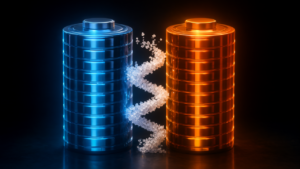
A comprehensive analysis of the stationary energy storage sector projects a significant cost reduction for sodium-ion batteries, with prices expected to drop to $40-55/kWh by 2028 from their current range of $55-70/kWh. This anticipated decrease in cost, coupled with current cell energy densities of approximately 150-175 Wh/kg, positions sodium-ion technology as a formidable competitor, rapidly closing the performance gap with the lower end of lithium iron phosphate (LFP) cells. These advancements make sodium-ion batteries particularly well-suited for grid-scale and other stationary applications where material abundance and cost stability outweigh the need for ultra-high energy density.
Technical & Market Details
- Cost Trajectory: The projected cost of $40-55/kWh by 2028 places sodium-ion batteries in a highly competitive position against established lithium-ion chemistries, benefiting from the lower and more stable commodity prices of sodium.
- Energy Density: With current energy densities of 150-175 Wh/kg, sodium-ion cells are demonstrating capabilities that are increasingly adequate for stationary storage, challenging the dominance of LFP (typically 160-200+ Wh/kg) in this segment.
- Supply Chain Resilience: The ubiquitous availability of sodium significantly de-risks the supply chain compared to lithium, which is geographically concentrated and subject to volatile pricing. This inherent advantage fosters greater energy security and sustainability.
Background & Industry Context
The global push towards higher penetration of intermittent renewable energy sources, such as solar and wind, necessitates robust and cost-effective energy storage solutions. While lithium-ion batteries have led this transition, concerns over lithium resource scarcity, escalating material costs, and geopolitical supply chain dependencies have spurred intense research and development into alternative chemistries. Sodium-ion batteries are emerging as a leading candidate to address these challenges, with major players like CATL and BYD in China already making significant commercialization efforts and investments, indicating strong market confidence in the technology’s readiness and scalability.
Strategic Significance & Outlook
The improving economics and performance of sodium-ion batteries are set to accelerate their deployment across a spectrum of stationary energy storage applications, including grid stabilization, microgrids, and data center backup. This technology is crucial for reducing reliance on lithium supply chains and mitigating geopolitical risks associated with critical raw materials. Future developments will likely focus on further increasing energy density and cycle life, ensuring sodium-ion batteries become a cornerstone of the future global energy infrastructure, enabling a more resilient and sustainable energy transition.
Source: https://jmbatteries.com/de/blogs/news/global-energy-storage-market-2026
Get our weekly technology intelligence — free
Receive an infographic that lets you judge at a glance whether each field’s analysis report is worth reading.
Subscribe Free — Weekly Tech Intelligence
By subscribing, you’ll receive Troy-Technical’s weekly technology intelligence newsletter.
- Your email and selected fields are used only to deliver the newsletter.
- We never share your information with third parties.
- You can unsubscribe anytime via the link in each email.
See our Privacy Policy for details.
Takes about a minute · Unsubscribe anytime