Background
The electric vehicle (EV) market’s rapid expansion intensifies the demand for superior battery technology, with automotive manufacturers prioritizing performance, safety, and longevity. Key objectives include faster charging capabilities, increased energy density, and robust safety profiles, especially during rapid charge cycles. In response, Volkswagen Group’s PowerCo established its ‘Unified Cell’ strategy, targeting vertical integration and performance optimization in battery manufacturing. This initiative underscores the critical need for advanced materials. Single-wall carbon nanotubes (SWCNTs), recognized for their exceptional electrical and mechanical properties, are emerging as a prime candidate for next-generation battery components, leading to a growing integration of such nanomaterials into core automotive supply chains.
Key Findings
OCSiAl has announced a significant agreement to supply its TUBALL single-wall carbon nanotubes (SWCNTs) to PowerCo, Volkswagen Group’s battery manufacturing subsidiary. These advanced nanomaterials are slated for integration into PowerCo’s ‘Unified Cell’ battery platform, marking a crucial advancement for next-generation EV battery performance and safety.
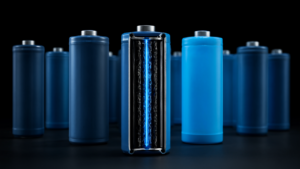
At the core of this innovation, OCSiAl’s TUBALL nanotubes are incorporated directly into the graphite anodes of PowerCo’s batteries. Here, they dramatically enhance both electrical conductivity and heat dissipation. The nanotubes establish a highly efficient, percolating conductive network throughout the anode material, significantly accelerating electron transport. This critical improvement allows batteries to sustain higher charging and discharging currents without incurring detrimental overheating, a common challenge in high-performance applications.
The benefits extend beyond mere current handling. Superior thermal management directly translates to enhanced battery safety, effectively mitigating the risk of thermal runaway, particularly during demanding rapid charging cycles. Furthermore, the improved charge performance and inherent thermal stability conferred by the nanotubes contribute to a significantly extended overall service life for the battery. Notably, TUBALL nanotubes offer a cost-effective solution, delivering substantial performance improvements with minimal additive concentrations to existing battery chemistries.
Strategically, this partnership has the potential to redefine benchmarks for EV battery technology. By leveraging TUBALL nanotubes within the ‘Unified Cell’ platform, future Volkswagen Group EVs are poised to offer faster charging, extended driving range, and superior safety. This successful deployment is anticipated to encourage broader adoption of advanced nanomaterial technologies across the automotive and battery manufacturing sectors, spurring further innovation. Crucially, the supply of TUBALL nanotubes will originate from OCSiAl’s facility in Serbia, a move that strengthens the establishment of a vital and localized battery material supply chain within Europe, reducing geopolitical supply risks.
Get our weekly technology intelligence — free
Receive an infographic that lets you judge at a glance whether each field’s analysis report is worth reading.
Subscribe Free — Weekly Tech Intelligence
By subscribing, you’ll receive Troy-Technical’s weekly technology intelligence newsletter.
- Your email and selected fields are used only to deliver the newsletter.
- We never share your information with third parties.
- You can unsubscribe anytime via the link in each email.
See our Privacy Policy for details.
Takes about a minute · Unsubscribe anytime