Key Findings
NASA is vigorously pursuing plans to construct ‘Moon Base,’ humanity’s first permanent lunar outpost at the Moon’s south pole, marking the next significant step in human deep space exploration. This ambitious vision aims to establish a sustained human presence on the lunar surface through a series of crewed and uncrewed missions, building robust infrastructure for scientific exploration and resource utilization. The Moon Base is a highly strategic project, designed to function as a crucial stepping stone for future crewed Mars exploration.
Technical and Clinical Details
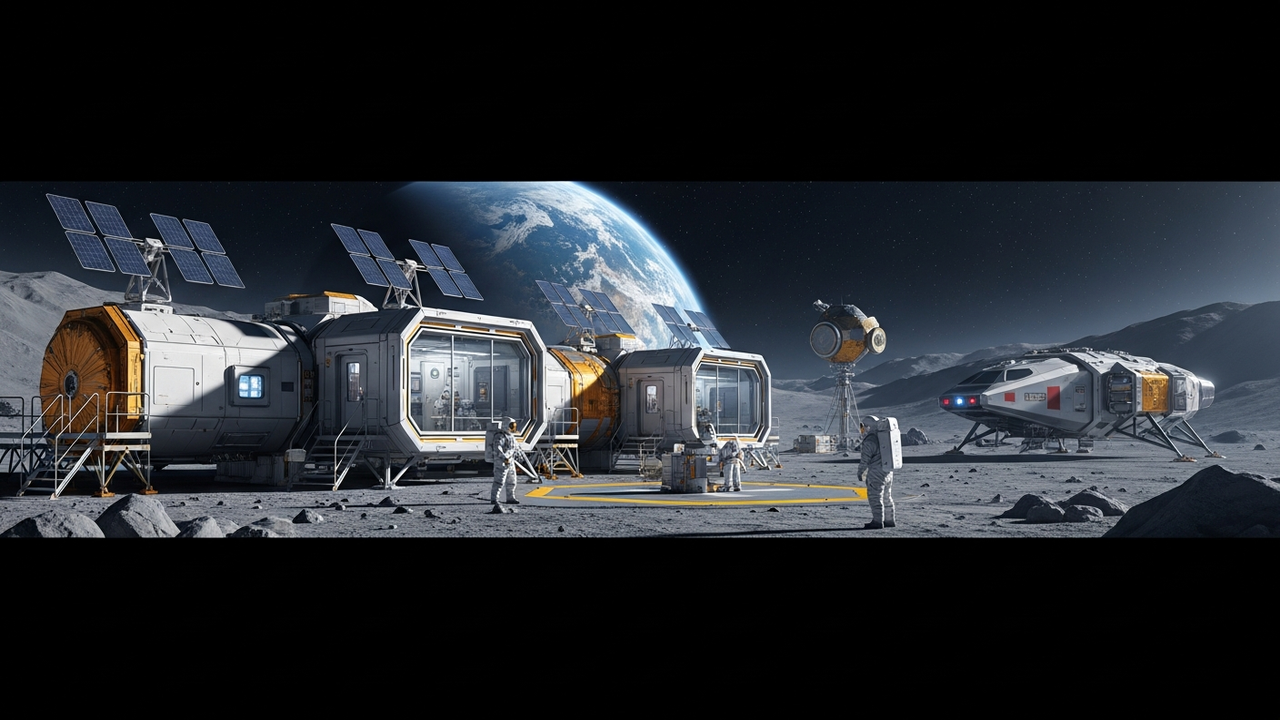
The construction of the lunar base will proceed in phases. Initially, robotic missions will conduct detailed topographic surveys of the planned construction site, prospect for resources like water ice, and test new construction technologies and life support systems. The Moon’s south pole is particularly important due to the potential presence of water ice within permanently shadowed craters, which could serve as a vital source for drinking water, breathable oxygen, and rocket fuel in the future. Subsequently, habitable modules for long-duration human stays, power generation systems (including fission reactors), communication infrastructure, and scientific experimentation equipment will be deployed incrementally. For example, the plan to land a 100-kilowatt lunar nuclear reactor by 2030 is essential for ensuring a stable power supply during the two-week lunar night. Astronauts will acquire skills necessary for survival, work, and scientific research in the lunar environment, with robust radiation protection measures in place.
Background and Industry Context
The Artemis program provides the comprehensive framework for NASA’s Moon Base construction. This program is driven by a commitment to re-establish U.S. leadership in space exploration, leveraging extensive public-private partnerships and international cooperation. The announcement by China and Russia to jointly construct a nuclear-powered lunar base by 2036 has intensified the competition in space nuclear technology development, making NASA’s Moon Base plan a critical endeavor for the U.S. to maintain its advantage in this international race. Private companies like SpaceX are enhancing the economic feasibility of lunar infrastructure construction by reducing launch costs and increasing payload capacities.
Strategic Significance and Outlook
The construction of Moon Base will be a transformative project, elevating humanity’s presence in space and generating new scientific discoveries and economic opportunities. The utilization of water ice resources at the lunar south pole will enhance self-sufficiency on the Moon and potentially serve as a fuel production hub for future Mars missions. This base will function as a testbed for improving human survival capabilities and autonomy in deep space, accelerating fundamental scientific research on the search for extraterrestrial life and the origins of the universe. Ultimately, Moon Base is expected to become an indispensable foothold for humanity’s expansion throughout the solar system, fostering new business opportunities and technological innovations across the entire space industry.
Source: https://www.nasa.gov/reference/moonbase-about/
Get our weekly technology intelligence — free
Receive an infographic that lets you judge at a glance whether each field’s analysis report is worth reading.
Subscribe Free — Weekly Tech Intelligence
By subscribing, you’ll receive Troy-Technical’s weekly technology intelligence newsletter.
- Your email and selected fields are used only to deliver the newsletter.
- We never share your information with third parties.
- You can unsubscribe anytime via the link in each email.
See our Privacy Policy for details.
Takes about a minute · Unsubscribe anytime