Key Findings
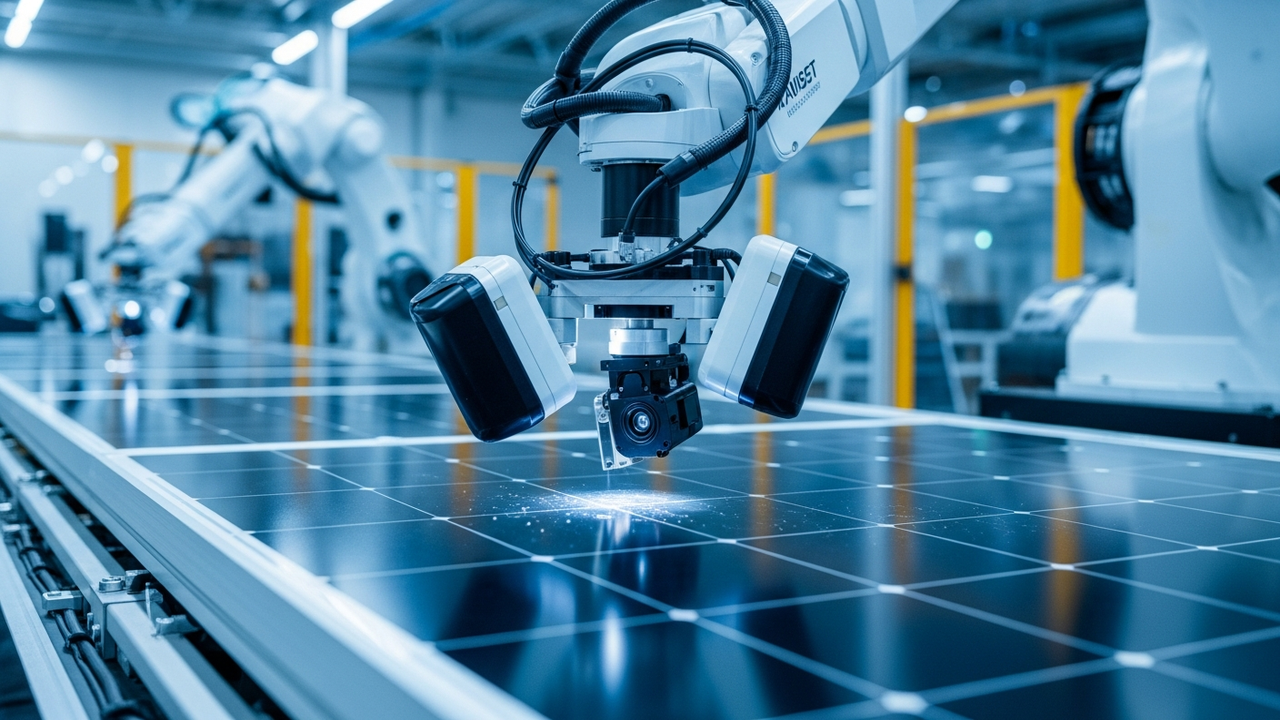
AI vision and advanced defect detection technologies are revolutionizing solar panel manufacturing by achieving high-accuracy identification of subtle microcracks and other flaws at production line speed. This innovation is critical for mitigating long-term warranty issues and power loss in solar modules. By combining electroluminescence (EL) imaging with sophisticated AI models, the system precisely detects and classifies defect types and severity on every module, significantly outperforming traditional manual or rule-based inspection methods.
Technical / Clinical Details
Microcracks in solar panels are notoriously difficult to detect with standard optical inspection, often remaining invisible to the human eye. Yet, these microscopic defects can propagate over time, leading to substantial performance degradation, hot spot formation, and eventual module failure. EL imaging, which captures light emitted by solar cells when an electric current is applied, effectively visualizes hidden flaws and damage that would otherwise go unnoticed.
AI models are trained on vast datasets of EL images to learn complex defect patterns, enabling automatic recognition and classification of anomalies that are indiscernible to human inspectors. These defects include finger marks, handling damage, internal microcracks within cells, and busbar defects. The AI categorizes these flaws by type (e.g., delamination, crack, cell chip) and severity (e.g., minor, moderate, severe), providing real-time feedback that allows for immediate process adjustments. This capability is essential for preventing further defective output and maintaining consistent quality across production batches.
This integrated AI vision inspection system guarantees 100% inspection coverage for all modules on the manufacturing line, providing unique defect records and quality data for each. This ensures full traceability throughout the supply chain, supplying invaluable data for future warranty claims and performance analysis. Furthermore, the collected data feeds into data-driven analyses to identify production bottlenecks and continuously improve manufacturing yields.
Background & Context
The global solar energy industry is experiencing rapid growth, driven by falling costs and increasing demand for renewable energy. However, the long-term performance and durability of solar panels are heavily dependent on robust quality control during manufacturing. Given product warranties spanning several decades, the early detection of even minute defects is paramount for manufacturers’ reputation and profitability. AI vision inspection provides the necessary leap in efficiency, speed, and, most importantly, consistent high-accuracy detection, forming a cornerstone for the industry’s sustainable expansion.
Strategic Significance & Outlook
AI vision inspection is poised to become the industry standard for quality control in solar panel manufacturing. Future advancements will likely see AI models integrate even more deeply into production processes, enabling self-optimizing manufacturing lines through real-time feedback loops. For instance, AI could infer defect causes and automatically adjust manufacturing parameters in response to detected flaws, leading to truly autonomous systems. This will further reduce solar panel production costs, enhance reliability, and accelerate their contribution to the broader energy transition, making solar power even more competitive and widespread globally.
Get our weekly technology intelligence — free
Receive an infographic that lets you judge at a glance whether each field’s analysis report is worth reading.
Subscribe Free — Weekly Tech Intelligence
By subscribing, you’ll receive Troy-Technical’s weekly technology intelligence newsletter.
- Your email and selected fields are used only to deliver the newsletter.
- We never share your information with third parties.
- You can unsubscribe anytime via the link in each email.
See our Privacy Policy for details.
Takes about a minute · Unsubscribe anytime