Key Findings
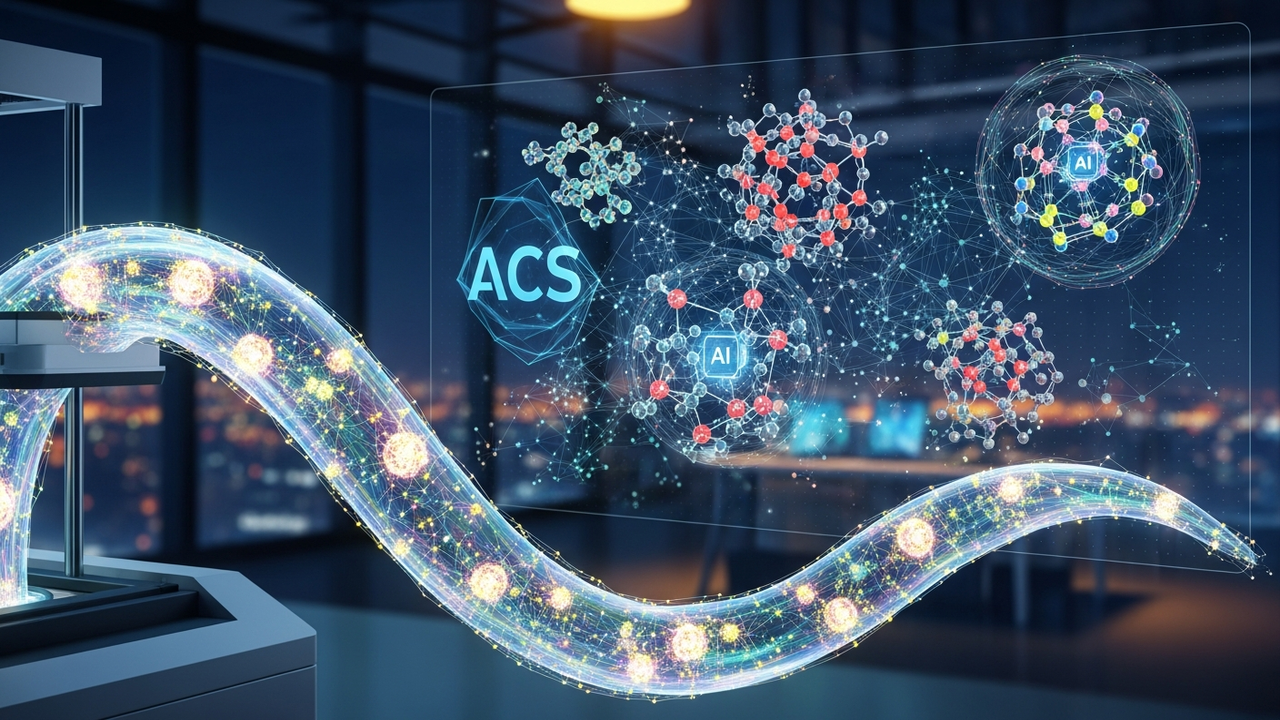
The ‘Polymer Science & Technology’ journal, published by the American Chemical Society (ACS), has announced a landmark special issue dedicated to the revolutionary role of Artificial Intelligence (AI) in polymer materials science. This special issue will delve deeply into how AI is transforming the entire process of polymer discovery, design, characterization, and ultimate application. With a submission deadline of December 31, 2026, it offers researchers and engineers at the forefront of AI-polymer convergence a vital platform to present cutting-edge insights that will drive future innovation.
Technical / Clinical Details
The special issue will highlight how AI accelerates the polymer research and development cycle. Specific topics include AI-driven autonomous design of polymer structures, predictive synthesis of novel polymers with targeted functionalities (e.g., high tensile strength, superior thermal resistance, biocompatibility), and the simulation and optimization of complex polymer networks. AI algorithms can extract patterns from vast datasets of experimental and simulation results, proposing optimal material compositions and process parameters with unprecedented speed and accuracy. This significantly shortens trial-and-error experimental cycles, reduces development costs, and leads to the discovery of unique polymer materials with properties previously unimagined. Research on biopolymers and polymer degradation behaviors will also be covered, exploring AI’s contributions to sustainable material design and environmental problem-solving.
Background & Context
Polymer science is a foundational field for nearly all modern industries, including aerospace, automotive, medical, and electronics. However, developing new polymer materials is a time-consuming and costly process, with a virtually infinite material discovery space. Against this background, the introduction of AI holds the potential to fundamentally transform this exploration process. AI, with its data-driven approach, optimizes material design and enables the creation of novel materials that challenge conventional wisdom. This trend is an indispensable factor for research institutions and companies worldwide to enhance their competitiveness, making the ACS special issue a crucial milestone in this rapidly evolving field.
Strategic Significance & Outlook
The convergence of AI and polymer science represents one of the most promising frontiers for driving future materials innovation. In the future, AI could operate completely autonomously, collaborating with robotic experimental systems to design, synthesize, and evaluate new polymers without human intervention, leading to ‘autonomous materials discovery labs.’ This would further shorten development cycles and drastically reduce time-to-market. Furthermore, AI is expected to become an essential tool for optimizing polymer recycling processes, designing biodegradable polymers, and developing high-performance materials such as smart polymers and self-healing polymers. The research compiled in this special issue will lay the groundwork for these future technological innovations, significantly contributing to the realization of a sustainable and prosperous society.
Source: https://pubs.acs.org/journal/pstoco
Get our weekly technology intelligence — free
Receive an infographic that lets you judge at a glance whether each field’s analysis report is worth reading.
Subscribe Free — Weekly Tech Intelligence
By subscribing, you’ll receive Troy-Technical’s weekly technology intelligence newsletter.
- Your email and selected fields are used only to deliver the newsletter.
- We never share your information with third parties.
- You can unsubscribe anytime via the link in each email.
See our Privacy Policy for details.
Takes about a minute · Unsubscribe anytime