Key Findings
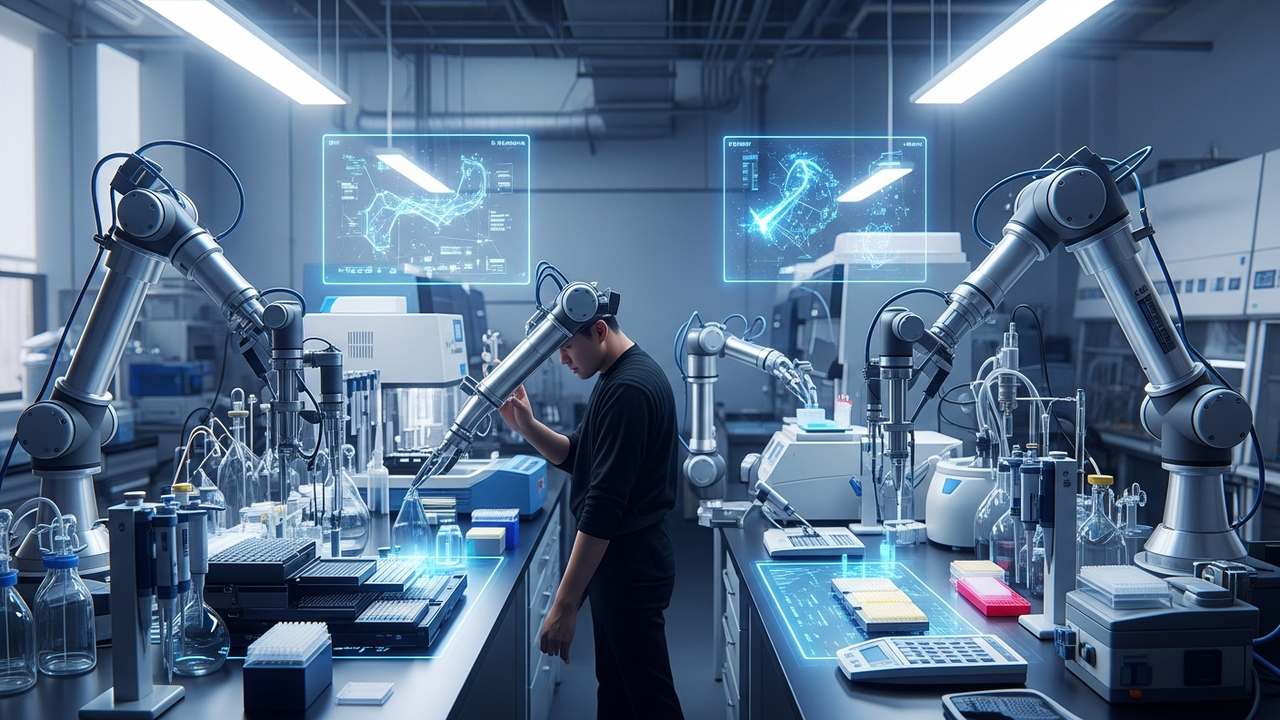
The BIO Asia–Taiwan 2026 conference, as previewed on July 7, 2026, is poised to highlight groundbreaking advancements shaping the future of the biotechnology industry, with a primary focus on AI-driven drug discovery, CDMO (Contract Development and Manufacturing Organization) supply chain strategies, and the clinical applications of Cell and Gene Therapy (CGT). A key presentation will be delivered by Kevin Tsai, VP of XtalPi Inc., who will detail how AI-powered robotic automation is being integrated into intelligent R&D platforms to significantly improve the efficiency, scalability, and reproducibility of pharmaceutical innovation.
Technical / Clinical Details
The conference agenda will feature in-depth discussions on how AI and physics-based approaches are collaboratively transforming modern drug discovery processes. Specifically, AI assists in predicting compound properties through computational design, followed by supporting the entire process from synthesis and evaluation to optimization. XtalPi’s robotic automation platform executes a vast number of experiments at high speed and precision, feeding the generated data back into AI models to form a continuous learning loop. This enables researchers to identify promising drug candidates more rapidly and accelerate lead optimization cycles. In the CGT sector, AI is expected to be utilized for patient stratification, treatment efficacy prediction, and manufacturing process optimization, thereby accelerating the realization of personalized medicine.
Background & Context
The rapid advancements in AI technology have led to dramatic increases in efficiency and cost reductions in drug discovery, particularly compared to traditional trial-and-error approaches. Pharmaceutical companies are leveraging AI to optimize compound screening, toxicity prediction, and clinical trial design, aiming to significantly reduce time-to-market. The CDMO industry is also exploring AI-driven predictive analytics and automation to enhance efficiency and quality assurance, responding to increased demand and supply chain complexities. While cell and gene therapies hold immense therapeutic potential, their widespread adoption has been hampered by manufacturing complexity and personalization challenges. AI is becoming a crucial tool to overcome these hurdles and deliver innovative treatments to a broader patient population.
Strategic Significance & Outlook
BIO Asia–Taiwan 2026 will serve as a critical platform for showcasing future prospects driven by the convergence of AI and biotechnology. Attendees will gain insights and networking opportunities regarding accelerating AI-powered drug discovery pipelines, digital transformation in CDMOs, and global strategies for CGT commercialization. The integration of AI and robotics, in particular, holds the potential to enable fully automated laboratories (Autonomous Labs) in the future, fundamentally reshaping the entire drug discovery process. This is expected to accelerate the discovery of new therapeutic modalities and significantly contribute to addressing unmet medical needs globally.
Get our weekly technology intelligence — free
Receive an infographic that lets you judge at a glance whether each field’s analysis report is worth reading.
Subscribe Free — Weekly Tech Intelligence
By subscribing, you’ll receive Troy-Technical’s weekly technology intelligence newsletter.
- Your email and selected fields are used only to deliver the newsletter.
- We never share your information with third parties.
- You can unsubscribe anytime via the link in each email.
See our Privacy Policy for details.
Takes about a minute · Unsubscribe anytime









Comments