Background
Graphene oxide (GO) stands as a critical intermediate in numerous nanomaterial applications, highly valued for its exceptional surface area, straightforward chemical functionalization, and excellent dispersibility. Despite its promise, the historical production of GO has been plagued by significant challenges concerning environmental impact, prohibitive costs, and scalability limitations. The new discovery from Texas A&M University is poised to shatter these long-standing bottlenecks, paving the way for mass production and a cost-effective supply of graphene oxide, which is expected to generate ripple effects across the entire nanotechnology industry. Furthermore, the innovative utilization of methane – an inexpensive and abundant resource – offers substantial economic and strategic advantages.
Key Findings
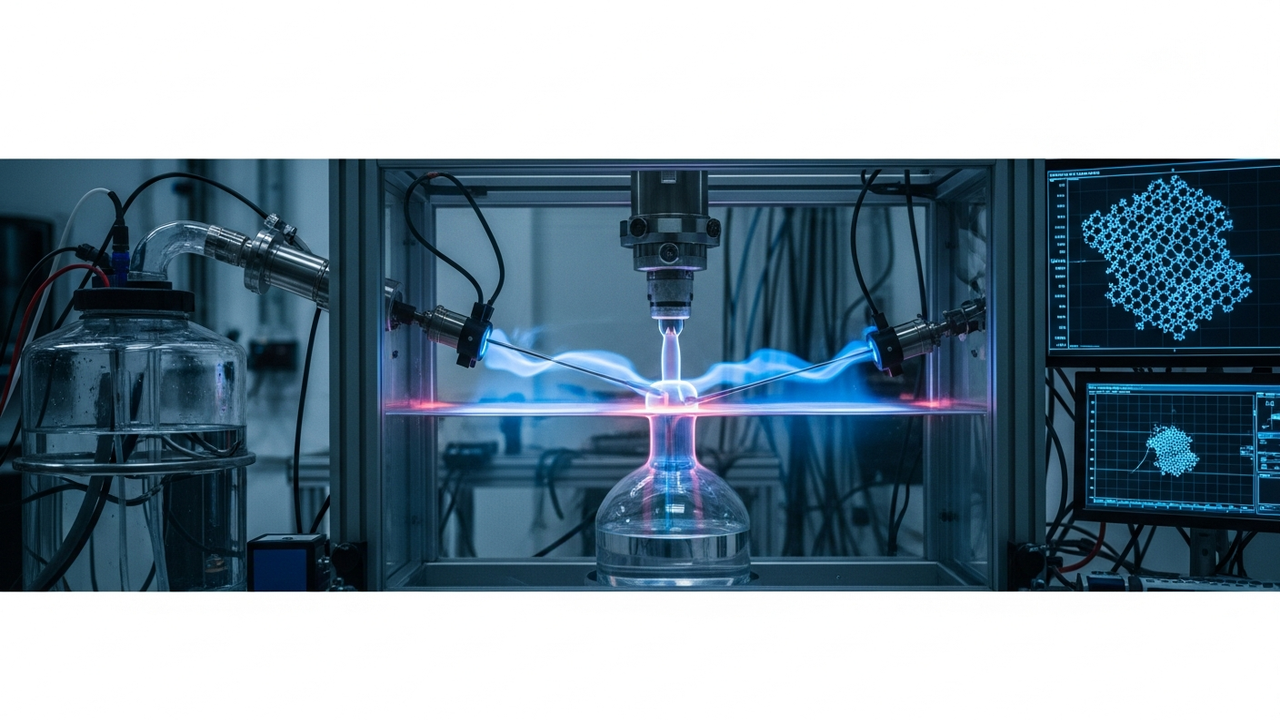
A research team at Texas A&M University has serendipitously discovered and developed a novel, highly efficient method for producing high-quality graphene oxide (GO). This breakthrough relies on the unexpected combination of methane gas and a non-thermal plasma-water interface. This groundbreaking discovery promises to substantially reduce both the production cost and the environmental footprint of graphene oxide, significantly broadening its industrial applicability across various sectors.
Technology and Applications
The innovative production method leverages methane, the primary constituent of natural gas, as its principal carbon source. The key reaction occurs at the interface between a non-thermal plasma and water, operating efficiently under atmospheric pressure. This process boasts high energy efficiency and elegantly bypasses the need for the expensive and complex procedures characteristic of conventional manufacturing. A critical advantage of this technique is its ability to yield high-purity, single-layer graphene oxide. Furthermore, the process simultaneously generates hydrogen, a valuable clean fuel, as a byproduct, thereby significantly enhancing its overall sustainability. In stark contrast, traditional graphene oxide production techniques, such as the Hummers method, demand substantial quantities of strong acids and oxidizers, resulting in considerable waste effluent and high energy expenditures. This new Texas A&M technology offers a compelling solution to these challenges, poised to dramatically improve the cost-competitiveness of graphene oxide across a wide array of applications, including advanced electronic devices, sophisticated sensors, high-performance composite materials, and cutting-edge energy storage systems.
Strategic Outlook and Implications
This newly developed manufacturing method marks a crucial stride toward achieving truly scalable graphene oxide production. The research team is actively engaged in further optimizing this technology, with a clear objective of industrial-scale implementation. A specific focus involves enhancing hydrogen generation efficiency, which holds the potential to forge a more sustainable ecosystem where graphene oxide production is synergistically integrated with clean energy generation. Ultimately, this technology is positioned to significantly accelerate the development of novel graphene-based products and is expected to play a pivotal role in driving the widespread adoption of next-generation, high-performance materials across industries.
Get our weekly technology intelligence — free
Receive an infographic that lets you judge at a glance whether each field’s analysis report is worth reading.
Subscribe Free — Weekly Tech Intelligence
By subscribing, you’ll receive Troy-Technical’s weekly technology intelligence newsletter.
- Your email and selected fields are used only to deliver the newsletter.
- We never share your information with third parties.
- You can unsubscribe anytime via the link in each email.
See our Privacy Policy for details.
Takes about a minute · Unsubscribe anytime





Comments