Key Findings
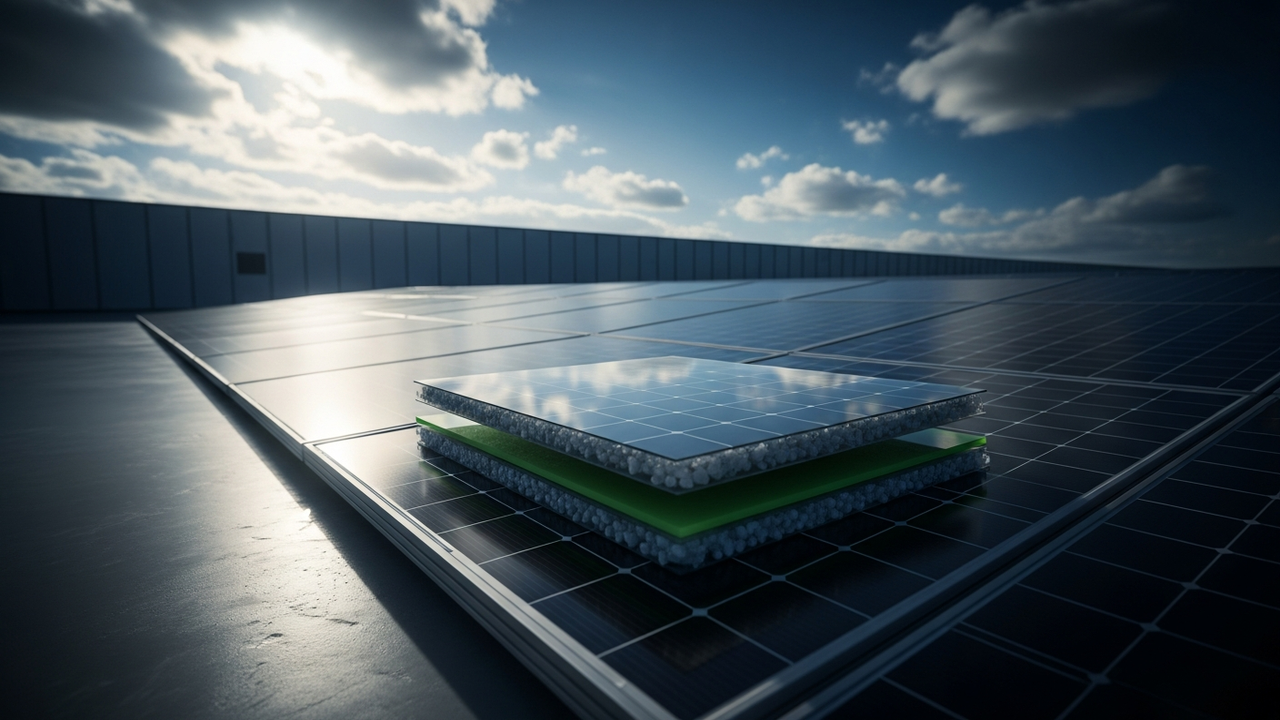
Perovskite-silicon tandem solar cells are projected to achieve efficiencies exceeding 30% within the next few years, a significant leap beyond the 22-24% efficiency typical of current premium silicon solar panels. In laboratory settings, these tandem cells have already demonstrated efficiencies above 34%, with ambitious long-term goals set for over 40% power conversion.
Technical Details
This tandem architecture ingeniously combines the strengths of both silicon and perovskite technologies. Silicon solar cells excel at absorbing longer-wavelength light, while perovskite cells are highly efficient at capturing shorter-wavelength light. By layering these two materials, the tandem cell can harness a much broader spectrum of solar energy, achieving higher overall efficiencies than either material could individually. A key advantage is their enhanced performance under low-light conditions, such as cloudy days or during dawn and dusk. Unlike conventional silicon panels that see a sharp drop in output, the perovskite layer maintains effectiveness, leading to more consistent energy generation throughout the day and year, thus optimizing total energy yield.
Background & Context
Solar energy is a cornerstone of clean energy initiatives, but further widespread adoption hinges on continuous improvements in efficiency and cost reduction. Perovskite solar cells have been hailed as a ‘miracle material’ due to their high efficiency and low manufacturing potential, though stability and durability have been ongoing challenges. The tandem configuration with silicon provides a practical pathway to achieve ultra-high efficiencies while leveraging silicon’s established reliability, thereby addressing some of perovskite’s inherent weaknesses.
Strategic Significance & Outlook
Efficiencies over 30% could revolutionize solar applications from residential rooftops to large-scale utility projects. This higher energy density per unit area will be particularly beneficial for space-constrained installations like urban rooftops and Building-Integrated Photovoltaics (BIPV), where maximizing power generation from limited surface area is crucial. Furthermore, the improved low-light performance will enable solar power generation in regions and times previously deemed inefficient, significantly expanding the addressable market for renewable energy. The next critical milestones for commercialization involve ensuring long-term reliability and establishing viable large-scale manufacturing techniques.
Get our weekly technology intelligence — free
Receive an infographic that lets you judge at a glance whether each field’s analysis report is worth reading.
Subscribe Free — Weekly Tech Intelligence
By subscribing, you’ll receive Troy-Technical’s weekly technology intelligence newsletter.
- Your email and selected fields are used only to deliver the newsletter.
- We never share your information with third parties.
- You can unsubscribe anytime via the link in each email.
See our Privacy Policy for details.
Takes about a minute · Unsubscribe anytime





Comments