Key Findings
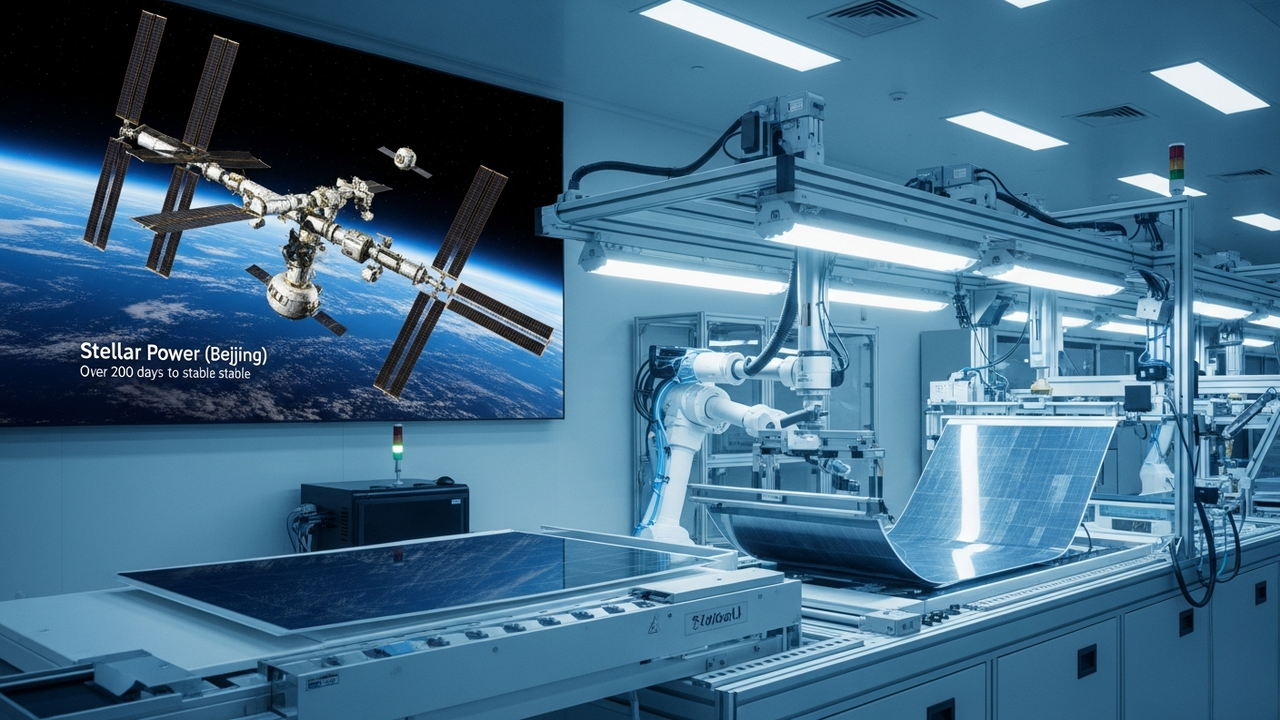
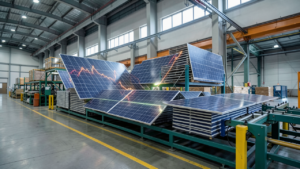
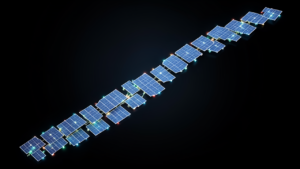
Stellar Power (Beijing) Technology Co. has broken ground on what it claims to be the ‘world’s first perovskite solar cell pilot line for space applications’ in Beijing. This groundbreaking facility, projected to be operational by August 2026, is dedicated to manufacturing ultra-lightweight, flexible, and low-cost perovskite solar cells engineered to withstand the extreme conditions of space. Crucially, samples produced by Stellar Power have already demonstrated stable operation for over 200 days on China’s Tiangong Space Station, marking a significant technological milestone towards practical space utilization.
Technical Details
Space presents an incomparably harsh environment compared to Earth. Solar cells deployed in space demand exceptionally high durability and reliability to endure extreme temperature fluctuations, high levels of radiation, microgravity, and atomic oxygen degradation. The perovskite solar cells developed by Stellar Power are specifically designed to address these challenges, with expected characteristics including:
- Ultra-lightweight: Significantly reduces launch costs, enabling heavier payloads.
- Flexibility: Allows for deployable structures and adaptation to curved surfaces, enhancing spacecraft design freedom.
- High Efficiency: Harnesses abundant solar radiation in space to deliver maximum power from limited surface areas.
- Radiation Hardness: Enhanced resistance to radiation degradation prevalent in the space environment.
The proven stable operation for over 200 days on the Tiangong Space Station validates that these design objectives are being met in a real-world space environment. This technology holds the potential to substantially reduce costs compared to traditional space solar cells (e.g., gallium arsenide) while providing comparable or superior performance and reliability.
Background & Context
Power supply for satellites and space stations has always been a critical challenge in the space industry. Conventional space solar cells are expensive and heavy, imposing limitations on launch costs and spacecraft design. Perovskite solar cells have long been recognized for their potential as space power sources due to their excellent cost-effectiveness and ease of fabricating thin-film, flexible devices. Stellar Power’s initiative to build this pilot line is the first step towards industrializing this potential, signaling China’s proactive push for innovation in space technology.
Strategic Significance & Outlook
The operation of this space-grade perovskite solar cell pilot line is poised to significantly impact not only China’s space industry but also global space technology development. Ultra-lightweight, flexible, and low-cost solar cells could establish new power supply standards for future space missions, including small satellite constellations, deep-space probes, and lunar bases. For commercialization, key factors will include optimizing production efficiency at the pilot line, conducting further long-term reliability tests, and forging partnerships with international space agencies and companies. Stellar Power’s success could fundamentally alter the cost structure of space exploration, potentially enabling more frequent and cost-effective space missions.
Source: https://www.youtube.com/watch?v=vbsoUNSZWHI
Get our weekly technology intelligence — free
Receive an infographic that lets you judge at a glance whether each field’s analysis report is worth reading.
Subscribe Free — Weekly Tech Intelligence
By subscribing, you’ll receive Troy-Technical’s weekly technology intelligence newsletter.
- Your email and selected fields are used only to deliver the newsletter.
- We never share your information with third parties.
- You can unsubscribe anytime via the link in each email.
See our Privacy Policy for details.
Takes about a minute · Unsubscribe anytime

Comments