Key Findings
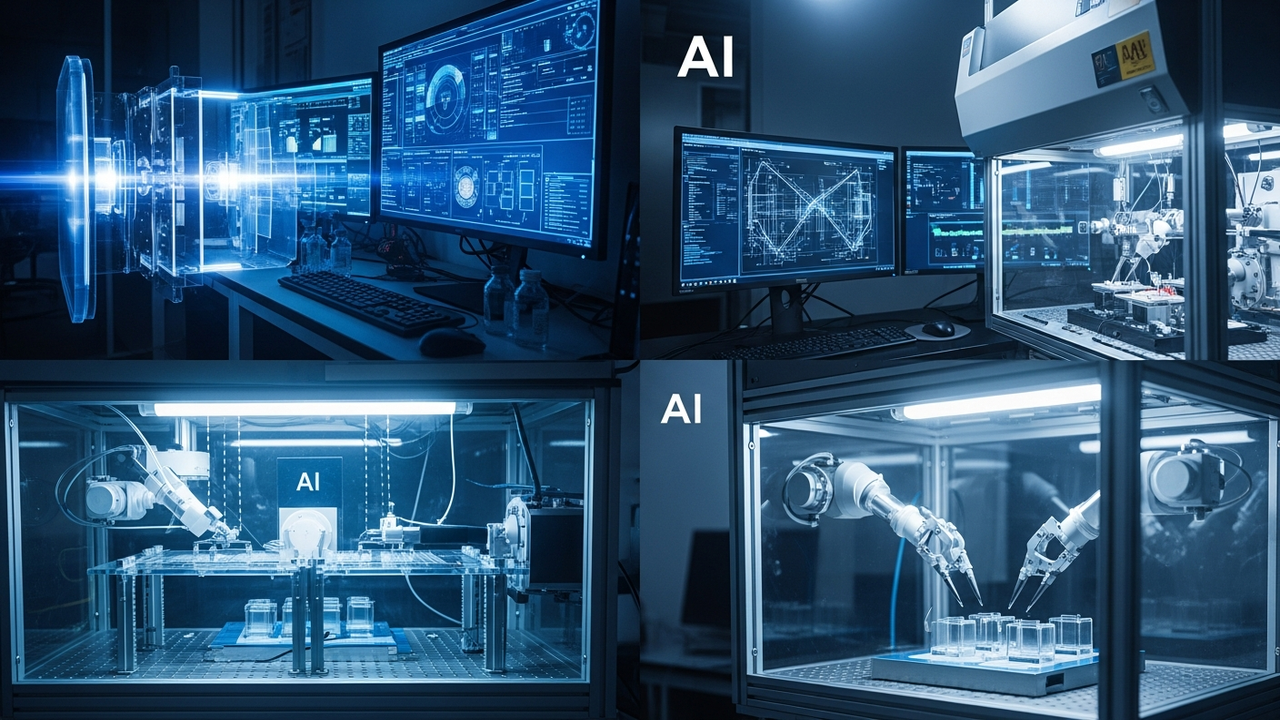
A collaborative research team from Johns Hopkins University and Toyota Research Institute (TRI) has established an innovative methodology that leverages artificial intelligence (AI) and high-throughput automated experimental systems to accelerate the development of electrolytes for next-generation fluoride-ion batteries (FIBs). This integrated approach dramatically shortens the decades-long material discovery process, enabling the rapid identification and optimization of novel electrolyte candidates that promise enhanced safety and energy density.
Technical / Clinical Details
At the core of their strategy, the research team employs AI algorithms to efficiently explore the vast chemical composition space for optimal electrolyte materials for fluoride-ion batteries. The AI learns from extensive existing materials databases and computational chemistry models to predict material structures likely to meet specific performance criteria, such as ion conductivity and electrochemical stability. Based on these AI predictions, an automated experimental platform synthesizes and rapidly evaluates a large number of candidate materials. The resulting experimental data is then fed back into the AI model, creating a ‘closed-loop’ process that continuously refines the predictive model and informs subsequent optimization cycles. This system is particularly effective for discovering novel solid-state or polymer electrolytes, enabling the identification of promising candidates with significantly fewer resources compared to traditional trial-and-error research.
Background & Context
While current lithium-ion batteries have been instrumental in the proliferation of smartphones and electric vehicles, their inherent limits in energy density and safety are becoming apparent. Fluoride-ion batteries are garnering significant attention as a next-generation alternative, potentially offering up to seven times the energy density of lithium-ion batteries and leveraging abundant, low-cost fluorine resources. However, the discovery of stable electrolytes suitable for fluoride-ion migration has been a long-standing challenge. The collaboration between Johns Hopkins University and TRI aims to overcome this bottleneck using the power of AI and automated experimentation, addressing one of the most significant barriers to the practical implementation of fluoride-ion batteries.
Strategic Significance & Outlook
This AI and automated experimentation platform has the potential to revolutionize R&D processes not only in fluoride-ion battery electrolyte development but across diverse fields of materials science. The research team plans to further enhance the predictive capabilities of their AI models and improve the throughput of their experimental platforms to accelerate discovery even more. In the future, this approach is expected to be applied to the discovery of next-generation solid-state electrolytes, ultra-efficient catalysts, and environmentally friendly new materials, contributing significantly to the realization of a clean energy society. This collaboration serves as a prime example of how academic institutions and industry can partner to apply cutting-edge AI and automation technologies to unlock unexplored frontiers in materials science.
Get our weekly technology intelligence — free
Receive an infographic that lets you judge at a glance whether each field’s analysis report is worth reading.
Subscribe Free — Weekly Tech Intelligence
By subscribing, you’ll receive Troy-Technical’s weekly technology intelligence newsletter.
- Your email and selected fields are used only to deliver the newsletter.
- We never share your information with third parties.
- You can unsubscribe anytime via the link in each email.
See our Privacy Policy for details.
Takes about a minute · Unsubscribe anytime





Comments