Key Findings
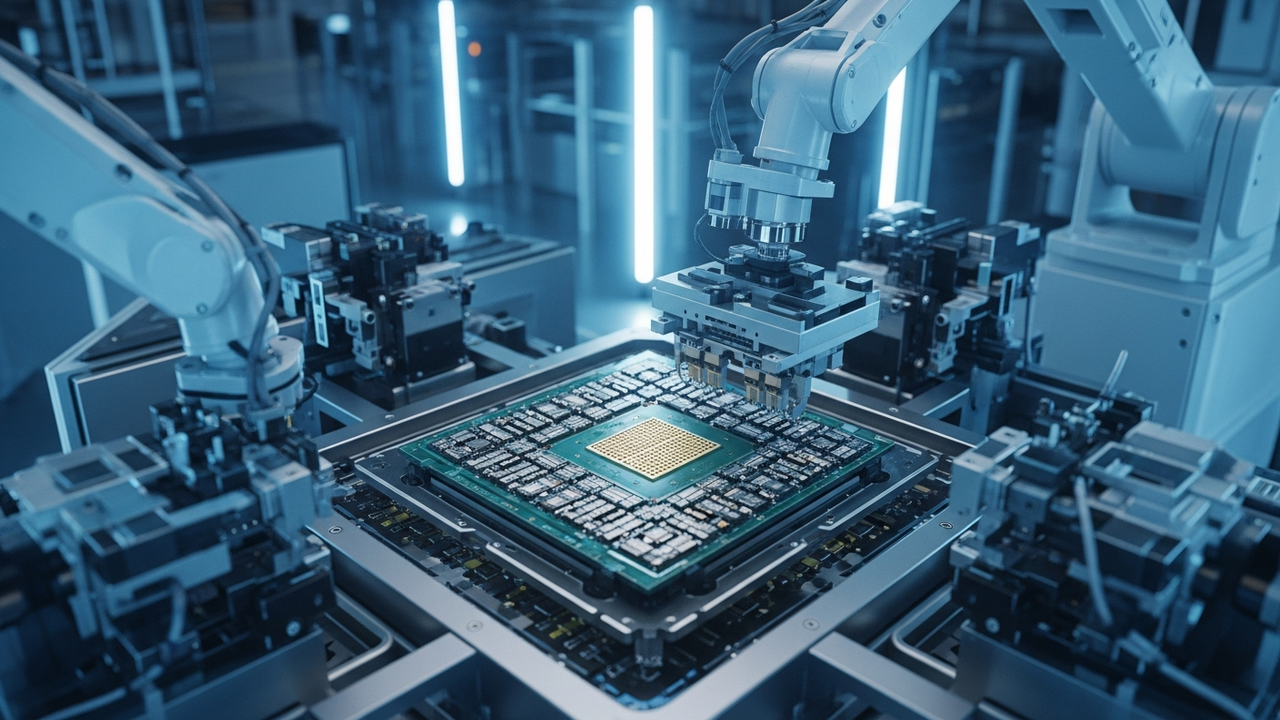
Nvidia has initiated high-volume production of its Blackwell AI accelerators at TSMC, a critical step that will bolster its leadership in the rapidly expanding AI infrastructure market. This strategic ramp-up underscores Nvidia’s commitment to meeting the escalating demand for high-performance computing essential for advanced AI workloads. The Blackwell chips are manufactured using TSMC’s cutting-edge 4NP process and innovative CoWoS-L packaging technology, promising significant performance gains for AI computation.
Technical / Clinical Details
The Blackwell AI accelerators utilize TSMC’s 4NP process node, optimized for peak performance in AI-driven computations. A cornerstone of its advanced design is CoWoS-L (Chip-on-Wafer-on-Substrate with Localized backside power delivery network) packaging, a sophisticated heterogeneous integration technique. CoWoS-L enables the seamless integration of multiple large compute dies and HBM3E memory stacks on a silicon interposer, facilitating ultra-high bandwidth and superior power efficiency compared to traditional packaging. This architecture is vital for handling the immense data throughput required by complex AI models in training and inference. However, the unprecedented demand for AI chips has created bottlenecks, particularly in HBM3E memory and high-performance substrate materials, which are anticipated to limit initial Blackwell shipment volumes.
Background & Context
The explosive growth of AI data centers globally is pushing the semiconductor industry to new manufacturing frontiers, with HBM and advanced packaging technologies like CoWoS emerging as critical supply chain choke points. Nvidia, supported by robust demand from hyperscale cloud providers such as OpenAI, Google, and Microsoft, maintains a commanding lead in the AI training sector. TSMC, as the leading CoWoS provider, is aggressively expanding its capacity to meet this surge. The commencement of Blackwell production highlights the ongoing race in AI technology and the pivotal role of advanced hardware in driving its evolution. The current supply chain challenges, including material shortages and equipment constraints, emphasize the interconnectedness and fragility of this high-stakes ecosystem.
Strategic Significance & Outlook
The volume production of Blackwell chips marks a significant milestone for Nvidia and the broader AI industry. While it promises to unlock new levels of AI performance, it also exposes the persistent vulnerabilities within the semiconductor supply chain. Nvidia forecasts that demand will outstrip supply through Q4 2026, indicating the immense appetite for its AI accelerators and placing considerable pressure on suppliers to scale up. HBM manufacturers (SK hynix, Samsung, Micron) and advanced substrate producers are investing billions to expand capacity, intensifying competition and innovation in these crucial segments. Furthermore, the global push for regional semiconductor manufacturing capabilities, particularly in the U.S. and Asia, suggests a future landscape with more diversified and potentially resilient supply chains for advanced chips.
Source: https://www.setin.asia/nvidia-blackwell-production-ramp-tsmc
Get our weekly technology intelligence — free
Receive an infographic that lets you judge at a glance whether each field’s analysis report is worth reading.
Subscribe Free — Weekly Tech Intelligence
By subscribing, you’ll receive Troy-Technical’s weekly technology intelligence newsletter.
- Your email and selected fields are used only to deliver the newsletter.
- We never share your information with third parties.
- You can unsubscribe anytime via the link in each email.
See our Privacy Policy for details.
Takes about a minute · Unsubscribe anytime






Comments