Key Findings
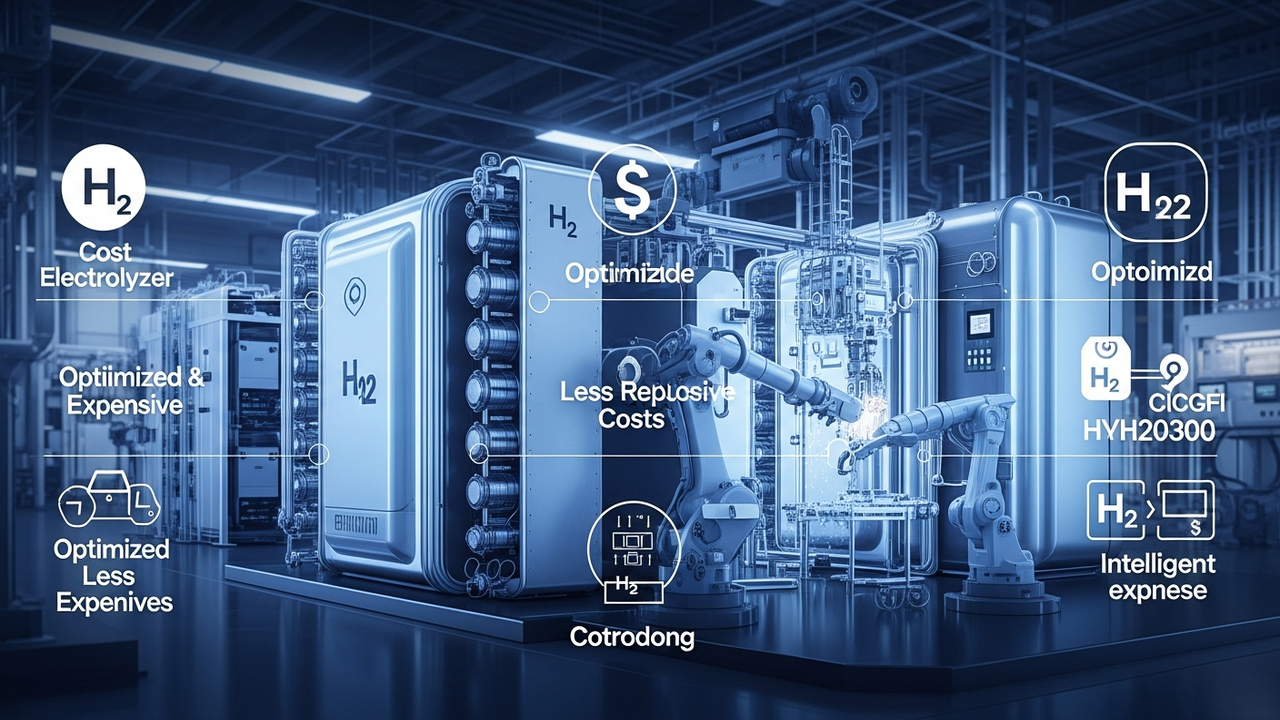
The reduction in hydrogen electrolyzer costs is positioned as a critical factor in advancing four contemporary strategic imperatives: achieving global climate goals, bolstering national energy independence, greening hard-to-abate sectors like heavy industry, and delivering efficient long-term storage solutions for renewable energy. According to Accio’s analysis, a sample Levelized Cost of Hydrogen (LCOH) calculation for a 1MW alkaline electrolyzer distinctly illustrates that Capital Expenditure (CAPEX) and Operational Costs, particularly for periodic stack replacement, are the primary determinants of the final hydrogen production cost, confirming current market forecasts in the $6-8/kg range.
Technical and Economic Details
LCOH represents the total lifecycle cost of an electrolyzer—including capital costs, operational and maintenance expenses, and energy input costs—divided by the total volume of hydrogen produced. It is the most crucial metric for evaluating the economic viability of hydrogen production technologies. Alkaline electrolyzers, favored for their mature technology and relatively lower CAPEX, require improvements in stack longevity and power efficiency to drive LCOH reductions. Specific cost components include the purchase price of the electrolyzer unit, installation costs, electricity tariffs, water treatment expenses, routine maintenance, and the costs associated with replacing electrolyzer stacks every few years. Critically, electricity costs constitute a significant portion of the LCOH, making affordable renewable energy supply a major factor in driving down the overall cost. The current LCOH forecast of $6-8/kg serves as a benchmark for hydrogen to become competitive with existing fossil fuels and gain widespread adoption across various industries.
Background & Context
Nations worldwide are accelerating greenhouse gas emission reductions to meet Paris Agreement targets. Within this context, hydrogen is anticipated to be a versatile energy carrier, driving decarbonization across diverse sectors such as transportation, power generation, industrial processes, and building heating. The concept of ‘power-to-gas,’ which involves storing surplus electricity from intermittent renewable sources like wind and solar as hydrogen for later use, is vital for stabilizing energy systems. Reducing electrolyzer costs has been one of the key bottlenecks for scaling the hydrogen economy and making it economically feasible. Due to technological innovation and economies of scale, electrolyzer manufacturing costs have steadily decreased, with government subsidies and policy support also contributing to LCOH reduction.
Strategic Significance & Outlook
To further reduce LCOH and establish hydrogen as a competitive energy source, continued advancements in electrolyzer technology, economies of scale through automated manufacturing processes, and the stable supply of inexpensive renewable electricity are essential. Particular attention is being paid to improving the efficiency and reducing the cost of next-generation technologies like Solid Oxide Electrolyzer Cells (SOEC) and Proton Exchange Membrane (PEM) electrolyzers. Should LCOH reach the target of below $2/kg, hydrogen could become a primary energy source replacing fossil fuels across a broad range of industries, fundamentally transforming the global energy landscape. These cost reduction trends will continue to be a critical focus for investment decisions in hydrogen-related technologies and for shaping national energy policies.
Source: https://www.accio.com/plp/electrolyser-cost-per-mw
Get our weekly technology intelligence — free
Receive an infographic that lets you judge at a glance whether each field’s analysis report is worth reading.
Subscribe Free — Weekly Tech Intelligence
By subscribing, you’ll receive Troy-Technical’s weekly technology intelligence newsletter.
- Your email and selected fields are used only to deliver the newsletter.
- We never share your information with third parties.
- You can unsubscribe anytime via the link in each email.
See our Privacy Policy for details.
Takes about a minute · Unsubscribe anytime




Comments