Key Findings
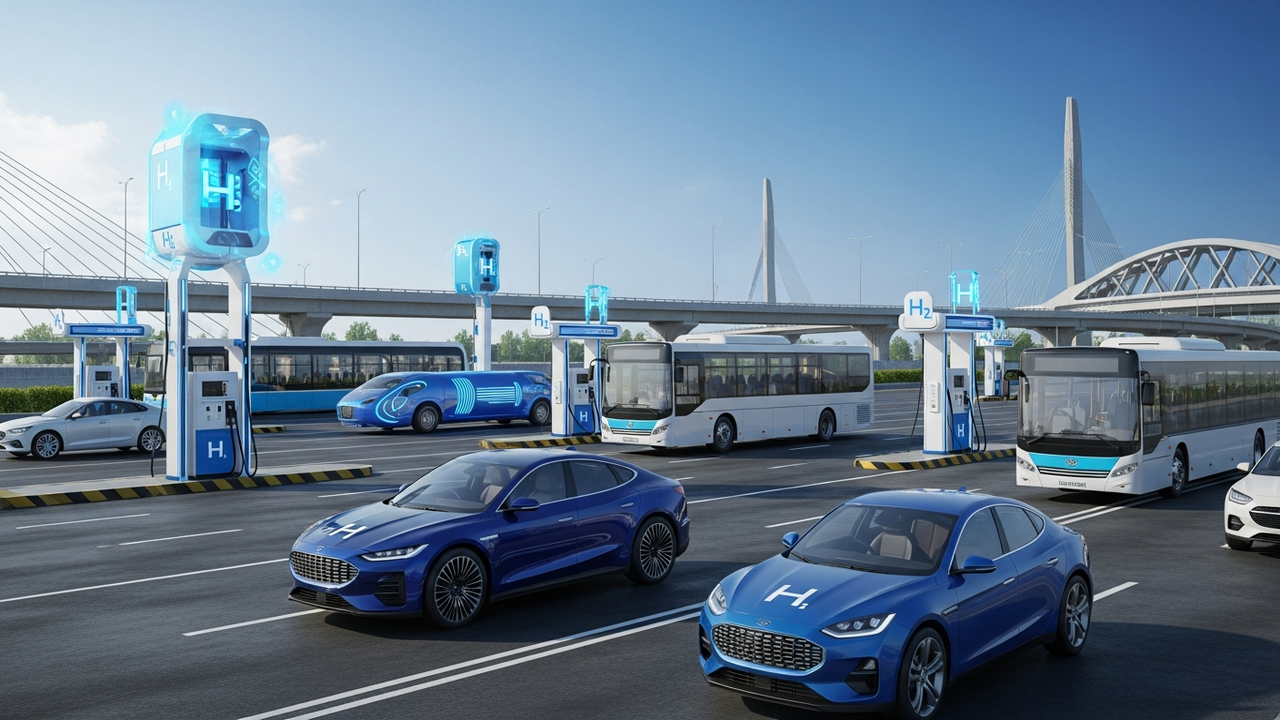
Indian Minister Gadkari has announced that the country has commenced trials of hydrogen-fueled vehicles across 10 distinct routes nationwide. This announcement, made within a broader report on Asian market trends, signals India’s clear intent to accelerate its transition towards clean mobility. This large-scale trial operation will be a crucial step in evaluating whether hydrogen fuel can become a viable option within India’s future transportation ecosystem.
Technology and Implementation Details
The hydrogen-fueled vehicles undergoing trials are presumed to be equipped with either fuel cell technology or hydrogen internal combustion engines. These vehicles possess zero-emission characteristics, expelling only water vapor as exhaust, unlike conventional automobiles that run on fossil fuels, which emit carbon dioxide and harmful pollutants. The Indian government plans to use these trials to assess the performance, reliability, and feasibility of fuel supply infrastructure for hydrogen-fueled vehicles under diverse geographical and operational conditions. The extensive trial scope across 10 routes suggests an aim for comprehensive data collection to inform a nationwide rollout of hydrogen mobility.
Background & Context
India faces the dual challenges of air pollution and energy security amidst rapid economic growth and urbanization. The transportation sector, in particular, is a major target for emissions reduction. Globally, hydrogen is gaining attention as a promising alternative to battery electric vehicles in hard-to-electrify sectors like heavy-duty trucks and long-distance buses. The Indian government has demonstrated a proactive stance towards developing a hydrogen economy, including launching a ‘National Hydrogen Mission,’ to strengthen energy self-sufficiency and reduce import dependence. These trials are part of this national strategy, representing concrete action to position India as a key adopter of green hydrogen technology.
Strategic Significance & Outlook
The hydrogen-fueled vehicle trials across 10 routes will be a significant milestone for decarbonizing India’s transportation sector. The trial results are expected to profoundly influence future policy decisions, plans for hydrogen fuel supply infrastructure, and strategies for manufacturing and popularizing hydrogen-fueled vehicles domestically. If successful, India could establish a large-scale hydrogen mobility market, becoming a significant player in the global hydrogen economy. This would bring diverse benefits, including improved air quality, reduced greenhouse gas emissions, and decreased reliance on fossil fuel imports. Investors and technology developers will undoubtedly watch India’s endeavors with keen interest.
Get our weekly technology intelligence — free
Receive an infographic that lets you judge at a glance whether each field’s analysis report is worth reading.
Subscribe Free — Weekly Tech Intelligence
By subscribing, you’ll receive Troy-Technical’s weekly technology intelligence newsletter.
- Your email and selected fields are used only to deliver the newsletter.
- We never share your information with third parties.
- You can unsubscribe anytime via the link in each email.
See our Privacy Policy for details.
Takes about a minute · Unsubscribe anytime






Comments