Key Findings
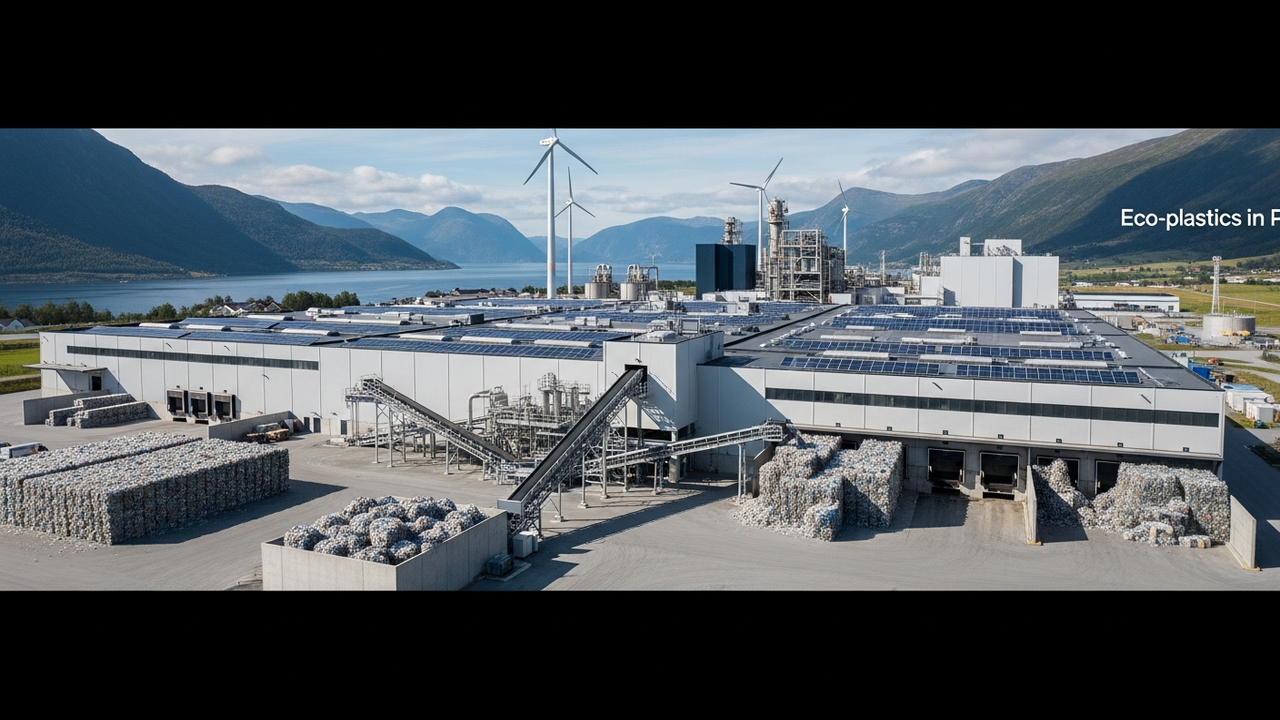
Ineos and Norwegian recycling company Recuro have announced a partnership to develop “Full Circle,” a chemical recycling facility at Ineos’ polymer site in Bamble, Norway. This ambitious project aims to process up to 33,000 metric tons of end-of-life plastic waste annually, utilizing pyrolysis technology. Crucially, the plant will be powered by renewable energy and is designed to recover oil and gas fractions, which will then be used to produce virgin-quality recycled polyethylene (PE) specifically for demanding applications, including food and medical packaging.
Technical Details
The “Full Circle” facility will employ advanced pyrolysis technology, a process that thermally decomposes plastic waste in the absence of oxygen to produce pyrolysis oil and gas. These recovered hydrocarbon streams will then serve as feedstocks for Ineos’ existing polymer production processes, effectively creating new, virgin-quality PE polymers that are indistinguishable from those made from fossil resources. The integration of renewable energy sources into the plant’s operations will significantly reduce its carbon footprint, establishing a more sustainable and environmentally responsible production cycle. This closed-loop system is vital for enabling the use of recycled content in highly regulated sectors where material purity and safety are paramount.
Background & Context
The intensifying global focus on plastic waste reduction and the push for a circular economy, particularly driven by stricter regulations like the EU’s packaging waste directives, are accelerating the adoption of chemical recycling technologies. Mechanical recycling, while valuable, often faces limitations when dealing with mixed, contaminated, or multilayer plastic waste, leading to a degradation in material quality. Chemical recycling offers a solution to these challenges by breaking plastics down to their molecular building blocks, allowing for the creation of high-purity recycled polymers. The collaboration between a major chemical producer like Ineos and a recycling specialist like Recuro underscores the industry’s commitment to scaling these advanced solutions.
Strategic Significance & Outlook
The establishment of the “Full Circle” facility represents a significant advancement in Norway and Europe’s efforts towards a circular plastics economy. Its substantial processing capacity of 33,000 metric tons annually will divert a considerable volume of plastic waste from incineration or landfill, reintroducing it into the value chain as high-quality raw material. This project will serve as a critical model for renewable-powered chemical recycling, demonstrating how industrial-scale operations can contribute to both waste reduction and reduced reliance on fossil resources. Its success is expected to catalyze further investments and technological innovations across the industry, driving progress towards a more sustainable future for plastics manufacturing.
Get our weekly technology intelligence — free
Receive an infographic that lets you judge at a glance whether each field’s analysis report is worth reading.
Subscribe Free — Weekly Tech Intelligence
By subscribing, you’ll receive Troy-Technical’s weekly technology intelligence newsletter.
- Your email and selected fields are used only to deliver the newsletter.
- We never share your information with third parties.
- You can unsubscribe anytime via the link in each email.
See our Privacy Policy for details.
Takes about a minute · Unsubscribe anytime







Comments