Key Findings
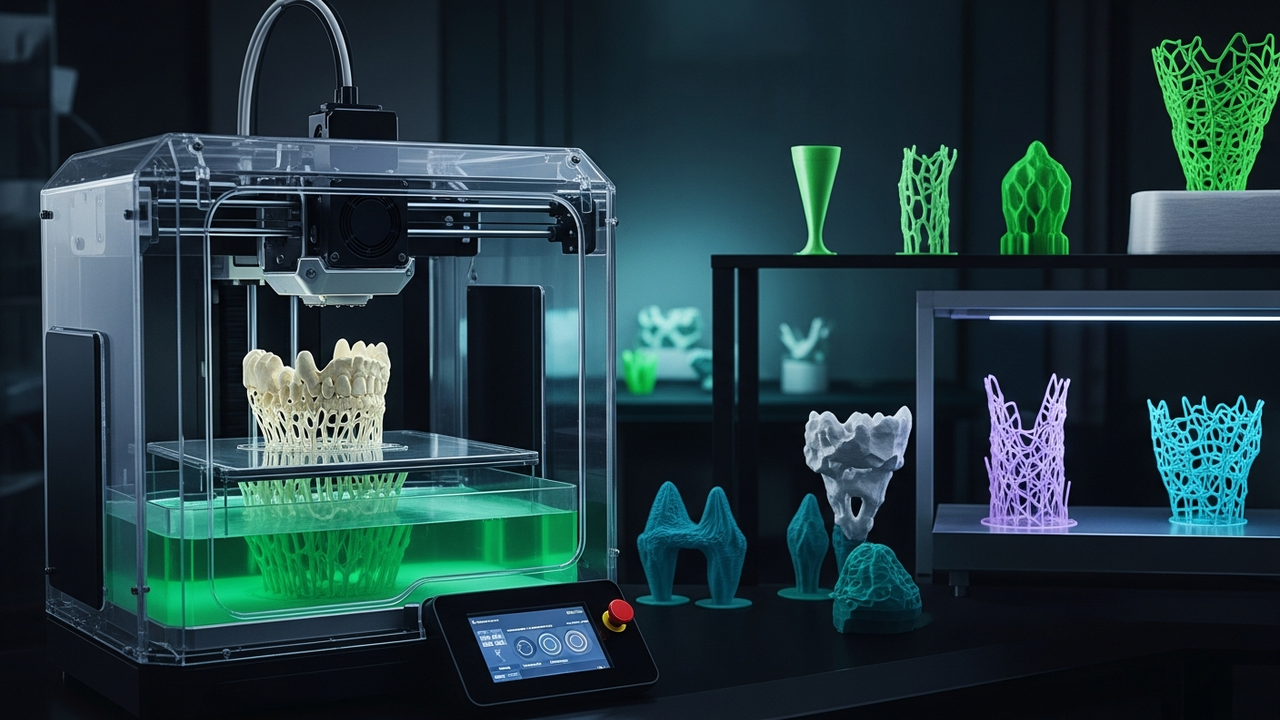
The rapidly expanding 3D printing market is witnessing a significant surge in demand for high-performance and sustainable raw materials, with a particular focus on “green TiO₂.” This advanced form of titanium dioxide is being integrated into biocompatible photopolymer resins, especially for medical and dental applications such as crowns and surgical guides, where it notably enhances imaging contrast and ensures robust UV stability. Furthermore, nano-scale green TiO₂ is specifically engineered for high-resolution Digital Light Processing (DLP) printers, providing superior dispersion and enhanced photocatalytic activity, thereby enabling next-generation functional printing capabilities.
Technical Details
“Green TiO₂” refers to titanium dioxide produced through environmentally friendly processes, maintaining or improving upon the properties of conventional TiO₂. When incorporated into biocompatible photopolymer resins, this material significantly improves the visibility of 3D printed medical and dental devices in imaging modalities like X-rays and CT scans, a crucial feature for diagnostic and post-operative assessment. Its UV stability protects printed parts from degradation when exposed to ultraviolet light, ensuring long-term integrity. For high-resolution DLP printing, nano-scale green TiO₂ is critical. Its optimized particle size and surface chemistry ensure excellent dispersion within the photopolymer resin, leading to homogeneous prints with intricate details. The enhanced photocatalytic activity of these nanoparticles can also impart additional functionalities, such as antimicrobial properties or self-cleaning capabilities, to the final 3D printed products.
Background & Context
3D printing technology continues to revolutionize diverse sectors, from personalized medicine to complex industrial manufacturing. As its applications expand, there is a growing imperative for materials that offer not only high performance and biocompatibility but also sustainability. Traditional materials often presented limitations in areas such as radiographic visibility for medical devices or long-term stability under UV exposure. The advent of innovative raw materials like “green TiO₂” addresses these challenges, acting as a key enabler for broadening the scope and sophistication of 3D printing applications, particularly in regulated industries where material safety and performance are paramount.
Strategic Significance & Outlook
The integration of green TiO₂ is set to accelerate the adoption of 3D printing in medical and dental fields, improving diagnostic accuracy and enhancing the longevity of printed devices, which will directly elevate the quality of patient care. Beyond medical applications, the functional enhancements provided by nano-scale TiO₂ will enable the 3D printing of more complex and functional micro-devices and sensors, stimulating innovation in new industrial sectors. In the overarching trend towards sustainability, green TiO₂ is poised to become a critical component in shaping the future of 3D printing materials, increasing its presence as a preferred choice for advanced and environmentally conscious manufacturing worldwide.
Source: https://www.xmtio2.com/green-tio2-for-3d-printing/
Get our weekly technology intelligence — free
Receive an infographic that lets you judge at a glance whether each field’s analysis report is worth reading.
Subscribe Free — Weekly Tech Intelligence
By subscribing, you’ll receive Troy-Technical’s weekly technology intelligence newsletter.
- Your email and selected fields are used only to deliver the newsletter.
- We never share your information with third parties.
- You can unsubscribe anytime via the link in each email.
See our Privacy Policy for details.
Takes about a minute · Unsubscribe anytime








Comments