Materials Informatics– category –
-

Northeastern University Develops AI Scientist for Autonomous X-ray Experiments, Advancing Self-Driving Labs
Northeastern Global News USA Overview Northeastern University's Quantum Materials and Sensing Institute (QMSI) has developed an "AI Scientist" capable of autonomously conducting X-ray experiments to study quantum materials, marking a sig... -
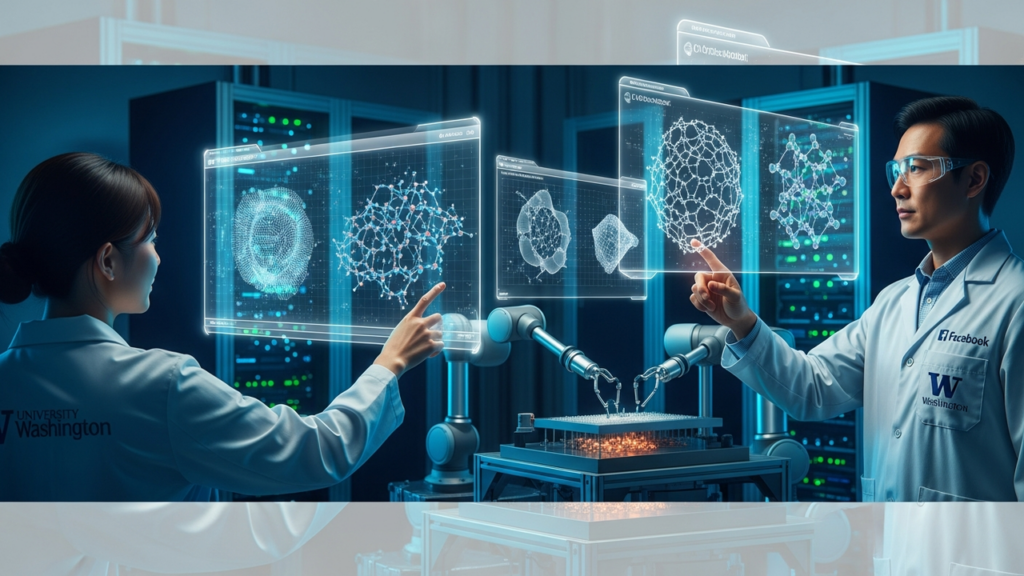
UW & Facebook AI Reverse Design Accelerates Flexible, Conductive Material Discovery
University of Washington / Facebook USA Overview Researchers at the University of Washington, in collaboration with Facebook, have introduced an AI-driven inverse design framework to significantly accelerate the discovery of flexible and... -
Argonne Lab’s Multi-Agent AI System Accelerates New Material Discovery from Months to Days
Argonne National Laboratory USA Overview Argonne National Laboratory researchers have engineered an AI-driven system leveraging multiple AI agents to automate atomistic simulations, slashing the discovery timeline for new materials from ... -
Materials Informatics Weekly Report August 9, 2026
▼ ▼ ▼ If the infographic makes you want to read the full report, please click the download button below. ▼ ▼ ▼ 📄 Weekly Report August 09, 2026 (PDF) — Download Weekly Report August 09, 2026 (PDF) — DownloadDownload 🎙 Podcast August 09, ... -
IBM and Qedma Achieve Quantum Advantage in Materials Simulation on IBM Quantum Heron Processor, Enabling 74-Qubit Dynamics
Investing.com USA Overview IBM and Qedma Quantum Computing have demonstrated quantum advantage in simulating quantum materials using IBM’s Quantum Heron processor and Qedma’s error mitigation software. This breakthrough enables the study... -
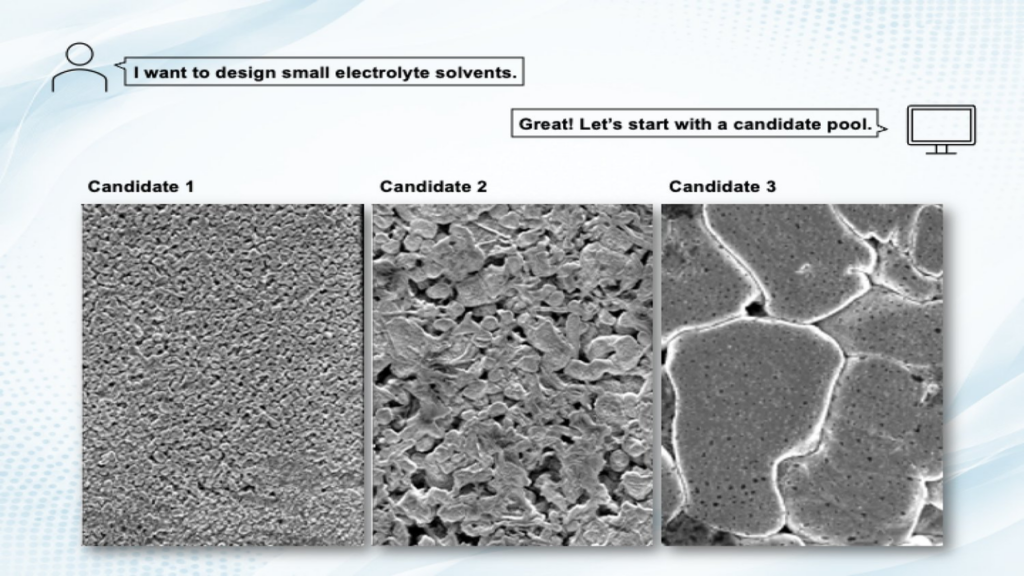
MIT Accelerates Sodium Metal Battery Electrolyte Design with Machine Learning: Key Role of Solvent Size and Molecular Similarity
MIT News USA Overview MIT researchers introduced a new approach to electrolyte design by developing a machine learning-driven pipeline enabling the generation, selection, and experimental validation of solvent candidates. This approach d... -
Discovery Alert Announces AI Discovery of Porous Oxide Materials for Next-Generation Energy Storage
Discovery Alert Australia Overview AI has discovered porous oxide materials for next-generation energy storage, emerging as a critical solution to electrode chemistry challenges. Researchers at NJIT and RPI identified five previously unr... -
Scilight Press Publishes Review on AI-Driven Rational Design of Solid-State Electrolytes: Paving the Way for Next-Gen Batteries
Scilight Press Unknown Overview Scilight Press published a review paper on AI's role in advancing the rational design of solid-state electrolytes (SSEs) for high energy density and safety in next-generation rechargeable batteries. The pa... -
CataCon Introduces Contrastive Graph Representation Learning for Catalyst Prediction, Accelerating Optimal Catalyst Identification via AI
PMC USA Overview This research introduces 'CataCon,' a novel contrastive graph representation learning framework designed to predict optimal catalysts for chemical reactions. CataCon generates rich structural embeddings for all reaction ... -
IIT KANPUR Elucidates Material Structure-Property Relationships with Computational Materials Science: Leveraging DFT, MD/MC, and PFM
MSE | IIT KANPUR India Overview IIT KANPUR emphasizes computational materials science as a powerful toolkit for solving material-related problems, citing Density Functional Theory (DFT) at the electronic level, Molecular Dynamics (MD) an...