Materials Informatics– category –
-

ProcGNN explained: PyTorch physics-informed GNN for simulation
ProcGNN South Korea Overview A new paper, "ProcGNN," introduces a PyTorch-based physics-informed graph neural network for stream-level chemical process surrogate modeling. ProcGNN uses shared unit and stream representations to predict te... -
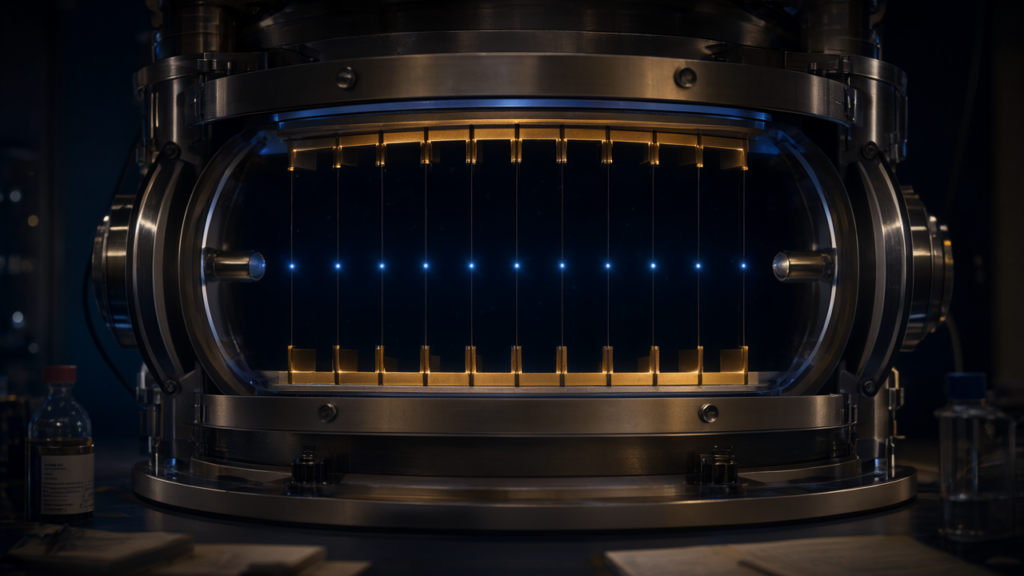
Duke University: Quantum computer matter simulation explained
ScienceDaily USA Overview Scientists at Duke University and an international team used a 13-ion quantum simulator to recreate a particle-forming process, effectively simulating matter "popping into existence," linked to the extreme physi... -
AARTI: Quantum simulation acceleration strategy explained
arXiv USA Overview An arXiv preprint develops strategies for accelerating quantum simulations of materials by transferring variational information between related Hamiltonians. It introduces Augmented Ansatz Reuse for Target Initializati... -
ElectrolyteFM: Unified model reduces 12 property errors by 14.8%
arXiv USA Overview An arXiv preprint introduces ElectrolyteFM, a unified multi-property prediction model designed to more accurately predict multiple physicochemical properties of electrolytes by identifying and utilizing both property-s... -
ACS Catalysis: AI agents for 2D electrocatalysts specs
ACS Catalysis USA Overview Research in ACS Catalysis details catalyst-state-aware AI agents for designing trajectories in reconstructing 2D electrocatalysts. The study addresses extending inverse design from static candidate structures t... -
Yale University: New electron interaction strategy explained
Department of Chemistry, Yale University USA Overview Researchers from Yale University and Caltech developed a new first-principles computational strategy to accurately predict material-specific Kondo behavior in real metals. This method... -
PhysMat AI: Tohoku University’s materials discovery framework
EurekAlert!, WPI-AIMR, Tohoku University, AlphaGalileo Japan Overview Researchers at Tohoku University have introduced the Physics-Grounded Materials AI (PhysMat AI) framework, which integrates fundamental physical knowledge into the mat... -
Palladium-Oxide Catalysts: AI discovery and 1,000h durability
arXiv USA Overview An arXiv preprint reports an AI-guided, human-supervised closed-loop platform enabled the high-throughput discovery of iridium- and ruthenium-free palladium-oxide catalysts for durable acidic oxygen evolution. The plat... -
GCNN Framework: Inverse design of mechanical lattices explained
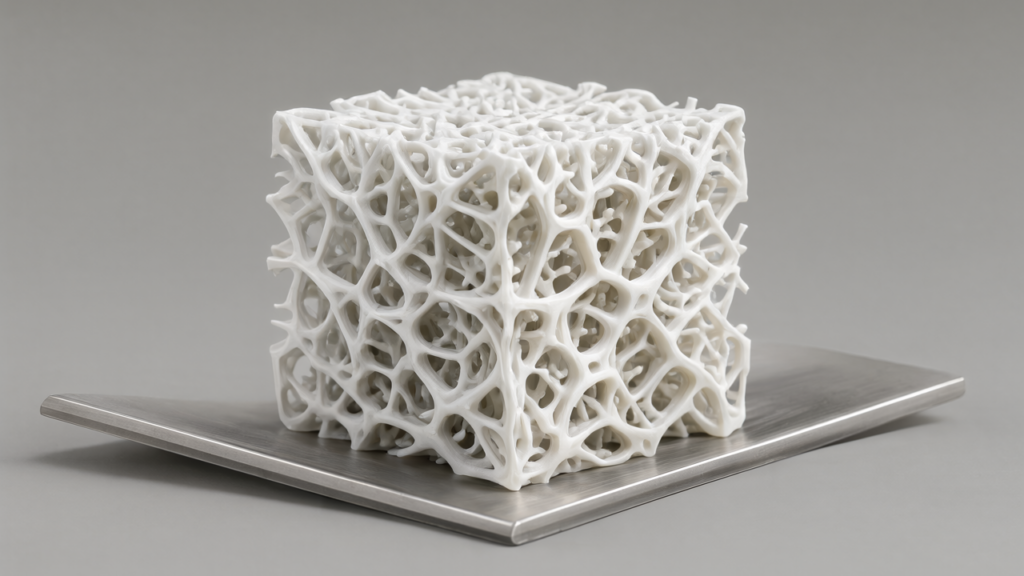
arXiv USA Overview An arXiv paper introduces a morphogenetic graph-generation framework for mechanical lattices, inspired by natural growth processes, enabling inverse design. The framework utilizes a Graph Convolutional Neural Network (... -
Lila Sciences: AI palladium catalyst discovery timeline
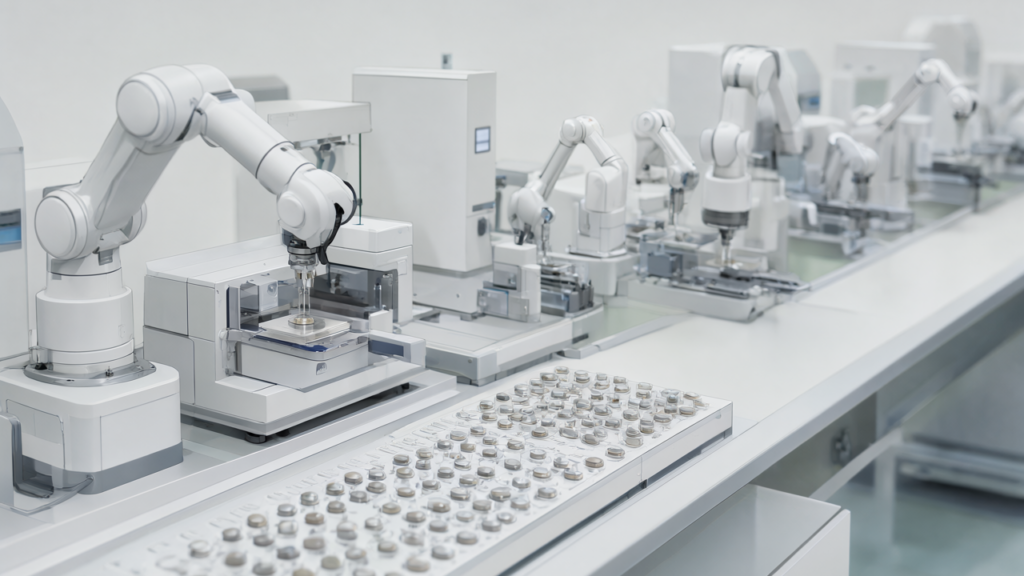
Lila Sciences USA Overview Lila Sciences utilized an AI-driven, closed-loop laboratory to discover a non-obvious palladium-based catalyst composition for acidic oxygen evolution reaction (OER), a critical bottleneck for green hydrogen pr...