COMPANY PROFILE / DRONES AND ROBOTICS
Unitree Robotics
From quadruped robots to humanoids: a Chinese company that makes the motors and gearboxes itself and sells at accessible prices
Unitree (Hangzhou, China) designs and builds quadruped robots (four-legged, dog-like machines) and humanoid robots, starting from the joint parts. It listed on the STAR Market of the Shanghai Stock Exchange on 19 August 2026. Revenue in 2025 was CNY 1,699.27 million; about 52% came from humanoids and about 42% from quadrupeds. The company reports shipping 5,511 humanoid robots in 2025. In the first half of 2026 (unaudited), however, revenue grew only 48.54%, and profit excluding one-off items fell 19.34% as R&D and advertising spending rose. In July 2026 the U.S. also decided to stop granting radio-equipment authorization to new models of foreign-produced advanced robots (the FCC Covered List). This profile sets out these points using the company’s exchange filings and a U.S. regulator’s document. Unit sales and “world number one” statements are treated as company claims; research-firm estimates are not used. Checked 25 October 2026.
- Unitree in 30 seconds, and where it stands in drones and robotics
- The logo and how the name is written
- Where the company sits in the drones and robotics field
- Scale (limited to the robotics business)
- Resources committed to robots
- What it has done so far
- What comes next
- What the company is aiming for in drones and robotics
- Map of partnerships in drones and robotics
- Technology, products and services
- The risks this company carries
- Glossary / References / Claim-to-source audit
1. Unitree in 30 seconds, and where it stands in drones and robotics
Hangzhou, ChinaOffices and factory space in the same district (leased). It assembles its robots and key parts in-house and outsources some processes
(19 August 2026)Initial public offering of 40,446,434 new shares at CNY 150.80, for gross proceeds of CNY 6,099.32 million
Industrial & specialist robots (secondary)Humanoids were 51.78% of 2025 revenue; the industry-grade quadrupeds (inspection, rescue) are the secondary type. The classification is ours
Quadrupeds 23,037 soldHumanoids are shipments; quadrupeds are sales. Humanoid sales recognized as revenue were 5,215. Third-party estimates are not used
Quadrupeds: Go2, B2, A2Humanoids for research, education and developers; industry-grade quadrupeds for inspection; plus joint modules, hands and lidar
Unitree makes its own motors, gearboxes, lidar and robot hands, which lets it sell humanoid and quadruped robots to research institutes, universities and developers at relatively accessible prices. Revenue grew from CNY 159.13 million in 2023 to CNY 1,699.27 million in 2025 Sourced. The prospectus itself states, however, that the company has not yet put its own general-purpose embodied-AI model into products at scale during the reporting period Sourced. Today’s revenue comes from selling robot bodies, not from an AI “brain”. In addition, sales to the United States were 13.30% of revenue in 2025, and the new U.S. rule of July 2026 makes U.S. sales of future new models uncertain Sourced. This profile reads the company through two things: the strength of making parts in-house, and two open questions, the AI brain and the U.S. market.
2. The logo and how the name is written

A note on names: the registered Chinese name is Yushu Keji Gufen Youxian Gongsi (our pinyin; formerly Hangzhou Unitree Technology Co., Ltd.), and the company is known as Unitree. The model names (H1, G1, R1 and H2 for humanoids; Go2, B2 and A2 for quadrupeds) are not company names. “Embodied AI” in industry usage means AI that has a physical body, a robot, and learns by acting in the real world. This article’s “Unitree” means this listed company.
Official site: https://www.unitree.com/ (the logo was taken from the header image of the official site)3. Where the company sits in the drones and robotics field
See also our explainers on humanoid robots, legged and inspection robots, and joint actuators. A humanoid is a robot shaped roughly like a person; a quadruped walks on four legs like a dog; a joint module is a robot joint that packages the motor, gearbox and other parts together. Unitree makes all three itself. The groupings are ours, not the company’s own Our calculation.
4. Scale (limited to the robotics business)
Almost all of Unitree’s business is robots and robot parts: 98.64% of 2025 revenue came from products tied to its “core technologies”. The prospectus reports in units of 10,000 yuan; the tables below are converted by us to CNY million. Figures for 2023 to 2025 are audited and come from the prospectus Sourced.
| Item (CNY million) | 2023 | 2024 | 2025 |
|---|---|---|---|
| Revenue | 159.13 | 392.77 | 1,699.27 |
| Main-business revenue: quadruped robots | 119.38 (75.78%) | 230.54 (59.47%) | 697.63 (41.62%) |
| Main-business revenue: humanoid robots | 2.97 (1.88%) | 107.30 (27.68%) | 867.83 (51.78%) |
| Main-business revenue: robot components | 26.92 (17.09%) | 44.54 (11.49%) | 103.74 (6.19%) |
| Gross margin on main business | 44.22% | 56.74% | 60.13% |
| Net profit attributable to owners | (11.15) | 95.47 | 278.21 |
| Net profit excluding one-off items | (18.02) | 78.48 | 590.75 |
| R&D expense (share of revenue) | 49.95 (31.39%) | 70.02 (17.83%) | 144.97 (8.53%) |
| Operating cash flow | 4.94 | 192.39 | 669.98 |
| Overseas share of main-business revenue | 55.63% | 55.74% | 43.65% |
| Of which United States (share of revenue) | 18.39% | 19.54% | 13.30% |
| Employees (year end) | 264 | 328 | 516 |
Latest figures: the January to March 2026 numbers were reviewed (a lighter check than an audit) by the auditor, and January to June 2026 is unaudited (listing announcement). The announcement says the company will not publish a separate half-year report after listing Sourced.
| Period | Revenue | Profit excluding one-off items | Note |
|---|---|---|---|
| Jan-Mar 2026 (reviewed) | 422.84 (+68.49% year on year) | 40.25 (-52.55%) | R&D rose by CNY 38.33 million, and selling expenses rose with advertising around the 2026 Spring Festival TV gala, the company explains |
| Jan-Jun 2026 (unaudited) | 1,152.25 (+48.54%) | 243.93 (-19.34%) | R&D rose by CNY 82.04 million. The company describes operations as generally good |
Mind the gap between net profit and profit excluding one-off items. In 2025 a share-based compensation charge of CNY 349.07 million (no cash leaves the company) was booked in administrative expense, which is why net profit (CNY 278.21 million) and profit excluding one-off items (CNY 590.75 million) differ so much. The same charge explains why net profit for January to June 2025 was negative (CNY -32.02 million) Sourced. The prospectus also says on its own that growth has slowed, “industry heat has cooled and competition has intensified” Sourced. This article does not judge which figure is closer to reality; it only sets out the company’s statements side by side.
5. Resources committed to robots
The table shows whether the four points (people, money, outside investments and acquisitions, and ties with universities and public bodies) could be confirmed in the prospectus and other filings.
| Type of resource | Details | Class |
|---|---|---|
| People | 516 people at the end of 2025 (184 in R&D, 154 in sales, 123 in production, 55 in management); R&D is 35.66%. Production also uses agency staff (labor outsourcing), costing CNY 68.03 million in 2025 (CNY 11.62 million in 2023). The company plans to cut this with automated lines | Sourced |
| Money: R&D | CNY 144.97 million in 2025 (8.53% of revenue), against CNY 49.95 million in 2023 (31.39%). The company says its R&D first centered on the body and motion control (the “cerebellum”) and that from 2024 it strengthened the embodied-AI model (the “brain”) | Sourced |
| Money: financing | A June 2025 capital increase raised CNY 694.50 million in total from 27 investors, among them Zhongyi Hechuang, Tencent and Wuxi Jinqiu. The August 2026 IPO raised CNY 6,099.32 million gross, or CNY 5,917.15 million after CNY 182.17 million of offering costs. Planned uses are four projects totaling CNY 4,201.71 million, of which the AI-model project is CNY 2,022.46 million | Sourced |
| Outside investments and acquisitions | No acquisition or business disposal could be confirmed in the prospectus text. Besides wholly owned subsidiaries, it holds minority stakes in three companies: Hangzhou Embodied-AI Pilot Production Base Technology (10%), Zhejiang Yulan Intelligent Emergency Robotics Research Institute (20%) and Shanghai Tuotian Zhilian Technology (10%). Its Hong Kong subsidiary was dissolved in September 2025 | Sourced (acquisitions and disposals not confirmed) |
| Universities, research bodies and public bodies | A strategic cooperation agreement with an unnamed domestic university, with a jointly set-up “general-purpose intelligent robot institute” (five years); as of August 2026 no jointly owned intellectual property had arisen. Named a “Little Giant” specialized, refined and innovative enterprise by the Ministry of Industry and Information Technology (2023). Government subsidies were 4.80% of total profit in 2025 | Sourced |
The main products are summarized below from the prospectus (checked 25 October 2026). All performance figures are company stated values and vary with conditions and configuration.
| Product | Type | Main specifications (company stated) | Stage and date | Reference |
|---|---|---|---|---|
| H1 | Humanoid (full size) | About 180 cm, about 47 kg, up to about 5 m/s, 5 degrees of freedom per leg. The company says it was launched in August 2023 | On sale (launched August 2023) | Reference 1 https://static.cninfo.com.cn/finalpage/2026-08-14/1225472621.PDF |
| G1 | Humanoid (mid size) | About 132 cm, about 35 kg, 6 degrees of freedom per leg, 5 to 7 per arm. Announced May 2024; the company calls it the world’s best-selling humanoid for 2024 to 2025 (a company claim) | On sale (announced May 2024) | Reference 1 https://static.cninfo.com.cn/finalpage/2026-08-14/1225472621.PDF |
| R1 | Humanoid (small) | About 123 cm, about 25 kg. Announced July 2025; joint and sensor control interfaces are open, the company says | On sale (announced July 2025) | Reference 1 https://static.cninfo.com.cn/finalpage/2026-08-14/1225472621.PDF |
| H2 | Humanoid (full size) | About 182 cm, about 70 kg, 31 degrees of freedom. Announced October 2025 | On sale (announced October 2025) | Reference 1 https://static.cninfo.com.cn/finalpage/2026-08-14/1225472621.PDF |
| Go2 | Quadruped (consumer and research) | About 15 kg, maximum payload 12 kg, climbs steps of about 20 cm, 2 to 4 hours of operation. The company says it launched at CNY 9,997 in 2023 | On sale | Reference 1 https://static.cninfo.com.cn/finalpage/2026-08-14/1225472621.PDF |
| B2 / B2-W | Quadruped and wheel-leg (industry grade) | B2: about 60 kg, sustained walking payload over 40 kg, IP68 dust and water protection, over 5 hours. B2-W: wheeled, up to about 15 km/h, IP67 | On sale | Reference 1 https://static.cninfo.com.cn/finalpage/2026-08-14/1225472621.PDF |
| A2 | Quadruped (industry grade, mid size) | About 37 kg, walking payload over 25 kg, climbs about 1 m, IP67, 5 hours unloaded, swappable batteries. 2025 | On sale (2025) | Reference 1 https://static.cninfo.com.cn/finalpage/2026-08-14/1225472621.PDF |
| UnifoLM-WMA-0 / VLA-0 / X1-0 and others | Embodied-AI models | WMA was open-sourced in September 2025 and VLA in January 2026. The company says X1-0 was tested in its own factory in early 2026 and could perform tasks such as assembling joint motors on its own (no unit counts, hours or independent verification given) | Basic research to trial (tested in its factory) | Reference 1 https://static.cninfo.com.cn/finalpage/2026-08-14/1225472621.PDF |
| Joint modules, lidar, hands | Components | Lidar L1 and L2 (30 m scan range); hands Dex1-1, 3-1, 5-1 and 2/5 (up to 20 degrees of freedom, 94 tactile sensors); Z1 arm (6 axes, about 4.5 kg). Sold externally | On sale | Reference 1 https://static.cninfo.com.cn/finalpage/2026-08-14/1225472621.PDF |
“World first”, “world record” and “number one in shipments” are the company’s own wording. The prospectus gives 2025 humanoid shipments as “over 5,500 (excluding wheeled dual-arm robots)” and says this is first in the world when compared with other firms’ shipments published by third parties. Those third-party figures are not used here, and independent verification could not be confirmed.
Demonstration claims are set out too. The prospectus says 16 H1 robots appeared in a “fully AI-driven” group in the Spring Festival TV gala in early 2025, and that in early 2026 24 G1 robots and one H2 performed a martial-arts routine under “fully autonomous swarm control”. Whether this was autonomous or choreographed with human help, the duration and any independent verification cannot be confirmed from the prospectus. It also says the company’s robots won 11 medals at the first World Robot Games in August 2025. All of these are company claims Sourced.
6. What it has done so far
| When | What happened | Meaning |
|---|---|---|
| August 2016 | Founded in Hangzhou. Built on the founder’s prototype (XDog), its first product, the quadruped Laikago, was commercialized in 2017 | It started by making motor-driven quadrupeds in-house |
| 2019 to 2021 | AlienGo (2019), A1 (2020, priced for consumers), Go1 (2021, CNY 16,000) | It widened high-performance quadrupeds from researchers to ordinary developers |
| 2022 to 2023 | B1 (2022, for inspection), Go2 at CNY 9,997 and B2 (2023). First humanoid, H1, in August 2023 | Two lines, consumer and industry grade, and a move into humanoids |
| May 2024 to 2025 | Mid-size humanoid G1 (starting price under CNY 100,000), wheel-leg B2-W (2024), A2, R1 and H2 (2025). Capital increase in June 2025 and release of the WMA model in September | Humanoid production and sales grew sharply (412 sold in 2024, 5,215 in 2025) |
| July 2025 to May 2026 | Patent-infringement suits by a Hangzhou daily-chemicals company. The patent was declared wholly invalid by the national IP office in March 2026. The company had the main claims dismissed at first instance and by the Supreme People’s Court | Rulings favor the company, but an administrative suit over the patent’s invalidation was undecided in August 2026 |
| 1 June to 19 August 2026 | Listing committee approval (1 June), registration approved by the China Securities Regulatory Commission (1 July), offering on 10 August, listing on the STAR Market on 19 August | The prospectus plans to use the proceeds to expand production capacity and AI development |
| 28 July 2026 | The FCC adds foreign-produced advanced robots to its Covered List (the company says its already authorized models are not affected) | The basis for U.S. sales of new models changed |
| 21 October 2026 | Announcement on abnormal share-price movement: the company says operations have not changed materially and that it has no undisclosed material matters | – |
7. What comes next
(two-year build planned)Production is now in leased factories. The base is planned in the Binjiang high-tech zone, Hangzhou. The company expects to cut agency staff through automated lines
These are plans the company set out in the prospectus and are not facts that have been achieved Not yet confirmed. The listing announcement and other filings do not explain how the difference between gross proceeds (CNY 6,099.32 million) and the CNY 4,201.71 million planned for the four projects will be used.
None of the following could be confirmed in the prospectus, listing announcement or abnormal-movement announcement Not yet confirmed: shipments or customers of products that use the embodied-AI models; names and unit counts of customers for industry-grade quadrupeds (customers are anonymized); track record of humanoids in real factory or home operation; the company’s response to the new FCC measure (whether it will seek conditional approval or produce in the United States); the company’s view on the cybersecurity of its robots. “Number one” shipments and world records are company claims, and independent verification could not be confirmed here.
8. What the company is aiming for in drones and robotics
This part includes things the company has not said directly. It is inference within what the primary sources show, written with its grounds.
| What can be read | Primary-source grounds | Class |
|---|---|---|
| Revenue has shifted from quadrupeds to humanoids | 2025 revenue was 51.78% humanoid and 41.62% quadruped (in 2023: 75.78% quadruped and 1.88% humanoid). Humanoid sales rose from 412 in 2024 to 5,215 in 2025 | Sourced |
| A business that offsets lower prices with higher volume | Average humanoid price fell from CNY 593,400 (2023) to CNY 260,400 and CNY 166,400 (2025); quadruped from CNY 38,300 to CNY 30,300. Revenue grew through volume (average price is revenue divided by units sold, our calculation) | Inference |
| In-house parts serve its own robots’ performance and cost more than outside sales | Parts were 6.19% of 2025 revenue. The prospectus says making joint modules in-house sets the performance ceiling and gives freedom in sourcing | Inference |
| Humanoids go first to research, education and development; factories and homes come later | The prospectus lists research, development, education, cultural performance and services as medium-term uses and factories and homes as longer-term. AI-model deployment is not yet at scale | Inference |
| It now has to reduce its dependence on the United States | U.S. sales were 13.30% of 2025 revenue. Under the new FCC measure, foreign-produced new models will find it hard to obtain authorization | Inference |
The 2025 and 2026 figures show a company entering a stage where volume has grown and the quality of profit is being tested. Revenue for January to June 2026 rose 48.54%, while profit excluding one-off items fell 19.34%. The company puts this down to higher R&D and advertising costs, and also writes that “industry heat has cooled and competition has intensified” Sourced. From these two statements this article reads the company as trying to move from growing on price to creating its next growth through investment in AI models and a production base. Whether that investment pays off is not yet known Not yet confirmed.
9. Map of partnerships in drones and robotics
10. Technology, products and services
| Layer | Main products | What the prospectus and official sources say |
|---|---|---|
| Bodies | Humanoids: H1, G1, R1, H2, G1-D, GD01. Quadrupeds: A1, Go1, Go2, B1, B2, B2-W, A2, As2 | Used for research, development, education, inspection, rescue and cultural performance. There are EDU models for secondary development and models with preset motions only |
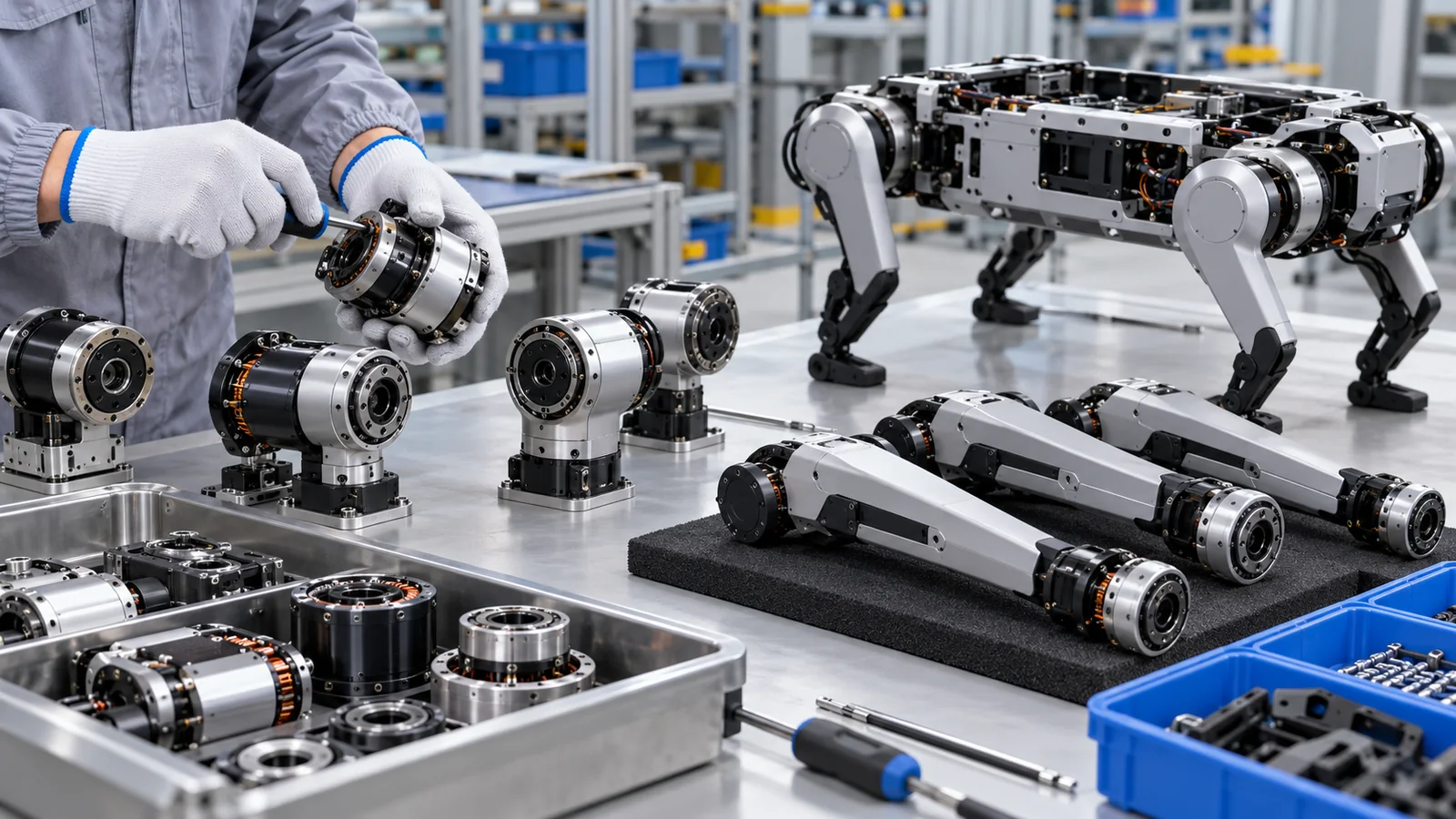
| Joints and drive | Joint modules (motor, reducer, driver, sensor, cooling and structure in one) | In-house high-power-density permanent-magnet synchronous motors and planetary gearboxes with tooth shapes tuned for impacts on legged robots (company statement) |
| Sensing and hands | Lidar L1 and L2, robot hands (Dex1-1, Dex3-1, Dex5-1, Dex2/5), Z1 arm | Lidar developed in-house. Hands carry tactile sensors, up to 20 degrees of freedom (company stated) |
| AI models | UnifoLM-WMA-0, UnifoLM-VLA-0, UnifoLM-X1-0, WVLA2.0, UnifoLM-OminiA-0.3 (company names) | Reinforcement-learning motion control (the “cerebellum”) and embodied-AI models (the “brain”). The company releases open-source code for developers and reports 43 projects on GitHub (end of February 2026) |
| Other | Smart fitness devices (PUMP, PUMP MAX) | An application of its joint force-control technology; 0.41% of 2025 revenue |
A shell that doubles as the skeleton: the company says it uses a “shell as skeleton” design with composite materials over large areas to get strength and stiffness in a small volume, and uses bayonet-style fittings for quick assembly and disassembly Sourced. A composite is a material that stays light but resists bending (see our explainer on structural materials for robots and drones).
Making falls survivable: the company describes a flexible shell with slotted openings, two-direction cushioning by slot-and-spring, and staged energy absorption with rubber, polyurethane (PU) and airbags. It says peak impact is cut by 30 to 50% and failure rates of joints and electronics fall by at least 30%. This is a company claim; the test conditions and any third-party verification could not be confirmed Sourced.
Heat and water in the joints: the company says joint modules route wiring internally, use dual magnetic encoders and IP67 sealing, and work from -20 to 55 degrees C. Cooling is built into the joints and body, for example micro water-cooling using a sponge-like phase-change material Sourced. Motors lose output as the permanent magnets heat up, so a cooling design bears directly on power (see our explainer on permanent magnets and rare earths).
Future materials: the company says it hopes to use carbon-fiber composites, titanium-aluminum alloys and 3D-printed lightweight lattice structures to reduce the inertia of moving parts and energy use. This is a statement of plans, not a record of adoption Not yet confirmed.
11. The risks this company carries
| Risk | Details | Class |
|---|---|---|
| Slowing growth and volatile profit | Revenue for January to June 2026 rose 48.54% (2025 was about 4.3 times 2024), and profit excluding one-off items fell 19.34%. The company writes that industry heat has cooled and competition has intensified, and that a fall in short-term demand such as robot rental could trigger price competition | Sourced |
| U.S. regulation | On 28 July 2026 the FCC added foreign-produced advanced robotic devices to the Covered List (official document). The company says its current main models (G1, H2, R1, Go2, B2, A2) hold FCC authorization and are unaffected. New models cannot obtain authorization without, for example, a conditional approval (reviewed by the Department of War according to the FCC document). U.S. sales were 13.30% of 2025 revenue | Sourced |
| AI model results and spending | The embodied-AI model is at the research and trial stage and has not been deployed at scale. The company says its R&D spending as a share of revenue (8.53% in 2025) is modest compared with some peers. The largest use of proceeds is model development | Sourced |
| Few patents | 262 registered patents (20 domestic invention patents, end of January 2026). The company says it limited filings to protect its technology, which makes copying harder to stop | Sourced |
| Concentrated voting power | Through special voting rights the founder, Wang Xingxing, controlled 68.78% of the votes before the listing and will hold up to 65.31% after it | Sourced |
| Competition | The prospectus says competition will intensify as car and consumer-electronics makers enter, for example noting that Tesla’s Optimus humanoid has begun small-batch trial production | Sourced |
| Sourcing and currency | About 20% of raw materials are imported parts bought through domestic agents. It also mentions sharply higher memory-chip prices. Overseas sales are settled mainly in U.S. dollars, and currency-related gains and losses were on the order of CNY 22.54 million in 2025 | Sourced |
| Litigation | Patent-infringement claims (the plaintiff is a Hangzhou daily-chemicals company) were decided in the company’s favor at first instance and by the Supreme People’s Court. An administrative suit over the patent’s invalidation was undecided in August 2026 | Sourced |
| Security | The FCC document cites several reports on cybersecurity vulnerabilities in foreign-produced robots in its footnotes, and the title of one includes Unitree’s name. This article has not verified those reports. The prospectus contains no statement on this point that could be confirmed | Sourced (the citation exists) |
12. Glossary
- STAR Market
- The Shanghai Stock Exchange’s market for science and technology companies.
- Embodied AI
- AI that has a body, a robot, and learns by acting in the real world.
- Embodied large model
- A large AI model that acts as a robot’s “brain”: it understands language and images and plans tasks. The company also calls it the “cerebrum”.
- Body intelligence / motion control
- Control that lets a robot walk, run and jump without falling. The company calls it the “cerebellum”.
- WMA / VLA
- WMA is a world-model-and-action model. VLA is a vision-language-action model that links images, words and motion.
- Joint module
- A robot joint that packages the motor, gearbox, sensors and driver together.
- EDU model
- A research and education model that allows secondary development (adding software or parts).
- Shipments vs. sales
- Shipments are units sent out of the factory; sales are units booked as revenue after the customer accepts them. The prospectus gives both.
- Special voting rights
- Shares that carry more votes than ordinary shares, letting a founder hold a majority of votes.
- FCC Covered List
- A list kept by the U.S. communications regulator of equipment judged to pose a national-security risk. Listed equipment cannot receive new authorizations.
13. References
- Unitree (registered in China as Yushu Keji Gufen Youxian Gongsi) Prospectus for the initial public offering and listing on the STAR Market of the Shanghai Stock Exchange (in Chinese; 14 August 2026; retrieved from cninfo.com.cn). Business, product specifications, unit sales, financials, R&D, special voting rights, risks, litigation and use of proceeds. https://static.cninfo.com.cn/finalpage/2026-08-14/1225472621.PDF
- Unitree Listing announcement (in Chinese; 18 August 2026). Listing date, shares offered, gross proceeds, offering costs, and unaudited results for January to June 2026. https://static.cninfo.com.cn/finalpage/2026-08-18/1225478658.PDF
- Unitree Announcement of offering results (in Chinese; 14 August 2026). Offer price, number of shares, date of the listing committee review, strategic placement results. https://static.cninfo.com.cn/finalpage/2026-08-14/1225472623.PDF
- Unitree Announcement on abnormal share-price movement (in Chinese; 21 October 2026). The company’s statement that operations have not changed materially and that the humanoid industry is at an early stage of commercialization. https://static.cninfo.com.cn/finalpage/2026-10-21/1225613088.PDF
- Federal Communications Commission (FCC) Public Notice DA 26-786 (28 July 2026): addition of foreign-produced power inverters and advanced robotic devices to the Covered List. Appendix C defines the covered robots. https://docs.fcc.gov/public/attachments/DA-26-786A1.pdf
- Unitree Official website (source of the logo image; company and product names checked 25 October 2026). https://www.unitree.com/
14. Claim-to-source audit
| Claim in the text | Class | Source |
|---|---|---|
| Legal name, founding (26 August 2016), headquarters, 516 employees (end of 2025) and breakdown, 262 patents (end of January 2026) | Sourced | Reference 1 https://static.cninfo.com.cn/finalpage/2026-08-14/1225472621.PDF |
| Listing (19 August 2026, 688836), offer price CNY 150.80, 40,446,434 new shares, gross proceeds CNY 6,099.32 million, net CNY 5,917.15 million, costs CNY 182.17 million | Sourced | Reference 2 https://static.cninfo.com.cn/finalpage/2026-08-18/1225478658.PDF Reference 3 https://static.cninfo.com.cn/finalpage/2026-08-14/1225472623.PDF |
| CSRC registration approval (1 July 2026) and listing committee review (1 June 2026) | Sourced | Reference 2 https://static.cninfo.com.cn/finalpage/2026-08-18/1225478658.PDF Reference 3 https://static.cninfo.com.cn/finalpage/2026-08-14/1225472623.PDF |
| Revenue, profit, R&D, operating cash flow and gross margin (2023 to 2025) and revenue by product | Sourced | Reference 1 https://static.cninfo.com.cn/finalpage/2026-08-14/1225472621.PDF |
| Units shipped and sold (5,511 and 5,215 humanoids, 23,037 quadrupeds, 2025) and average prices | Sourced | Reference 1 https://static.cninfo.com.cn/finalpage/2026-08-14/1225472621.PDF |
| Reviewed figures for January to March 2026 (revenue CNY 422.84 million, etc.) | Sourced | Reference 1 https://static.cninfo.com.cn/finalpage/2026-08-14/1225472621.PDF |
| Unaudited figures for January to June 2026 (revenue CNY 1,152.25 million, profit excluding one-off items CNY 243.93 million) and no separate half-year report | Sourced | Reference 2 https://static.cninfo.com.cn/finalpage/2026-08-18/1225478658.PDF |
| Product specifications (H1, G1, R1, H2, quadrupeds, components) and launch dates | Sourced | Reference 1 https://static.cninfo.com.cn/finalpage/2026-08-14/1225472621.PDF |
| Spring Festival gala appearances, games medals and embodied-AI model trial (company claims) | Sourced | Reference 1 https://static.cninfo.com.cn/finalpage/2026-08-14/1225472621.PDF |
| June 2025 capital increase (27 investors, CNY 694.50 million), three minority stakes, strategic agreement with a university | Sourced | Reference 1 https://static.cninfo.com.cn/finalpage/2026-08-14/1225472621.PDF |
| Use of proceeds (four projects, CNY 4,201.71 million) and the manufacturing-base plan | Sourced | Reference 1 https://static.cninfo.com.cn/finalpage/2026-08-14/1225472621.PDF |
| Course of the patent suits and the wholly-invalid decision (March 2026) | Sourced | Reference 1 https://static.cninfo.com.cn/finalpage/2026-08-14/1225472621.PDF |
| Special voting rights (68.78% before listing, up to 65.31% after) | Sourced | Reference 1 https://static.cninfo.com.cn/finalpage/2026-08-14/1225472621.PDF |
| U.S. revenue share (13.30%, 2025) and the company’s explanation of the new FCC measure | Sourced | Reference 1 https://static.cninfo.com.cn/finalpage/2026-08-14/1225472621.PDF |
| Addition to the FCC Covered List (28 July 2026, foreign-produced advanced robotic devices, conditional-approval route) and the definition of advanced robotic devices | Sourced | Reference 5 https://docs.fcc.gov/public/attachments/DA-26-786A1.pdf |
| Abnormal-movement announcement (no material change in operations) | Sourced | Reference 4 https://static.cninfo.com.cn/finalpage/2026-10-21/1225613088.PDF |
| Source of the logo image | Sourced | Reference 6 https://www.unitree.com/ |
| Average prices (revenue divided by units sold), the 4.3 times ratio (169,926.93 / 39,277.07), unit conversion to CNY million | Our calculation | Our calculation from the figures in the prospectus and listing announcement |
| The four-type classification of drone and robotics companies and Unitree’s position | Our calculation | Our own grouping; company names are examples from firms covered in this series |
| Shipments or customers for AI-model products, customers of industry-grade quadrupeds, real factory or home operation of humanoids, response to the FCC measure, view on robot cybersecurity, use of proceeds above the plan | Not yet confirmed | Reference 1 https://static.cninfo.com.cn/finalpage/2026-08-14/1225472621.PDF Reference 2 https://static.cninfo.com.cn/finalpage/2026-08-18/1225478658.PDF |
| “Number one” shipments, world records and the 30 to 50% impact reduction (performance claims) | Not yet confirmed | Reference 1 https://static.cninfo.com.cn/finalpage/2026-08-14/1225472621.PDF |
| The shift from quadrupeds to humanoids, offsetting lower prices with volume, parts for its own robots, research and education first, reducing dependence on the United States, a stage where profit quality is tested | Inference | Our own interpretation of the prospectus and listing announcement figures and statements |
| A materials engineer’s view (composite shell, impact absorption, joint heat and sealing, future materials) | Explainer | Commentary: a general technical explanation; figures are company stated values that this article has not verified |
Last updated 25 October 2026 / Troy Technical
Figures in this article come from the prospectus, listing announcement, offering-results announcement and abnormal-movement announcement that Unitree published for its listing on the STAR Market of the Shanghai Stock Exchange, and from an official document of the U.S. Federal Communications Commission. No research-firm estimates or press-based figures have been used (the market and shipment estimates by research firms that appear in the prospectus are not used either). “Number one” and similar statements are company claims and are not verified here. Passages marked “Inference” are this article’s interpretation of primary sources, not statements made by the company. Share prices, valuations and investment decisions are not addressed.