THE FIRST GUIDE FOR NEWCOMERS
Read This First: Drones, Robotics and Automated Driving — How AI and Materials Shape Their Present and Future
Three accessible entry points into industrial drones, AI robotics and automated driving across regions: verified examples, remaining challenges, conditional futures and the role of materials.
This field uses AI to observe the physical world and move machines. A flying drone, a manipulating robot and a road vehicle face different operating conditions and consequences of failure. Useful services require capable models, dependable bodies and safe operations together.
This guide introduces the three fields and routes into the detailed articles; it does not attempt to teach every component.
The shared loop: sense, decide, act and observe again
Imagine a drone photographing a bridge, an arm picking a component and a car turning at a junction. Each measures its surroundings, estimates a state, selects an action, drives actuators and measures the outcome. That repeated loop connects the three applications.
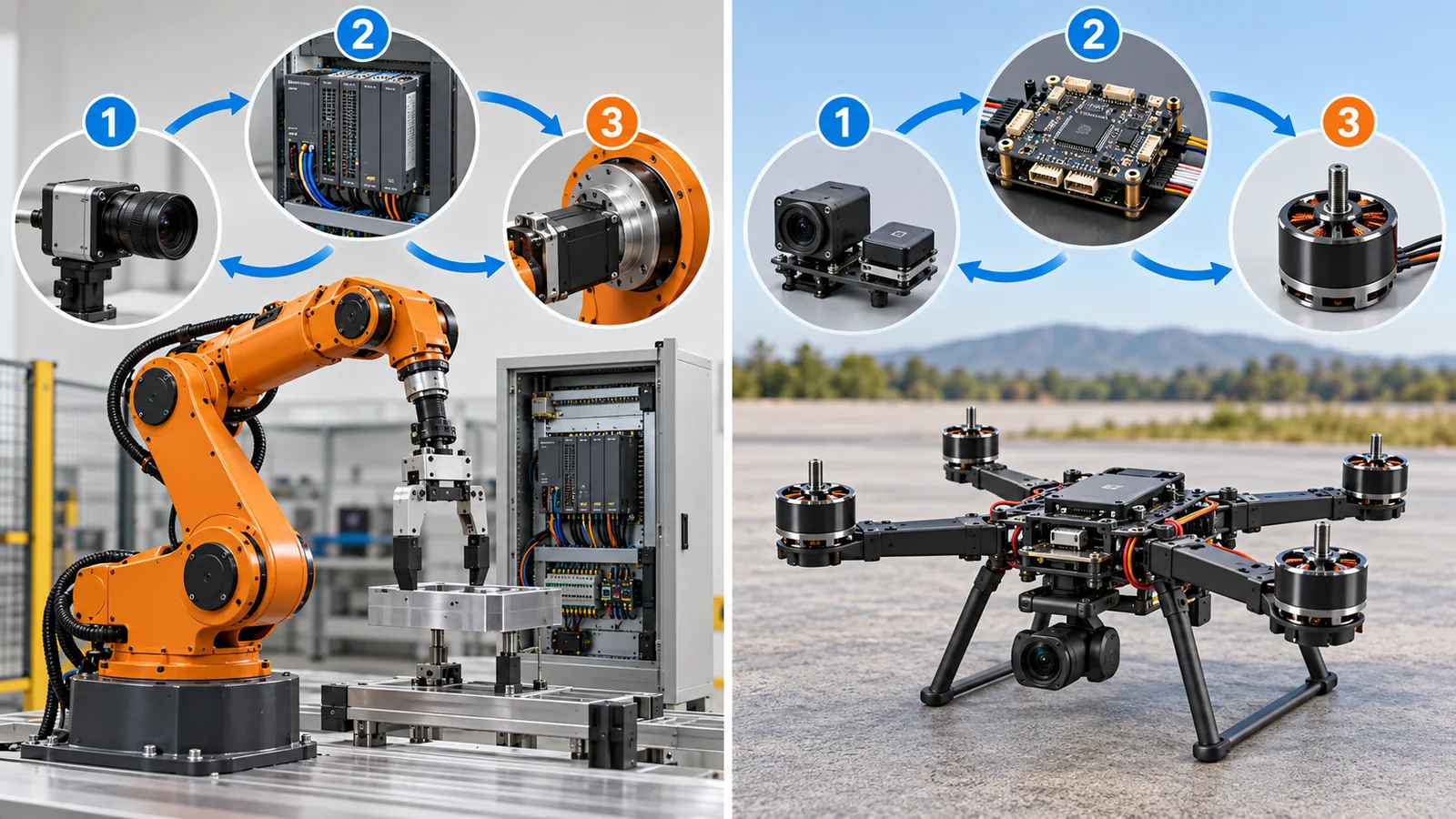
Established automation obtains repeatability by controlling objects, positions and procedures. AI can extend the ability to recognise variable objects, learn actions and connect language instructions to work. It need not replace every controller: rapid stabilisation, motor control and independent stopping mechanisms can retain distinct roles.
A machine produces real motion and force. A plausible decision may fail when friction, wind, lighting or payload differs from training. The body and environment are therefore part of the engineering system, not merely containers for software.
1) Drones: bringing information and goods to hard-to-reach places
Industrial value comes from completing a job
For inspection, the job is to gather comparable observations and identify changes on inaccessible structures. For surveying, it is to record geometry that supports decisions. For delivery, it may be to connect locations separated by inconvenient roads. Thinking in terms of outcomes explains industrial value better than flight alone.
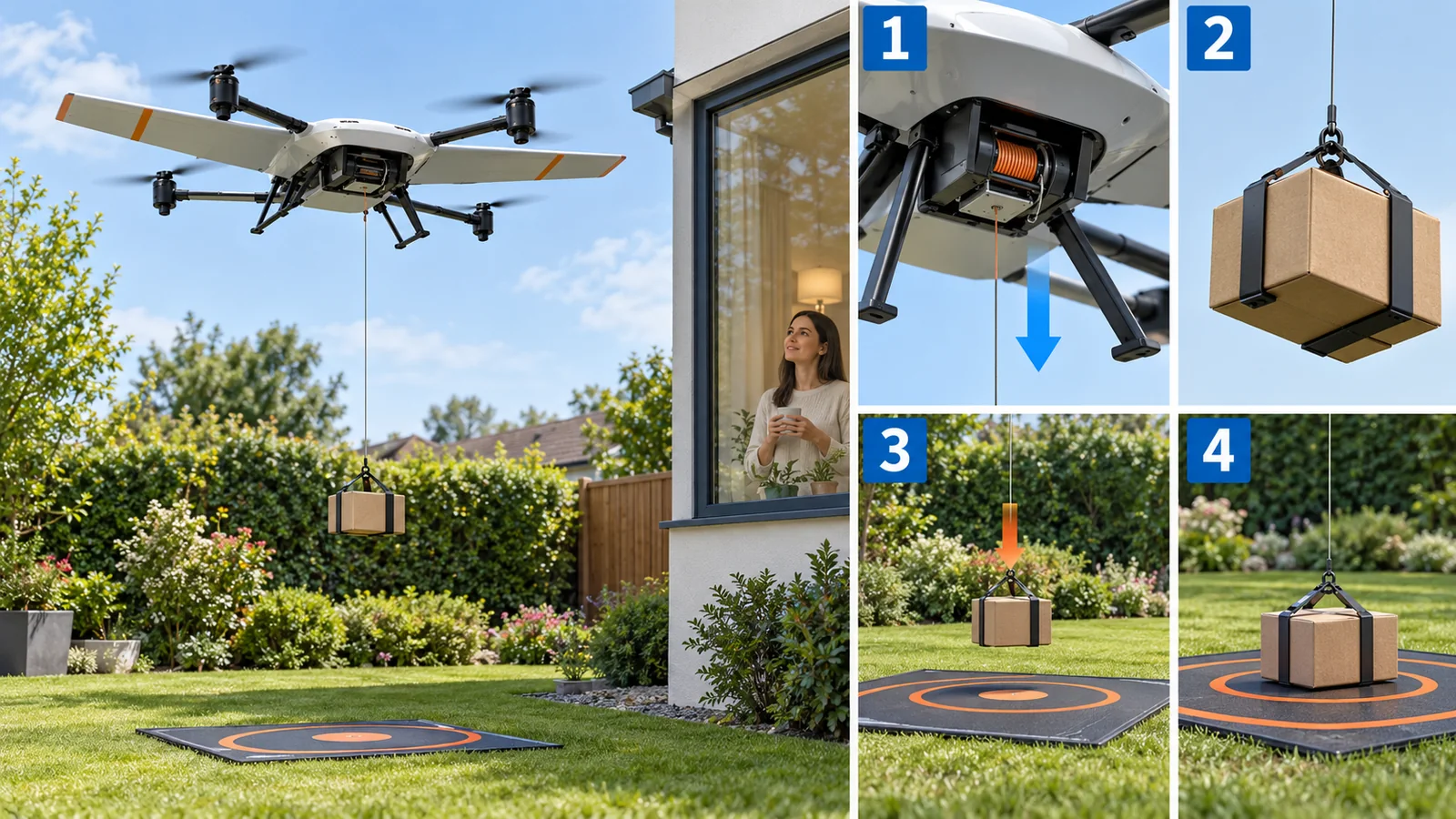
Verified position: Japan has a framework for Level 4 drone operations over populated areas beyond visual line of sight without assistants. Aircraft certification, pilot credentials and operational requirements remain separate; the framework does not permit flight everywhere. [1] The FAA describes existing Part 135 delivery operations alongside certification, operational and environmental processes. A regulatory route, an authorised operator and a usable local service are different things. [2]
As an infrastructure example, DJI’s 2025 Dock 3 announcement describes remote operations linking a ground dock with operational software. This illustrates integration of landing, charging and route management, not permission to fly at any location or a ranking of current products. [22]
What AI helps, and what it cannot remove
Useful AI functions include identifying candidate defects in imagery, recognising terrain and obstacles and selecting inspection coverage. Detecting a suspected defect is not the same as determining structural safety. Field evaluation must address both missed findings and unnecessary follow-up work.
Wind, rain, energy reserves, communication loss, other aircraft, noise and handover locations constrain expansion. Better recognition does not create extra thrust or energy for a safe return.
A conditional picture of everyday use
The following is our outlook, not a promised timetable. A plausible near-term direction is repeat operation on defined inspection routes or delivery destinations, with people handling exceptions. Communities could benefit from earlier fault identification and easier access to essential goods, provided alternatives exist when weather prevents flight.
A longer-term direction connects fleets to logistics and infrastructure maintenance. Conditions include operating and maintenance costs, safe handover, noise acceptance and airspace coordination. Fleet size per supervisor is only one part of the service economics.
Materials opportunities: lightweight structures, fatigue-resistant joints, vibration isolation, radio-transparent covers and battery heat management. A lighter frame that allows excessive sensor vibration can undermine imagery and localisation. Weight, durability and measurement quality must be considered together.
2) Robots: from repeating fixed motions to adapting work
AI extends established automation
Repeatable welding or assembly benefits from accurate mechanisms, control and fixtures. AI robotics adds learned perception and action selection for varying object placement, flexible packages and changing tools. It builds on rather than discards dependable automation.
A vision-language-action (VLA) model links images and instructions with actions, often also using robot state. Google DeepMind announced Gemini Robotics 2 in July 2026 with whole-body and multi-robot capabilities. This is a developer report within evaluated settings, not evidence that universally reliable robots are already deployed. [3]
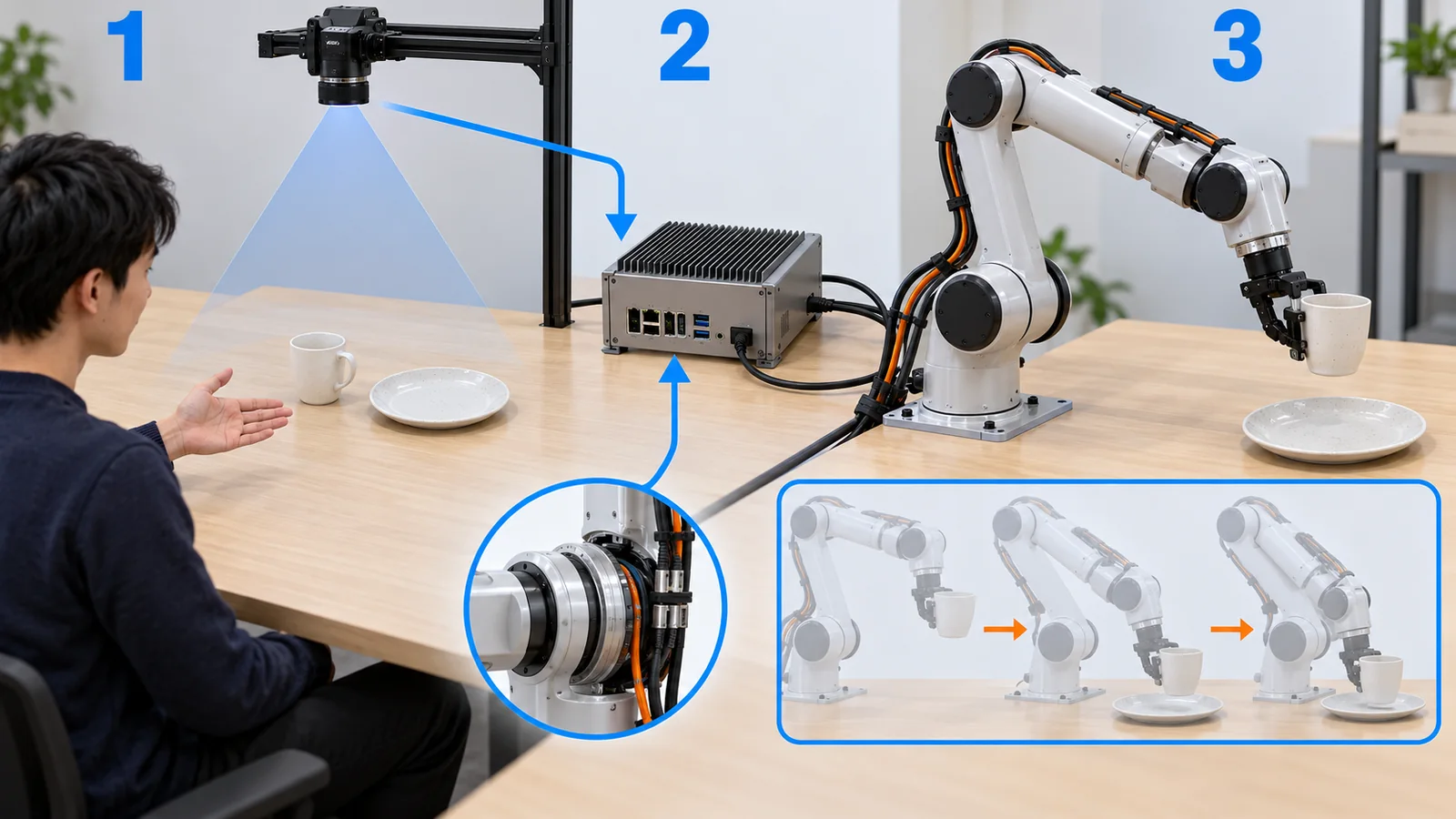
AI robotics is broader than humanoid dexterity. Amazon describes DeepFleet as a foundation-model approach to predicting interactions between warehouse mobile robots. Supporting fleet operations is a different capability from understanding a request and performing arbitrary manipulation. [21]
The gap between one success and everyday work
Generalisation means transferring capability to unfamiliar settings or objects. Physical Intelligence’s pi0.5 research addresses new environments while explicitly acknowledging remaining failures. [4] Ask how a system behaves when conditions change or a task goes wrong, not merely how impressive a selected video looks.
- Hands and bodies: can the system reliably manipulate thin bags or compliant objects, including after contact surfaces wear?
- Learning: how were demonstrations and failures collected, and can training avoid hazardous physical exploration?
- Safety: what handles misrecognition, communication loss or unexpected human proximity?
- Operations: do charging, cleaning, repair, changeovers and human intervention still allow the required job to be completed dependably?
A humanoid body is one option for human-designed tools and spaces. Depending on the job, a wheeled arm, dedicated gripper or established industrial robot may be simpler and more effective. Novel shape and operational value are separate questions.
Near term: bounded work with explicit exception handling
Our outlook: AI use can grow where objects, work areas and recovery procedures are bounded. A practical entry point is letting the machine handle normal cases and escalating uncertain ones. Intervention frequency and the time available for a human to respond affect viability.
Longer term: moving skills between bodies and workplaces
A longer-term direction is transferring experience between embodiments and environments with fewer new demonstrations. Homes and care settings are particularly variable. No uniform delivery date is justified: safe contact, personal data, maintenance and responsibility must also be resolved.
Materials opportunities: wear-resistant gears and bearings, heat-tolerant magnets and windings, stiff lightweight joints, replaceable gripping pads and compliant tactile skins. Stable friction and deformation help stabilise the system being learned. Compliance can also make precise positioning harder; benefits involve trade-offs.
3) Automated driving: compare conditions and responsibilities, not a national league table
Driver assistance and driving automation are different
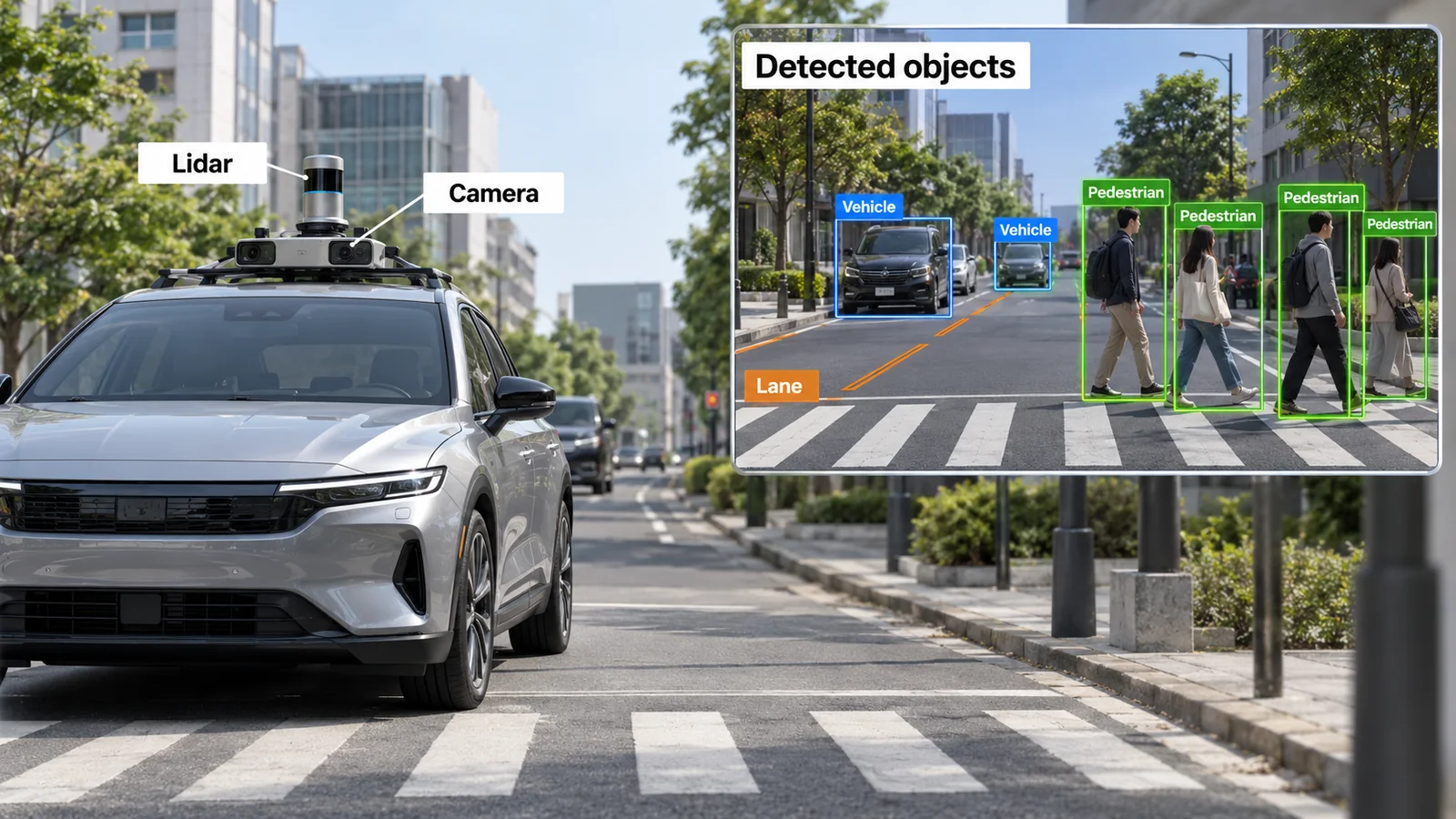
Hands-free operation alone does not determine automation level. At Level 2 a driver continuously supervises. Level 3 performs driving within conditions but assumes a person can respond to a takeover request. Level 4 also handles fallback without relying on that person within its defined conditions; it does not mean driving everywhere. [5]
The operational design domain (ODD) describes those conditions: geography, roads, speed, weather and other limits. A slow fixed-route Level 4 shuttle and a complex urban robotaxi represent different tasks. The examples below reflect public sources checked through 25 October 2026; they are not national penetration rates or rankings.
| Region | Verified examples and public action | What to watch: our analysis |
|---|---|---|
| United States | Waymo reports public driverless access in defined service areas, including San Diego. [6] Federal vehicle safety and state/local operating conditions need separate attention. [5] | Validation across cities, weather and roads; emergency-vehicle interactions, vehicle recovery and operating cost. One city’s evidence does not establish national readiness. |
| Japan | A METI/MLIT project announced Level 4 medium-bus operation on a 700 m public-road segment in Hitachi in January 2026. [7] Waymo, Nihon Kotsu and GO target Tokyo driverless rides in 2027 subject to approvals and validation: a plan, not completed deployment. [8] | Local transport operations, staffing, remote monitoring and pedestrian-rich roads. Separate targets, permits obtained and services actually available. |
| China | Baidu describes driverless operation in service cities including Beijing and Wuhan, not nationwide availability. [9] MIIT announced a mandatory L3/L4 safety standard scheduled for July 2027 implementation. [10] | Bounded commercial services, vehicle/operator safety management and data/incident procedures. Local trials, product admission and transport operations are distinct stages. |
| European Union | An ADS type-approval framework exists; the Commission lists 2026 amendments. Type approval differs from local operation and service permission. [11][12] Waymo’s Madrid rider target for 2027 follows planned familiarisation and validation. [13] | Interaction of common vehicle rules with national/local operating conditions. Assisted-driving product launches do not establish driverless taxi availability. |
| United Kingdom | The government describes applications from spring 2026 for commercial pilots without safety drivers. An application route is not an individual operator approval. [14] | Operator authorisation, operational capability, passenger protection and reporting. Read the UK separately from the EU. |
| Other examples | Singapore’s transport ministry reports public Punggol shuttle rides from April 2026 and phased expansion. [15] Dubai RTA announced local commercial operations with Apollo Go and WeRide in March 2026. [16] | Bounded districts/routes, integration with public transport and local operating partners. Other countries do not share one maturity level. |
Different needs and institutions shape different entry points
These examples suggest different entry points: multi-city ride-hailing in the US and China, integration with local transport operators in Japan and network-feeding routes in Singapore. That is our interpretation of the examples. Asking whose journey is served, under which conditions and responsibility arrangements is more informative than labelling a whole country enthusiastic or behind.
Why expansion remains difficult as AI improves
AI supports recognition, motion prediction and action selection, including architectures that learn multiple stages together. Predicting a plausible next event and reliably reaching a safer state during a hazard remain different requirements.
- Rare situations: temporary road markings, police directions, emergency vehicles and unexpected debris.
- Poor visibility: precipitation, glare, dirty or fogged windows and occluded road users.
- Faults: failed sensors, computers, power or communications must trigger suitable risk-reducing behaviour.
- Service operations: boarding, cleaning, charging, remote assistance and incident/vehicle recovery.
Rules and test frameworks, road validation and partnerships with operators address this gap from different sides. Model evaluation alone is insufficient evidence for a vehicle and service in a particular ODD.
Conditional adoption outlook
This is a scenario, not a forecast with a guaranteed date. Bounded Level 4 services and advanced human-supervised assistance can expand in parallel. A consumer assistance feature should not be assumed to become driverless merely through a software update.
Longer-term possibilities include broader roads/weather and connections to other passenger and freight transport. Timing depends on approvals, responsibility, economics and acceptance as well as technology. This guide does not assign unsupported dates for universal driving or market-size projections.
Materials opportunities: dirt/fog/scratch-resistant sensor windows, optical components, communications materials, heat removal and vibration/moisture protection. A coating can help preserve sensor input, but transmission and ageing also need validation. A material’s standalone performance is not whole-vehicle safety.
Materials across all three fields: stabilising the body that AI controls
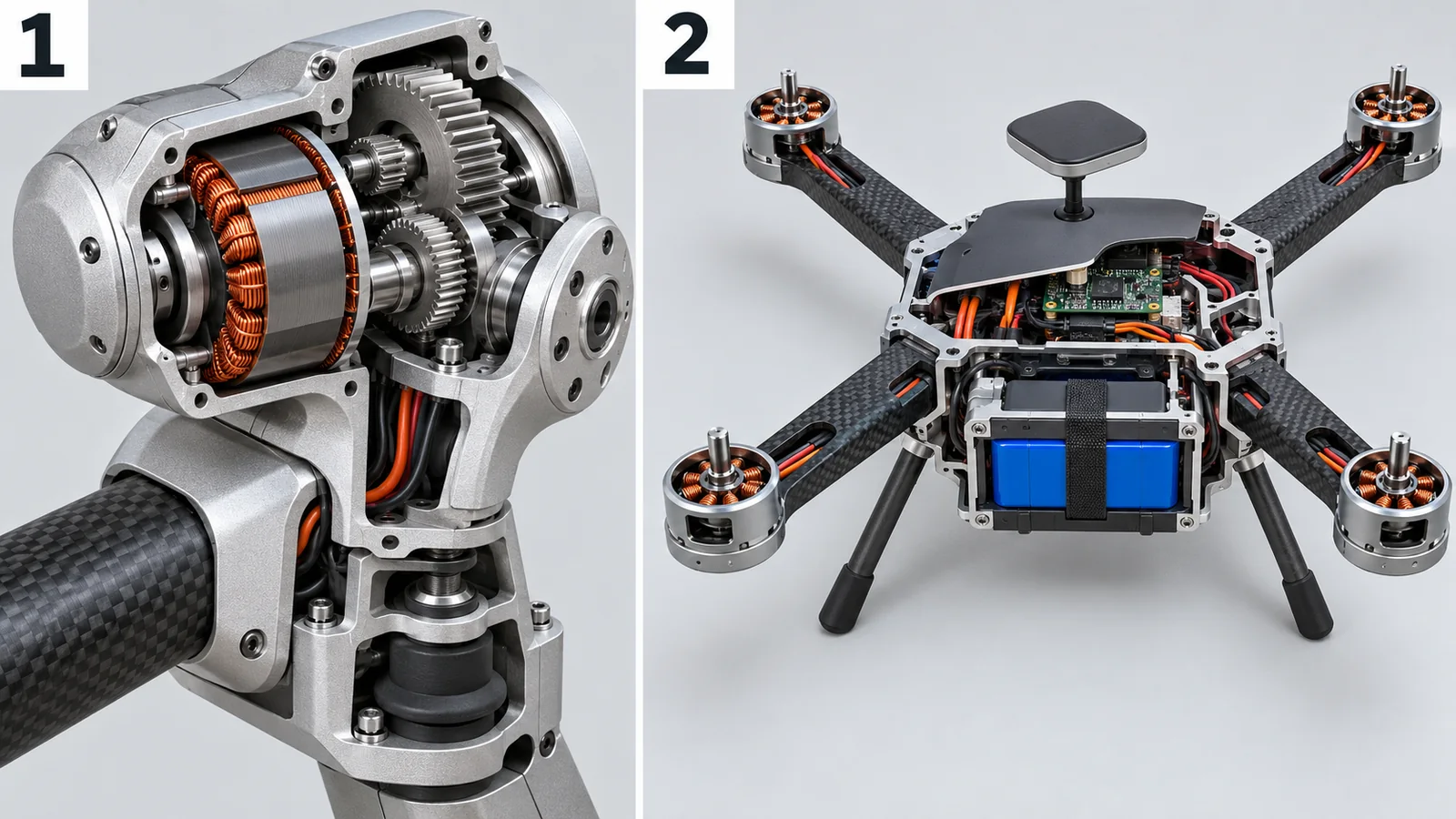
This is our engineering framework, not adoption statistics or guaranteed improvements. NASA provides an introduction to composite fibre/structure relationships; the DOE project presentation is an entry into battery thermal management. [19][20]
| Challenge | Potential materials contribution | Check together |
|---|---|---|
| Mass and stiffness | CFRP, light alloys, reinforced polymers and joints | Fatigue, fibre direction, inspection, repair and recycling |
| Power and heat | Battery materials, insulation, thermal interfaces and cooling parts | Cell versus pack performance, power, heat paths, charging and ageing |
| Precise motion | Magnets, electrical steel, windings, gear/bearing materials and lubricants | Heating, wear, backlash, supply and maintenance intervals |
| Contact and touch | Elastomers, conductors, flexible wiring and tactile layers | Friction, slip, durability, cleaning, temperature and replacement |
| Sensing and connection | Optical windows, coatings, antenna polymers, seals and isolators | Wavelength transmission, radio loss, contamination, condensation, yellowing and bonding |
Stable materials can reduce differences between learned and deployed conditions. Wear and temperature-dependent friction can change behaviour even with an unchanged model. Evaluate the assembled machine rather than optimising materials and control in isolation.
Reading evaluations and standards: beyond “it worked”
- Define the completed job: lifting or also placing; flight or successful handover?
- Inspect conditions: speed, payload, weather, lighting, surface and test duration.
- Locate the human: teleoperation, supervision, correction and reset; how were these counted?
- Count failures and recovery: include sustained operation, faults and recovery time rather than success rate alone.
- Separate evidence: original research, developer claims, independent tests, authorisation and future targets.
NIST develops repeatable capability and operator-proficiency tests. [18] ISO 10218-1:2025 addresses industrial robots, with part 2 addressing integration/applications; it cannot simply be extended to drones, medical or household robots. We refer to the public scope, not uninspected paid clauses or pass criteria. [17]
Illustrations are not evidence of performance. ImageGen visuals here explain components and operations. Cutaways, colours and arrows are teaching devices, not measured results or actual internal product designs.
What to read next
Choose an application first, then explore the relevant sensing, actuation and materials. The routes below cover all 41 technology articles.
Drone applications and flight
Drone Logistics — How package-delivery drones work, and how to read the numbers: delivery counts, speed and "quietness" / Multicopter Principles and Design ― From "thrust above weight means it floats" to the battery-versus-flight-time trade-off and airframe materials / Fixed-Wing, VTOL and Long-Endurance Flight — Why wings save energy, how a wing-borne aircraft can take off without a runway, and how to read "flew for 67 days" / eVTOL and Air Taxis — Layouts, batteries and range, and how to tell "type-certified" from "in progress" / Drone Communication, Positioning and Collision Avoidance — How an aircraft that its pilot cannot see stays connected, knows where it is, avoids traffic and announces itself / Drone Regulation and Airspace Management — "Where, by whom and under what conditions can a drone fly?", and how to read the stage of a rule (proposed, final, in force)
Robot work and embodiments
Industrial and Collaborative Robots — Four shapes, how to read catalogue numbers, how the meaning of "cobot" changed, and the IFR world statistics / Warehouse and Logistics Robots — AMRs, picking robots, how a robot warehouse works, and how to read claims of "robots in operation" and "orders" / Humanoid Robots — What "human-shaped" means and where it stops, how a robot stays upright, and how to read demos and "deployment" claims / Legged and Inspection Robots — How four-legged walking works, the flow of inspection work, what explosion-protection certification (ATEX, IECEx) means and covers, and the limits / Agricultural and Construction Robots ― Machines working in fields and on building sites, and what could be confirmed about the companies behind them / Surgical Robots ― How a tele-operated system extends the surgeon's hands, and how to read an FDA "clearance" / Underwater and Marine Robots ― Machines that work where radio does not reach, pressure crushes and seawater corrodes / Microrobots and Bio-Inspired Robots ― Tiny machines in sticky water, and materials designed by copying how living things work
AI, perception, learning and driving
Autonomous Driving and AI — reading "what it can drive" and "how that is shown" with levels, dates and conditions aligned / Robot Foundation Models and VLA — how an AI that "sees, listens and moves" works, and how to read its results / World Models and Embodied AI — how AI that predicts "what happens next" and moves a body works, and how to read its evaluation / Imitation Learning and Reinforcement Learning — learning by copying people, learning by trial and error, and moving from simulation to the real machine / Teleoperation and Data Collection — how a robot's "teaching material" is gathered, and how to tell whether a video shows autonomy or teleoperation / Robot Simulation and Digital Twins — how a robot is run inside a computer, how it differs from the real machine, and what "digital twin" does and does not mean / Robot Vision and Perception — how cameras and range sensors tell a robot "what is where", and how that is turned into something it can grasp / SLAM and Localization – Knowing "where am I" while building the map / LiDAR — measuring the world by the round trip of light, with the wavelength set by the detector material / Edge AI and On-Device AI — before asking "how many TOPS", ask "how many GB of memory and how many GB/s of bandwidth"
Motion, grasp and touch
Fundamentals of Robot Control – Robots move by "measure, correct, look ahead" / Joint Actuators — The robot's "muscle unit" that combines motor, reducer, sensors and control / Speed Reducers and Gears — Types, accuracy, lifetime and materials of the part that slows rotation to gain force / Robot Hands and Grasping — From finger count, grasp types, friction and fingertip materials to the yardsticks of dexterity / Tactile Sensors and Electronic Skin — Methods and materials of the robot's "skin" that senses pressure, shear and temperature, and its challenges / Soft Robots and Artificial Muscles – What powers a robot with a soft body, and how far has it got? / Soft Actuators and Artificial Muscles — what is a "muscle-like" figure divided by, and under what conditions was it measured? / Shape Memory Alloys — transformation temperatures are numbers about how an alloy was made and measured, not numbers about "the material"
Materials, power, safety and policy
Introduction to Drones and Robotics — The shared skeleton of robots and drones: sense, think, act / Structural Materials for Robots and Drones – Where does "light and stiff" actually come from? / Power Sources for Robots and Drones – What mass do you pay for energy, and what for power? / Lithium-Ion Battery Fundamentals — six cell components, and how to read the denominator of “Wh/kg” / Thermal Runaway and Battery Safety — a cell that resists fire and a system that stops fire spreading are two different things / Fuel Cell Vehicles and PEM Fuel Cells — four materials (membrane, catalyst, diffusion layer, plate) tested by degradation and sub-zero temperatures / Permanent Magnets and Rare Earths — coercivity is set by interfaces more than by composition, and the weak link in supply is refining and magnet-making more than mining / How to Read Robot Safety Standards – "Conforms to a standard" is not the same as "safe": a map of ISO 10218, 13482, 3691-4, 25785-1 and 13849-1 / National Robotics and Drone Strategies and Supply Chains — How to read "a plan worth billions", "most robots installed" and "concentrated supply of parts" (United States, China, Europe, Japan, Korea)
The picture to retain
Drones move information and goods through the air, robots act on objects and surroundings, and automated vehicles move people and freight. AI can expand the range of changing conditions each handles. Extending that range responsibly requires data, mechanisms, materials, evaluation and operations to be treated as one undertaking.
Primary sources and scope of verification
Checked 25 October 2026. Current examples use regulators, operators and original research. Developer announcements remain developer claims. Future scenarios and engineering groupings are editorial analysis. This overview does not revalidate every source in every detailed article. Check current original rules and applicable editions for authorisation or compliance decisions.
- MLIT: Level 4 drone flight portal
- FAA: Package Delivery by Drone (Part 135)
- Google DeepMind: Gemini Robotics 2, 30 July 2026
- Physical Intelligence: pi0.5, 22 April 2025
- NHTSA: Automated Vehicle Safety
- Waymo Help: Service announcements through 21 October 2026
- METI: Level 4 medium-sized bus operations, 13 January 2026
- Waymo: Tokyo service preparations, 14 September 2026
- Baidu: General Business / Apollo Go
- MIIT: Automated Driving System Safety Requirements, 4 August 2026
- European Commission: Vehicle legislation and ADS amendments
- EUR-Lex: Commission Implementing Regulation (EU) 2022/1426
- Waymo: Madrid preparations, 20 October 2026
- UK DfT: Self-driving vehicle pilot applications, 31 March 2026
- Singapore MOT: Automated and autonomous vehicles, updated 13 October 2026
- Dubai RTA: Commercial autonomous taxis, 30 March 2026
- ISO: ISO 10218-1:2025 public scope
- NIST: Performance of Emergency Response Robots
- NASA: Aeronautics Sustainability Factors, 2023
- US DOE: Stand-Alone Battery Thermal Management System
- Amazon Science: Foundation models for multirobot coordination, 11 August 2025
- DJI: Dock 3 announcement, 27 February 2025