INSTITUTION PROFILE / DRONES AND ROBOTICS
IFR (International Federation of Robotics)
The industry body that compiles the world’s robot numbers every year
The IFR is a non-profit international organisation whose members include robot makers, national and international industry associations and research institutes. Each autumn it publishes the statistical report World Robotics, which is widely quoted as the reference for “how many robots were installed worldwide”. But the IFR is not a body that sets regulations or standards. Its figures are the organisation’s own published numbers, compiled from reports by manufacturers and others. Its service-robot statistics also generally leave out drones. This profile looks at one question: how far the IFR’s numbers can be relied on, and what they do not describe.
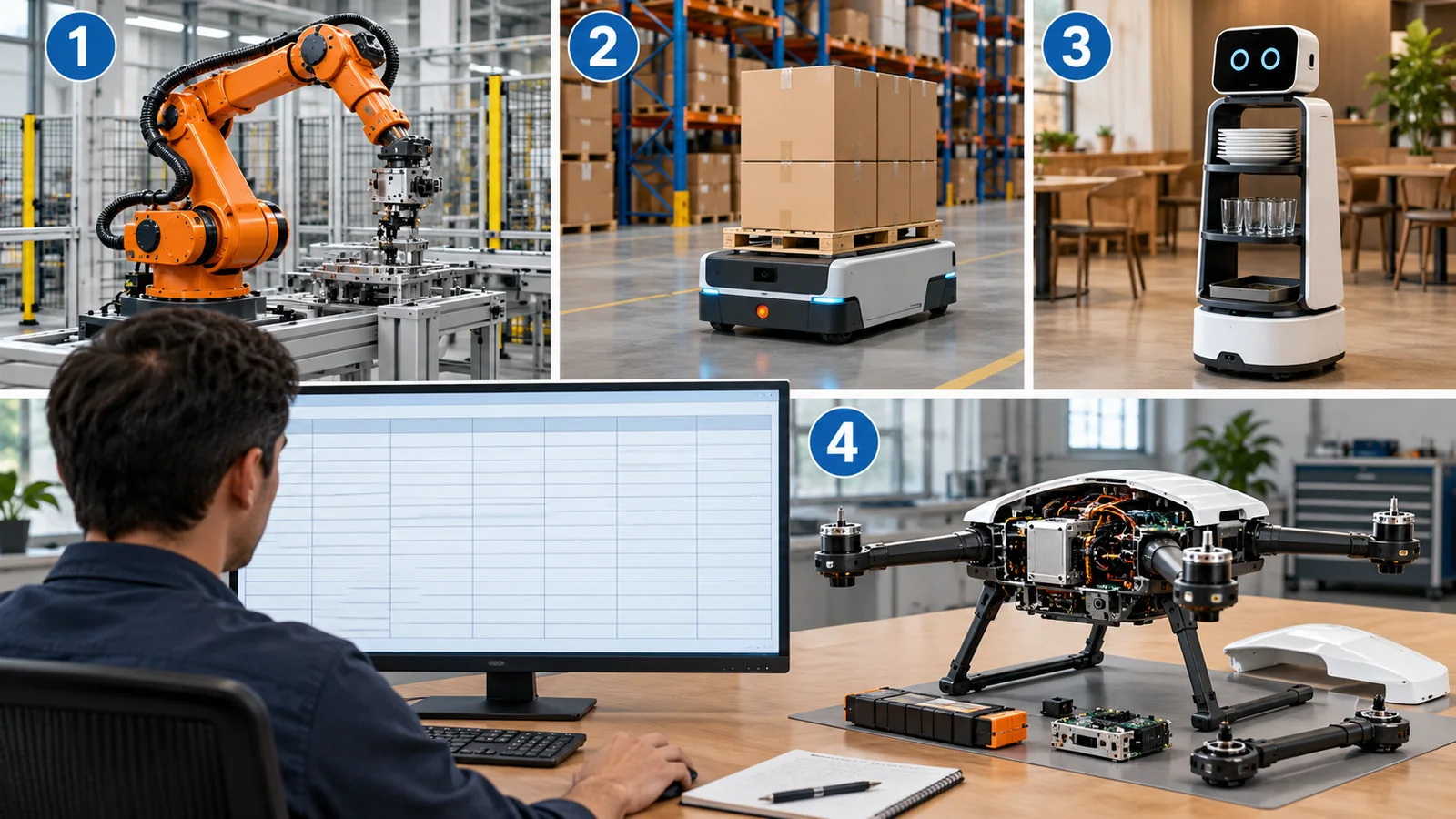
- The IFR in 30 seconds
- What kind of body it is: the four types of influence
- What it does for drones and robotics
- How far its influence reaches (powers and geography)
- Who it works with: how the numbers are made
- Outlook
- Glossary, references and claim-to-source audit
1. The IFR in 30 seconds
(from 20+ countries)The IFR’s own description. We could not find the secretariat’s staff numbers
The IFR’s numbers are a reference for how fast robots are spreading, but they are an organisation’s compilation, not the facts themselves. The industrial-robot statistics combine reports from nearly all major suppliers worldwide with data from national industry associations Sourced. The IFR is itself a gathering of manufacturers and industry associations, and it is also a body that promotes the adoption of robots (it lists advocacy for supportive policies among its activities) Sourced. So read not only the size of a number but what is being counted: installations or shipments, and which kinds of robot.
2. What kind of body it is: the four types of influence
Unlike the companies in this series, none of the institutions in drones and robotics builds aircraft or robots. What separates them is the route by which they influence the industry, and that gives four types.
The IFR is a “Convening” type. Members gather to exchange information, publish statistics and put out the industry’s views Sourced. For industrial robots, the IFR’s definition follows ISO’s (as stated on the IFR’s site). ISO/TC 299 lists the IFR as a liaison organisation (category A), but standards are decided through ISO’s own procedures Sourced.
3. What it does for drones and robotics
The IFR’s main work is the annual statistical report World Robotics and its release. The 2026 edition was announced by press release on 24 September 2026 for industrial robots and 30 September 2026 for service robots Sourced.
| Item | Figures published by the IFR (World Robotics 2026) | What the number means; cautions |
|---|---|---|
| Industrial robots installed in 2025 | 603,000 units (+11% on the previous year). Operational stock at year-end was 5.079 million (+9%), above 5 million for the first time | “Operational stock” is an estimate of robots working worldwide. Installations and stock are different measures |
| By country | China 354,000 (+20%, 59% of world installations); United States about 38,500 (+12%); Japan 36,219 (-19%); Republic of Korea 30,000 (-1%); Germany under 25,000 (-8%) | The United States overtook Japan to become the second-largest market; Japan is third |
| Collaborative robots | 66,000 units (11% of industrial-robot installations). Growth of +7% was below the industrial-robot market as a whole for the first time since the IFR began tracking them | Collaborative robots are designed to be used close to people |
| Service robots (professional) | About 250,000 units (+24%, within the IFR’s sample). Transport and logistics accounted for 117,500 units (47%) | “The IFR’s sample” means this is not a count of every robot in the world |
| Humanoids | About 7,000 full-size units (over 140 cm) were sold in 2025. The IFR says most current uses are specialised and often need human teleoperation | Units sold are not the same as units working autonomously. The IFR itself lists safety standards and the business case as challenges |
| Medical and consumer | 8,400 surgical robots (+57%). Consumer robots, mainly for the home, about 34.2 million units (+37%) | Home robots are mostly cleaning robots, and the volume is on a different scale from industrial or professional robots |
Note: all figures are the IFR’s own published numbers (press releases and the president’s report). The reports are sold and we did not examine them. Installations outside China come to about 249,000 units (603,000 minus 354,000; our calculation) Our calculation.
The IFR’s “service robot” statistics generally leave out robots that move through the air (drones). The report’s methods section says, in substance, that swimming and diving robots are included, but aerial types of movement, that is drones, are generally avoided and are considered only in special cases such as full autonomy Sourced. For drone counts and market size, look to other primary sources, such as aviation authorities’ registration data. Do not put robot figures (ground, underwater, surgical, logistics) in the same table as drone figures.
Its other activities are as follows (the IFR’s own description) Sourced.
- Sponsoring the International Symposium on Robotics (ISR), a conference on industrial and service robotics held since 1970
- A research award (the IERA Award), position papers, press conferences and executive roundtables
- Advocacy for policies that support the adoption of robots
4. How far its influence reaches (powers and geography)
| Aspect | What the IFR has | What the IFR does not have |
|---|---|---|
| Powers | Collecting, compiling and publishing statistics. Maintaining the definitions and classifications used in them. Publishing the industry’s views (position papers) | Power to make regulations. Power to issue standards (those come from ISO and others). Certifying or approving robots or drones |
| Geography | Industrial-robot data for about 40 countries. Members are in more than 20 countries | A complete picture of companies and countries that do not report. Drone statistics (generally outside scope) |
| Force | Member suppliers and national associations are required to submit statistics (IFR constitution). That is an internal duty of the association, not a legal one | Any way to compel a company that does not report. Any power to require governments or companies to use the numbers |
| Scale | 90+ direct members. It publishes no company-level figures, only totals by country, industry and application; numbers based on fewer than four observations are withheld | Secretariat staff numbers and budget (we could not find these published) |
(1) Installations or shipments. The report centres on “installations”, but some companies and associations report “shipments”. (2) Reported data. The numbers are suppliers’ own reports cross-checked against national associations’ data. (3) Gaps in small markets. Figures based on fewer than four observations are withheld and folded into “other”, so tables may not add up. (4) China’s data. China’s figures come through the industry association CRIA, which, because of legal requirements, can report only its members’ statistics. (5) Revisions. Past numbers are updated when new information arrives. In the 2026 edition the regional classification was also changed and all data reprocessed. Sourced
5. Who it works with: how the numbers are made
The figure below shows how the World Robotics numbers are produced and who uses them, using only relationships described in the IFR’s own materials.
| Organisation | Relationship stated in the IFR’s materials |
|---|---|
| National robot associations | The 2026 industrial-robot statistics were supported by A3 (North America), AER (Spain), BARA (United Kingdom), CRIA (China), DIRA (Denmark), JARA (Japan), KAR (Republic of Korea), SIRI (Italy), SWIRA (Sweden) and TAIROA (Chinese Taipei) |
| VDMA (German Mechanical Engineering Industry Association) | World Robotics is produced by VDMA Services GmbH in Frankfurt and sold through VDMA Verlag’s webshop. A VDMA representative also appears among the IFR’s key people |
| Fraunhofer IPA | Co-compiles the service-robot report with the IFR’s statistical department. The IFR’s service robot committee chair (Werner Kraus) is affiliated with it |
| Robot makers | The key-people page lists people from ABB, FANUC, YASKAWA Europe, Teradyne Robotics, Stäubli, Schunk, COMAU, Estun, EFORT, PAL Robotics and others. These are individuals’ affiliations and do not necessarily reflect each company’s position |
| ISO/TC 299 | ISO’s page lists the IFR as a liaison organisation (category A) (see our ISO profile) |
6. Outlook
| What we can read from the sources | Primary source | Category |
|---|---|---|
| IFR forecast: industrial-robot installations of 655,000 units (+9%) in 2026 and 806,000 units in 2029 | IFR press release (24 September 2026). A forecast by the organisation, not an outcome | Not yet confirmed |
| A webinar on service, mobile and humanoid robot statistics is planned for 30 October 2026 | The IFR president’s report (24 September 2026). Content not yet published | Not yet confirmed |
| Next year’s World Robotics is likely to be released in the autumn (around September) as well | The 2026 edition came out on 24 and 30 September, and the IFR describes the report as annual | Inference |
| Humanoids may continue to be treated as a separate item in the statistics | The 2026 service-robot report has a special chapter on humanoids | Inference |
7. Glossary
- Installations / operational stock
- Installations are robots newly put into service in a year. Operational stock is an estimate of robots working at year-end.
- Robot density
- The number of robots in operation per 10,000 manufacturing employees. A measure for comparing degrees of automation.
- Industrial robot (IFR definition)
- Based on ISO’s definition: an “automatically controlled, reprogrammable multipurpose manipulator programmable in three or more axes”.
- Service robot (IFR definition)
- A robot programmable in two or more axes that performs useful tasks for humans or equipment, excluding industrial automation. Divided into professional (used by trained operators) and consumer.
- Collaborative robot
- A robot designed to work in the same space as people.
- RaaS (Robotics as a Service)
- A contract model in which a customer pays to use a robot as a service instead of buying it.
8. References
- IFR About IFR: established in 1987 as a non-profit organisation, over 90 direct members from more than 20 countries, aims and activities. Checked 25 October 2026. https://ifr.org/association
- IFR Key People: president, vice-president, committee chairs and national association delegates, with affiliations. https://ifr.org/executive-board
- IFR About World Robotics: how statistics are collected; the statement that policymakers and media use them. https://ifr.org/about-world-robotics/
- IFR World Robotics – Industrial Robots: coverage of about 40 countries, data collection, robot density. https://ifr.org/wr-industrial-robots/
- IFR World Robotics – Service Robots: definition of a service robot; co-compiled with Fraunhofer IPA. https://ifr.org/wr-service-robots/
- IFR Five Million Robots now Operate in Factories Globally (24 September 2026): installations by country, forecasts. https://ifr.org/ifr-press-releases/news/five-million-robots-now-operate-in-factories-globally
- IFR Global Sales of Professional Service Robots Surge 24% (30 September 2026): service robots, humanoids, medical and consumer robots. https://ifr.org/ifr-press-releases/news/global-sales-of-professional-service-robots-surge-24-percent
- IFR President’s Report by Jane Heffner (24 September 2026): 603,000 installations, 5.079 million operational stock, collaborative robots, the webinar on 30 October 2026. https://ifr.org/ifr-press-releases/news/presidents-report-by-jane-heffner-3-2026
- IFR World Robotics 2026 Industrial Robots – Sources & Methods: data sources, the obligation to submit statistics, quality, withholding rules, China’s data, data revisions. https://ifr.org/img/worldrobotics/Sources___Methods_WR_2026_-_Industrial_Robots.pdf
- IFR World Robotics 2026 Service Robots – Sources & Methods: definition of service robots and the statement that drones are generally avoided. https://ifr.org/img/worldrobotics/Sources___Methods_WR_2026_-_Service_Robots.pdf
- IFR Compliance: no company-level data published; numbers based on fewer than four observations withheld. https://ifr.org/compliance
- IFR IFR home page: definitions of industrial and service robots, the ISR symposium, position papers. https://ifr.org/
- ISO ISO/TC 299 Robotics: the IFR listed as a category A liaison organisation. https://www.iso.org/committee/5915511.html
9. Claim-to-source audit
| Claim in the article | Category | Source |
|---|---|---|
| Founded in 1987 as a non-profit organisation; over 90 direct members in more than 20 countries; advocacy among its activities | Sourced | Reference 1 https://ifr.org/association |
| Affiliations of officers and committee chairs (ABB, FANUC, YASKAWA Europe, Teradyne Robotics, Fraunhofer IPA, VDMA and others) | Sourced | Reference 2 https://ifr.org/executive-board |
| The IFR’s statement that policymakers, media and researchers cite its statistics; how statistics are collected | Sourced | Reference 3 https://ifr.org/about-world-robotics/ |
| Industrial-robot statistics cover about 40 countries and draw on reports from nearly all suppliers | Sourced | Reference 4 https://ifr.org/wr-industrial-robots/ |
| Definition of a service robot; co-compilation with Fraunhofer IPA | Sourced | Reference 5 https://ifr.org/wr-service-robots/ |
| 2025 installations by country (China 354,000 and others), forecasts for 2026 and 2029 | Sourced | Reference 6 https://ifr.org/ifr-press-releases/news/five-million-robots-now-operate-in-factories-globally |
| About 250,000 professional service robots, 117,500 in transport and logistics, about 7,000 humanoids, 8,400 surgical robots, about 34.2 million consumer robots | Sourced | Reference 7 https://ifr.org/ifr-press-releases/news/global-sales-of-professional-service-robots-surge-24-percent |
| 603,000 installations, 5.079 million operational stock, 66,000 collaborative robots, the “IFR sample” for service robots, the webinar on 30 October | Sourced | Reference 8 https://ifr.org/ifr-press-releases/news/presidents-report-by-jane-heffner-3-2026 |
| Data sources (national associations), obligation to submit statistics, installations versus shipments, China’s data, revisions and the classification change, production by VDMA Services | Sourced | Reference 9 https://ifr.org/img/worldrobotics/Sources___Methods_WR_2026_-_Industrial_Robots.pdf |
| Service-robot statistics generally avoid aerial movement (drones) | Sourced | Reference 10 https://ifr.org/img/worldrobotics/Sources___Methods_WR_2026_-_Service_Robots.pdf |
| No company-level data published; numbers based on fewer than four observations withheld | Sourced | Reference 11 https://ifr.org/compliance |
| Definitions of industrial and service robots, the ISR symposium (since 1970), position papers | Sourced | Reference 12 https://ifr.org/ |
| The IFR is a category A liaison organisation of ISO/TC 299 | Sourced | Reference 13 https://www.iso.org/committee/5915511.html |
| The grouping into four types, the three “users” in Fig. 2, and installations outside China (603,000 minus 354,000) | Our calculation | This article’s own grouping (based on References 3, 6 and 8) |
| Secretariat staff numbers and budget; drone statistics | Not yet confirmed | Not stated in References 1 to 12; this article does not estimate them |
| The two outlook items in chapter 6 (timing of the next report, humanoids) | Inference | This article’s reading of the release dates and the special chapter in References 3, 6 and 7 |
Last updated 25 October 2026 / Troy Technical
Figures are the IFR’s own published numbers, taken from its website and press releases. We did not examine the reports themselves, which are sold. Items marked “Inference” are this article’s reading of the primary information.