Background
The global demand for diversified solar energy solutions is growing, extending beyond conventional rooftop panels to lightweight, flexible, and transparent applications. Building-integrated photovoltaics (BIPV) represent a particularly attractive market, allowing structures themselves to generate electricity without compromising aesthetics. Perovskite solar cells (PSCs), with their high power conversion efficiencies and versatile processing, are prime candidates for next-generation PV. However, achieving both extreme thinness and high transparency while maintaining performance has remained a significant challenge, especially for applications like smart windows or flexible electronics.
Key Findings / Results
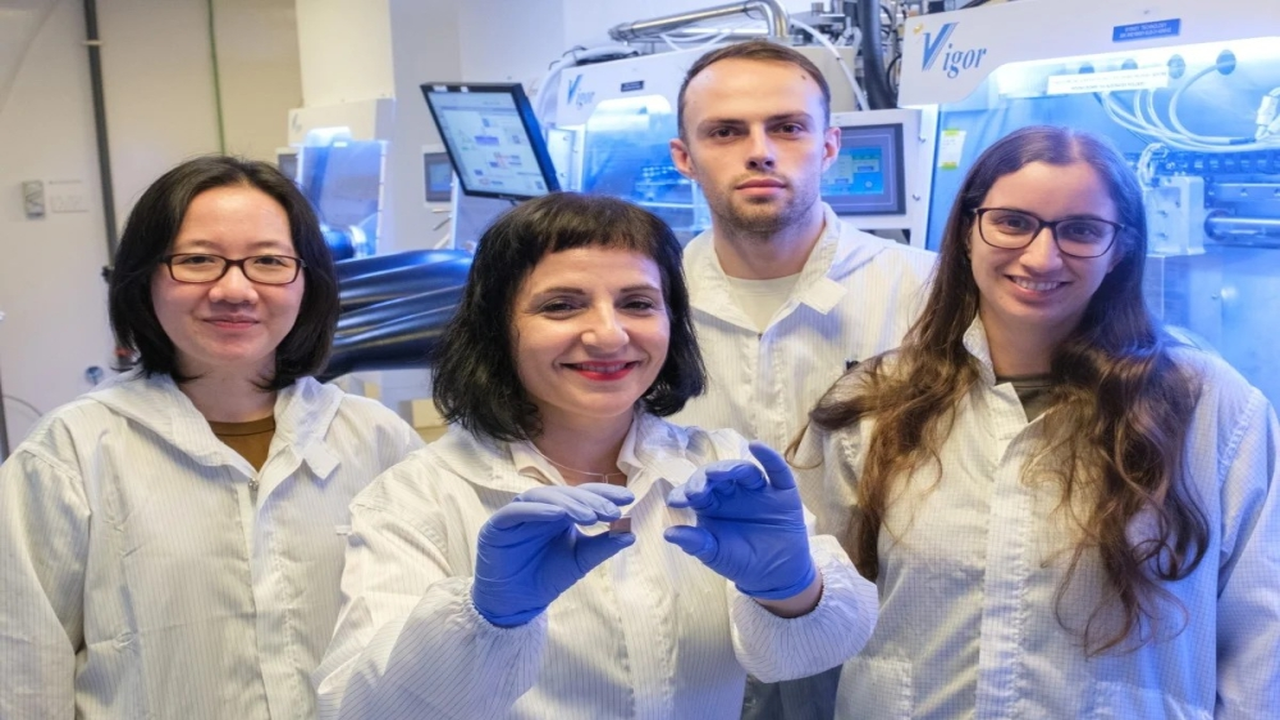
Researchers at Nanyang Technological University (NTU) in Singapore have made a significant breakthrough by developing ultrathin perovskite solar cells with a thickness as low as 10 nanometers. This represents a substantial reduction, making them approximately 50 times thinner than typical perovskite solar cells. The devices were fabricated using a vacuum thermal evaporation method, a technique known for producing highly uniform and high-quality thin films, which is crucial for such delicate structures.
- Extreme Thinness: The 10 nm thickness offers unprecedented flexibility and minimal material usage, paving the way for new form factors and integration possibilities.
- Dual Performance (Efficiency & Transparency):
- Opaque Devices: Demonstrated a maximum power conversion efficiency of 12%.
- Semi-Transparent Devices: Achieved 7.6% efficiency while maintaining an impressive 41% visible light transmittance, highlighting their potential for transparent applications like smart windows.
- Vacuum Thermal Evaporation: This fabrication method provides precise control over film thickness and uniformity, addressing some of the limitations of solution-processed perovskites, particularly for large-area deployment and stability.
Technical Significance & Outlook
The development of these nanoscale, ultrathin, and semi-transparent perovskite solar cells opens up vast new application spaces for photovoltaics. Their extreme thinness makes them ideal for BIPV, where they can be seamlessly integrated into windows, facades, and other architectural elements, transforming buildings into energy-generating entities. The ability to achieve high transparency alongside power generation is a key differentiator, enabling aesthetic and functional integration. Furthermore, their lightweight and flexible nature makes them suitable for powering drones, wearable electronics, and various Internet of Things (IoT) devices that require discreet and adaptable power sources. This advancement positions NTU Singapore at the forefront of transparent and flexible PV research, pushing the boundaries of solar technology beyond rigid panels and accelerating the transition towards more pervasive and sustainable energy solutions.







Comments