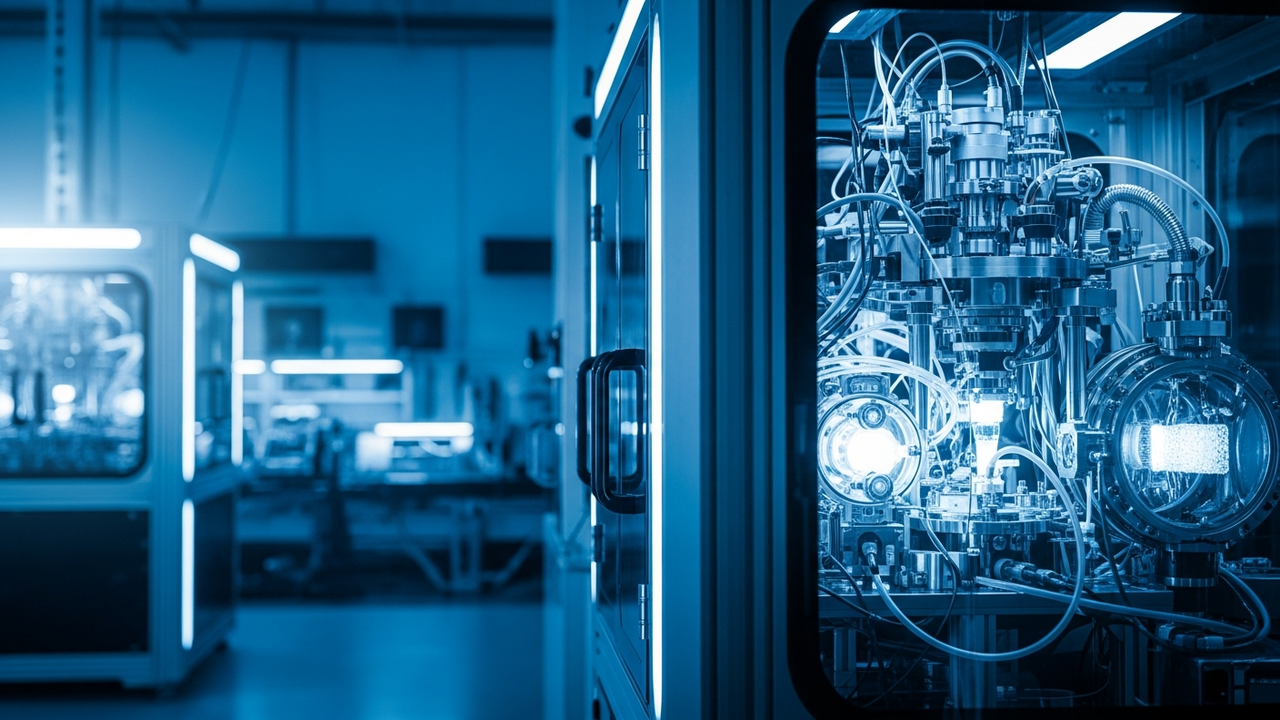
Background: Challenges in Scaling Cell Therapy Manufacturing
Regenerative medicine and cell therapies hold immense promise for treating a wide array of diseases, from cancers to degenerative conditions. However, a major bottleneck to their widespread clinical adoption has been the inability to produce large quantities of high-quality, functional cells consistently and cost-effectively. Traditional 2D cell culture methods often struggle with maintaining cellular phenotype and viability during expansion, making scalable production a significant challenge. This has driven intense research into advanced 3D cell culture systems that can mimic the physiological environment more closely.
Cellfiber’s Zeito™ Technology and Market Expansion
Cellfiber, a Japanese deep-tech startup, has developed a unique “cell fiber” technology to address these manufacturing hurdles. The company recently announced the branding of its cell fiber manufacturing systems as “Zeito™” and detailed plans for a full-scale rollout into both the Japanese and United States markets.
- Overview of Cell Fiber Technology: The Zeito™ system utilizes an innovative 3D cell culture approach where cells are encapsulated within a network of micron-sized fibers. This architecture provides a scaffold that supports cell growth in an environment more analogous to in vivo conditions, leading to superior cell viability and retention of specific cellular functions compared to conventional methods. The fiber-based format also simplifies media exchange, cell recovery, and offers high potential for large-scale, continuous culture systems.
- Strategic Importance of Zeito™ Brand: The introduction of the Zeito™ brand signifies Cellfiber’s ambition to position its technology as a robust, practical solution for biomanufacturing rather than just a research tool. The strategic focus on the US market, a global hub for cell therapy research and commercialization, highlights the company’s intent for Zeito™ to become an international standard in advanced cell culture manufacturing.
Impact on Regenerative Medicine and Future Outlook
The commercial availability of Zeito™ systems is poised to have a substantial impact on the regenerative medicine landscape. Currently, many cell-based products in clinical development or early commercialization face challenges related to limited production scale and high manufacturing costs. If Cellfiber’s technology enables more efficient and scalable cell production, several key benefits are anticipated:
- Cost Reduction for Cell Therapies: By facilitating large-scale manufacturing, Zeito™ could significantly lower the per-dose cost of cell therapies, improving patient access. This is a critical factor for the economic viability of many advanced therapeutic medicinal products (ATMPs).
- Enhanced Quality and Consistency: 3D culture in a controlled fibrous environment can lead to more homogeneous cell populations with improved functionality and reduced variability between batches, thereby enhancing therapeutic efficacy and safety.
- Acceleration of Novel Therapies: The availability of abundant, high-quality functional cells at scale could unlock the development of new cell therapies that were previously impractical due to manufacturing constraints. This includes complex engineered tissues and organoids for drug screening and disease modeling.
Beyond regenerative medicine, Cellfiber’s technology holds promise for other applications, such as the production of cultivated meat (cellular agriculture) and the creation of advanced in vitro models for drug discovery. The Zeito™ brand represents a potential paradigm shift in cell culture, positioning Cellfiber to drive innovation across multiple biotechnological sectors. Its success will be closely watched as it seeks to establish new benchmarks for scalable, high-quality cell production.
Source: #





Comments