Key Findings
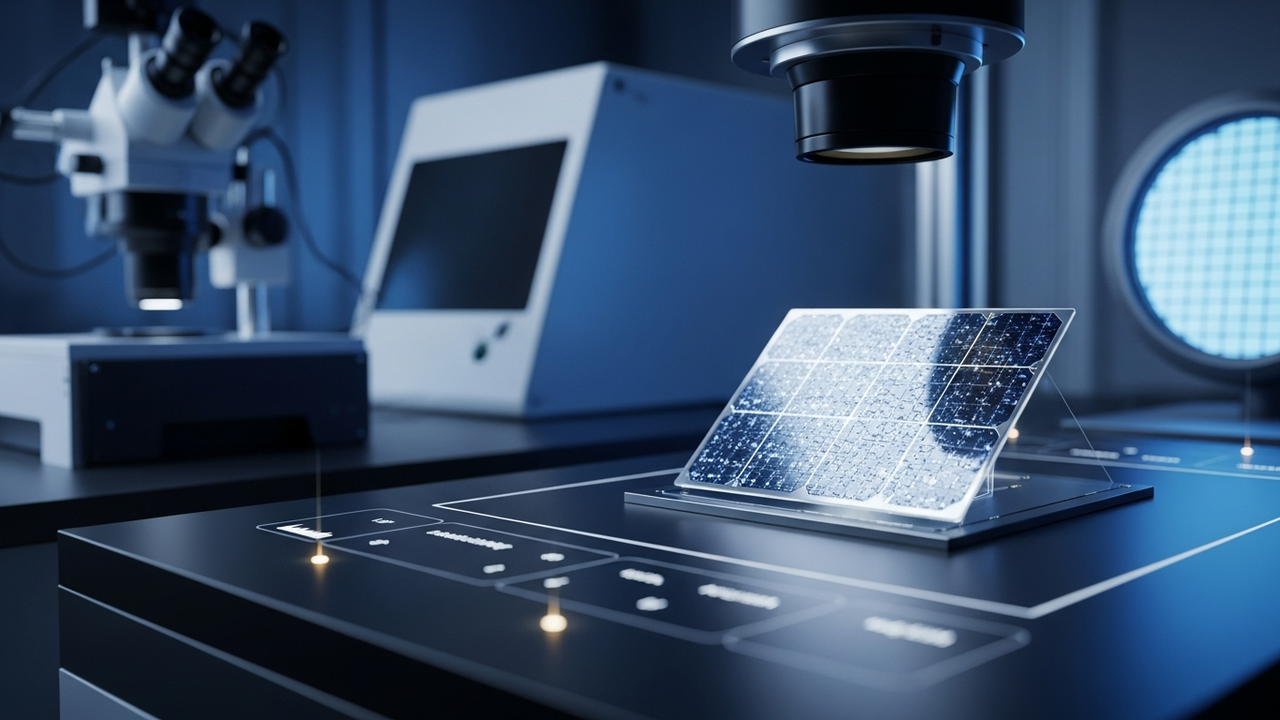
The paper ‘More than just light management – The multiple advantages of nano- and micro-textures in perovskite solar cells,’ published on arXiv, provides a comprehensive review of novel benefits derived from nano- and micro-texturing technologies for multi-faceted performance enhancement in perovskite solar cells. This research reveals that these textures not only contribute to light management but also improve the perovskite film formation process, enhance material crystalline quality, facilitate efficient charge carrier extraction, and bolster the mechanical stability of flexible devices. These combined advantages significantly contribute to the overall efficiency improvement of perovskite-silicon tandem solar cells, positioning them as a critical element in next-generation solar cell design.
Technical Details
Nano- and micro-texturing involves introducing fine structures onto substrate surfaces. The review highlights specific advantages:
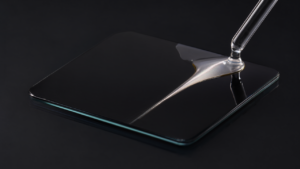
- Improved Film Wettability: Textured surfaces enhance the wettability of perovskite solutions, promoting the formation of more uniform and defect-free perovskite films, which is crucial for reproducible large-area manufacturing.
- Enhanced Crystallinity: Textures at interfaces control perovskite crystal nucleation and growth, leading to the formation of larger, more stable crystalline grains, which in turn improves device stability and efficiency.
- Enhanced Charge Carrier Extraction: The textured structures shorten the path for photogenerated charge carriers to reach electrodes and reduce recombination losses, thereby increasing current density and power conversion efficiency.
- Improved Mechanical Stability: Especially in flexible perovskite solar cells, textures contribute to stress distribution, enhancing the device’s resilience to bending and stretching. This ensures the long-term reliability of flexible devices.
These effects also boost the overall device performance in perovskite-silicon tandem solar cells by improving the efficiency and stability of the top perovskite layer.
Background & Context
Perovskite solar cells are gaining significant attention as a next-generation photovoltaic technology due to their high efficiency and potential for low-cost manufacturing. However, their commercialization requires overcoming challenges in stability, reproducibility, and large-scale production. Nano- and micro-texturing technologies offer a multifaceted approach to address these issues. While traditional texturing primarily focused on light management (light trapping effects), this review demonstrates its profound contributions to material science and electrochemical aspects, expanding the design philosophy of perovskite solar cells. This technology could be relatively easily integrated into existing manufacturing processes, making it an attractive option for the industry.
Strategic Significance & Outlook
Nano- and micro-texturing is a highly promising strategy for improving the performance and durability of perovskite solar cells, and further R&D in this area is expected to accelerate. Specifically, research into developing low-cost, scalable texturing methods and optimizing texture designs for specific applications (e.g., BIPV, wearable devices) is anticipated. The widespread adoption of this technology will expedite the practical application of perovskite solar cells and, by improving the cost-effectiveness of solar power, is expected to make significant contributions to the global clean energy transition. In the future, these textured structures may also find applications in improving the performance of other optoelectronic devices such as perovskite LEDs and sensors.
Source: https://arxiv.org/abs/2605.18431