Key Findings
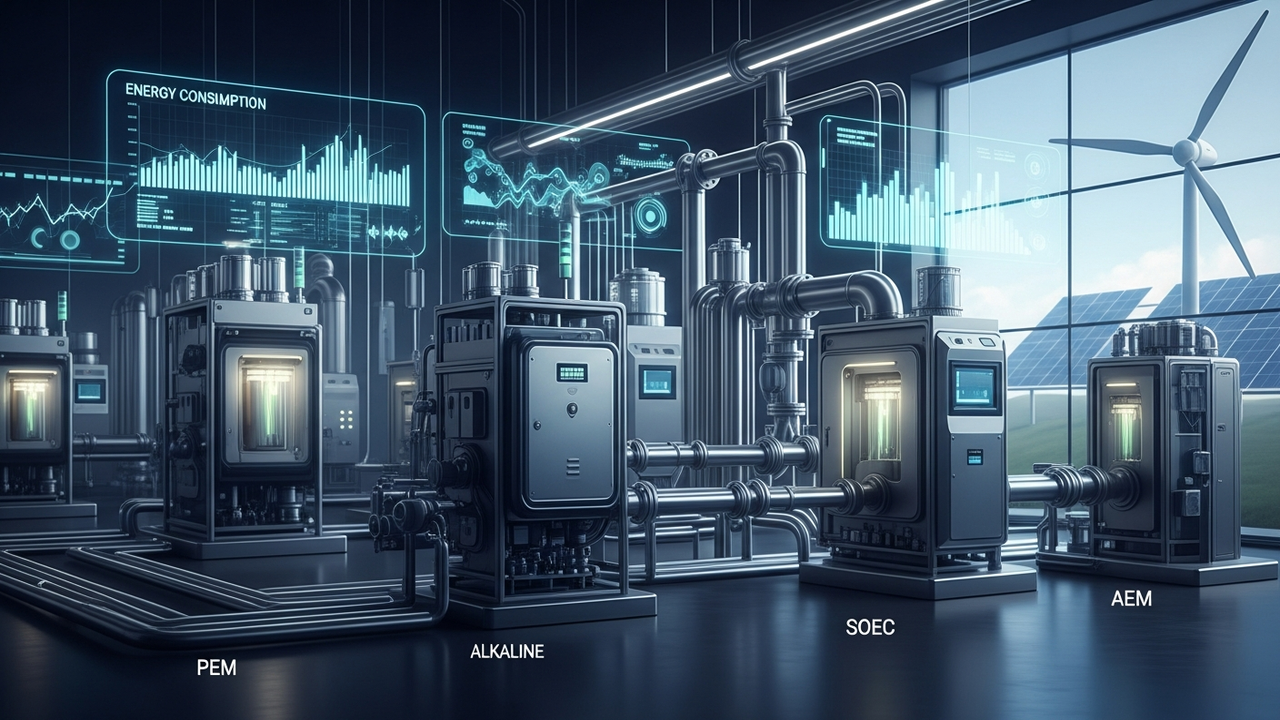
In green hydrogen production, the selection of electrolyzer technology and electricity cost are paramount drivers of project economics, with electricity representing approximately 50-70% of total production expenses. Leading electrolyzer technologies, including Proton Exchange Membrane (PEM), alkaline, Solid Oxide Electrolysis Cell (SOEC), and Anion Exchange Membrane (AEM), each offer distinct performance, cost, and operational characteristics. Danish electrolyzer developers have achieved a breakthrough, reducing green hydrogen costs by up to 30% compared to 2024, through advanced stack designs, waste heat recovery, dynamic operation optimization with renewable energy, modularization, and digital process optimization.
Technical Details and Cost Reduction Strategies
- PEM Electrolyzers: Capable of producing high-purity hydrogen at high pressure with rapid startup and shutdown, offering flexibility for variable renewable energy sources. While compact, their reliance on precious metal catalysts like iridium and platinum contributes to higher costs.
- Alkaline Electrolyzers (ALK): A mature technology with lower upfront capital costs. However, they are less responsive to dynamic operation than PEM systems, posing efficiency risks when integrated with fluctuating renewable power inputs. Proper control and buffering are essential for optimal performance.
- SOEC Electrolyzers: Operate at high temperatures (700-850 °C) and boast the highest efficiency by utilizing both heat and electricity. Suitable for hard-to-abate sectors such as refining, chemicals, ammonia, steel, and synthetic fuels, but face material challenges associated with high-temperature operation. Topsoe is actively advancing SOEC technology for industrial-scale green hydrogen production.
- AEM Electrolyzers: Aim to combine the advantages of alkaline and PEM electrolyzers, potentially producing high-purity hydrogen without precious metals, but are still in the developmental phase.
Danish efforts to reduce costs include innovative stack designs replacing iridium with nickel-iron alloys, efficient waste heat recovery, dynamic responsiveness to fluctuating renewable electricity, modular scaling, and digital process optimization. These advancements are projected to lower the Levelized Cost of Hydrogen (LCOH) in Denmark from its current range of €3.50–€5.50/kg to €2.50–€3.50/kg by 2028.
Background & Industry Context
Green hydrogen holds significant promise for decarbonizing hard-to-abate industries, stabilizing electricity grids, and storing renewable energy. However, its current production costs (ranging from $3 to $8 per kilogram) remain significantly higher than grey hydrogen ($1 to $2 per kilogram), posing a major barrier to widespread adoption. China leads the world in electrolyzer manufacturing, with large-scale deployment and cost reductions ongoing. In the U.S., the Inflation Reduction Act’s (IRA) 45V clean hydrogen production tax credit, offering up to $3/kg, is narrowing the cost gap between green and grey hydrogen.
Strategic Significance & Outlook
With sufficient manufacturing scale-up, electrolyzer costs are projected to fall to $200–$300 per kilowatt by 2030. The evolution and cost optimization of each electrolyzer technology are crucial for enhancing green hydrogen’s competitiveness and accelerating its large-scale deployment. High-temperature electrolysis, such as SOEC, has the potential to further improve efficiency and reduce costs by effectively utilizing industrial waste heat. These technological advancements will vigorously propel the transition towards a hydrogen-based clean energy economy.
Source: https://pressurecontrol.nl/how-does-an-electrolyzer-produce-green-hydrogen/