Key Findings
An interdisciplinary research team from the University of Utah and the University of Illinois Chicago has developed a novel wearable smartwatch capable of continuously and non-invasively measuring blood pressure and blood flow without requiring a cuff. This groundbreaking device combines principles of physics with Artificial Intelligence (AI) to deliver highly accurate and calibration-free cardiovascular health monitoring, potentially transforming the paradigm of cardiovascular disease management.
Technical / Clinical Details
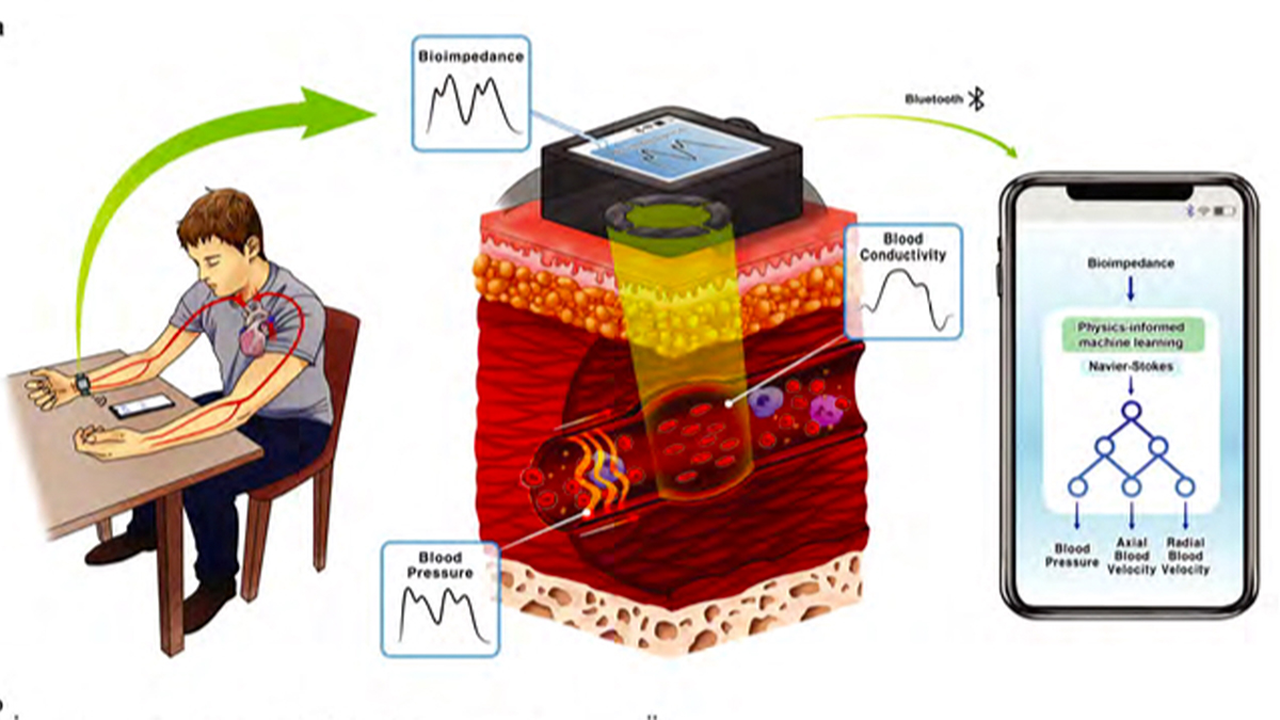
The core technology of this smartwatch lies in multiple miniature sensors in contact with the arterial pulse at the wrist. These sensors detect subtle changes in the electrical properties of blood as it flows through the arteries (e.g., impedance, conductivity). Specifically, the following technologies are integrated:
- Electrical Impedance Plethysmography (EIP): By applying a very weak high-frequency current to the skin and measuring changes in the tissue’s electrical resistance, the device detects variations in blood volume within the vessels. These blood volume changes are closely correlated with blood pressure fluctuations.
- Machine Learning and AI Algorithms: AI models analyze the raw data from the sensors in real-time, estimating blood pressure values and blood flow patterns based on individual users’ physiological characteristics. The AI learns complex patterns from vast cardiovascular datasets, enabling noise reduction and accuracy improvement. This AI dynamically adjusts to individual users’ physical traits and activity levels, eliminating the need for additional user calibration once set up.
- Continuous Monitoring: Unlike traditional oscillometric (cuff-based) methods that provide intermittent measurements, this device continuously monitors blood pressure and blood flow throughout the day, including during sleep and exercise. This allows for detailed insights into diurnal variations and the impact of specific activities on the cardiovascular system.
- Biocompatibility and Comfort: Designed with user comfort as a priority for a wearable device, it is minimally irritating to the skin and suitable for prolonged wear.
Preliminary trials by the research team have demonstrated that the device can measure blood pressure with accuracy comparable to standard medical equipment, particularly in capturing blood pressure fluctuations during daily activities and sleep. A significant advantage is its calibration-free nature, contrasting with many existing cuff-less blood pressure monitors that require periodic calibration against a cuff-based device.
Background & Context
Hypertension is a major risk factor for heart disease, stroke, and kidney disease, affecting hundreds of millions globally. Yet, it often goes undetected as a ‘silent killer.’ Traditional blood pressure measurement has been limited to periodic visits to hospitals or clinics, or intermittent home monitoring, potentially missing ‘white-coat hypertension’ or ‘masked hypertension.’ Moreover, while wearable devices offer convenience, the need for continuous calibration has been a barrier to widespread adoption. This cuff-less, calibration-free continuous monitoring technology represents a crucial advancement in overcoming these challenges, promoting early detection, efficient management, and preventive care for hypertension.
Strategic Significance & Outlook
This smartwatch is expected to become a central tool in cardiovascular disease risk stratification, monitoring the efficacy of pharmacotherapy, and remote patient monitoring programs in the future. The research team plans to conduct large-scale clinical trials to confirm its efficacy and safety, aiming for FDA approval. Furthermore, integration with other health metrics such as heart rate, activity levels, and sleep patterns could evolve it into a more comprehensive healthcare solution. The widespread adoption of this technology will not only empower patients to manage their cardiovascular health more proactively but also provide healthcare providers with a powerful tool for delivering more personalized preventive interventions. This is a prime example of how the fusion of wearable technology and AI accelerates the progress of personalized medicine.




Comments