Key Findings
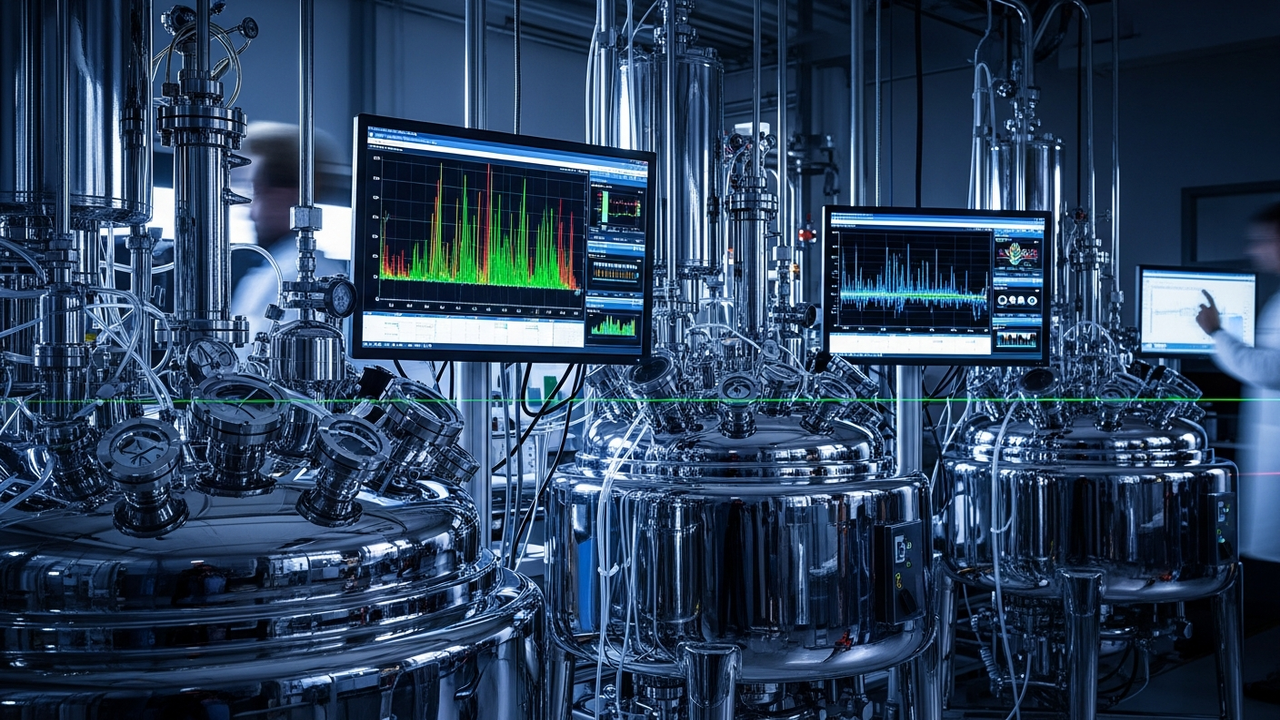
Cellbase emphasized that the integration of real-time monitoring tools is crucial for successful bioreactor scale-up. In large-scale bioreactors, single-point monitoring is often insufficient, as mixing delays and the formation of gradients, which compromise process homogeneity, become common issues. Thus, comprehensive real-time data is essential.
Technical / Clinical Details
- Scale-Up Challenges: Bioreactor scale-up involves technical challenges in optimizing parameters such as oxygen supply, mixing, and temperature control when replicating lab-scale success in large-scale production. These challenges can increase variability within the process and negatively impact product quality.
- Impact of PAT Integration: The integration of Process Analytical Technology (PAT) is key to addressing these challenges. PAT tools collect real-time data from multiple points within the bioreactor, enabling a comprehensive understanding of the process state. This has been shown to potentially reduce process deviation rates to less than 2% and shorten batch processing times by up to 30%.
- Key Monitoring Elements: In cultivated meat R&D and general bioprocess engineering, focus should be placed on the following four elements:
- Core Control Sensors: Real-time measurement of pH, dissolved oxygen (DO), temperature, etc.
- Process State Tools: Measurement of glucose concentration, metabolite levels, cell viability, etc.
- Biomass Tools: Non-invasive monitoring of cell density and activity.
- Scale-Up Checks: Validation of hydrodynamics, mass transfer, and energy dissipation during scale-up.
- Leveraging Chemometrics: The large volumes of data collected in real-time can be analyzed using chemometrics (multivariate analysis) to provide deep process insights, enable predictive model building, and detect anomalies.
Background & Context
As demand for biopharmaceuticals and cultivated meat increases, improving manufacturing process efficiency and scalability is imperative for the industry. Traditional bioprocess development relied on trial-and-error and off-line analysis, which was time-consuming, costly, and provided limited process understanding. PAT and real-time monitoring offer a data-driven approach to overcome these challenges and enhance manufacturing robustness, thus representing a crucial strategy.
Strategic Significance & Outlook
The widespread adoption of real-time monitoring tools and further integration of PAT will significantly enhance the reliability and efficiency of bioreactor scale-up. Coupled with advancements in AI and machine learning, bioprocesses are expected to become more autonomous and optimized, leading to reduced product development cycle times and lower manufacturing costs. This will accelerate the market introduction of innovative bioproducts, benefiting more patients and consumers.
Source: https://cellbase.com/blogs/news/bioreactor-scale-up-real-time-monitoring-tools
Get our weekly technology intelligence — free
Receive an infographic that lets you judge at a glance whether each field’s analysis report is worth reading.
Subscribe Free — Weekly Tech Intelligence
By subscribing, you’ll receive Troy-Technical’s weekly technology intelligence newsletter.
- Your email and selected fields are used only to deliver the newsletter.
- We never share your information with third parties.
- You can unsubscribe anytime via the link in each email.
See our Privacy Policy for details.
Takes about a minute · Unsubscribe anytime