Key Findings
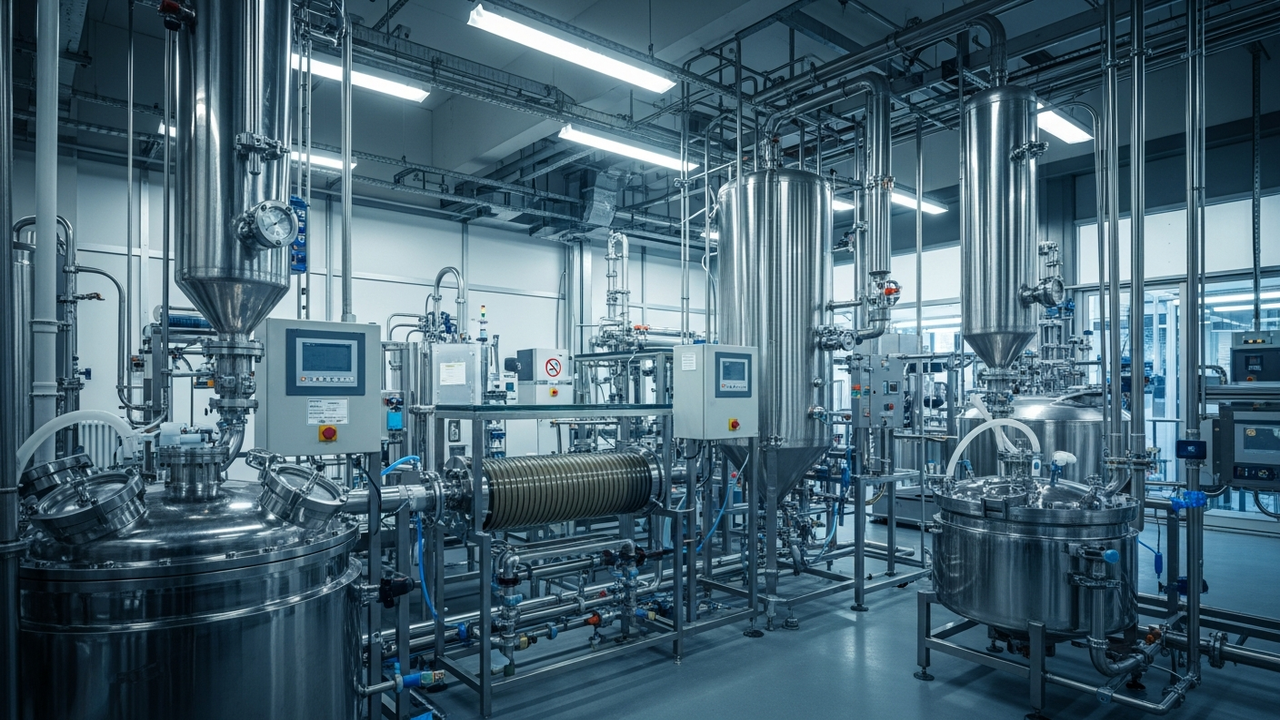
Core bioprocessing technologies are driving transformative changes across diverse sectors beyond traditional pharmaceuticals, including food production, industrial enzymes, biofuels, and environmental applications. Fermentation bioreactors, advanced membrane filtration systems, and real-time Process Analytical Technology (PAT) sensors are central to enhancing efficiency and sustainability in these new application domains.
Technical/Clinical Details
At the heart of this expansion is the integration of real-time spectroscopic monitoring tools. Raman and Near-Infrared (NIR) probes, in particular, have been validated for continuous, non-invasive measurement of biomass concentration, substrate consumption, and metabolite production across a wide range of fermentation processes. These sensors are crucial for gaining a deep understanding of process dynamics, identifying bottlenecks, and maintaining optimized operating conditions. Furthermore, the adoption of single-use bioprocessing infrastructure significantly improves process flexibility and economics, especially in food and environmental sectors, by reducing cross-contamination risks and shortening setup times.
Background & Context
Historically, bioprocessing technologies have primarily been employed in the pharmaceutical industry for manufacturing complex biological products. However, with growing global demands for food security, energy independence, and environmental protection, the inherent value of these technologies is being re-evaluated. Bioprocessing offers sustainable solutions to various challenges, such as producing alternative proteins through precision fermentation, utilizing microorganisms in wastewater treatment, and efficiently generating biofuels.
Strategic Significance & Outlook
Moving forward, these bioprocessing technologies are expected to evolve into more sophisticated autonomous control systems through integration with AI, machine learning, and the Internet of Things (IoT). This will enable predictive analytics for process optimization and remote monitoring and control, leading to the establishment of distributed, highly efficient biomanufacturing networks. These advancements are poised to play a crucial role in global efforts toward achieving a sustainable society.
Get our weekly technology intelligence — free
Receive an infographic that lets you judge at a glance whether each field’s analysis report is worth reading.
Subscribe Free — Weekly Tech Intelligence
By subscribing, you’ll receive Troy-Technical’s weekly technology intelligence newsletter.
- Your email and selected fields are used only to deliver the newsletter.
- We never share your information with third parties.
- You can unsubscribe anytime via the link in each email.
See our Privacy Policy for details.
Takes about a minute · Unsubscribe anytime








Comments