

Key Findings
The developed biosensor achieves a visible test-line signal within five seconds and a reported limit of detection of 0.91 micrograms per milliliter for dengue virus antigen in human serum. The system utilizes a competitive assay format where the presence of dengue antigen triggers the release of gold nanoparticles to produce a red band visible to the naked eye. Densitometric analysis using ImageJ yielded a calibration coefficient of determination of 0.994, indicating suitability for semiquantitative measurement.
Technical Details
The biochemical core consists of a 34-base DNA aptamer conjugated with gold nanoparticles. These nanoparticles, synthesized by reducing chloroauric acid with trisodium citrate, have a transmission electron microscopy diameter of 12.43 ± 0.20 nanometres and a mean surface charge of -37.56 millivolts. Upon conjugation with the aptamer, the surface-plasmon-resonance band shifted from 521 to 526 nanometres, and the hydrodynamic diameter increased to 17.11 nanometres.
The hardware integration includes:
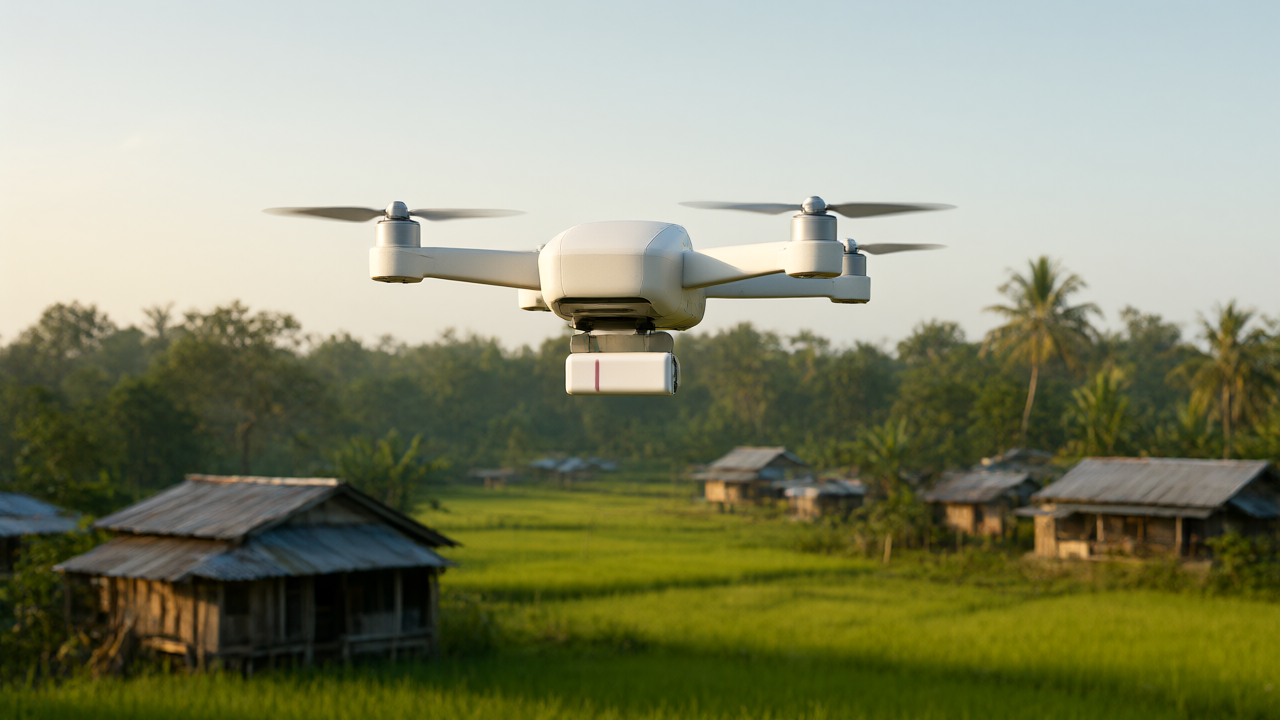
- Platform: A DJI Mini 3 Pro weighing less than 249 grams, with dimensions of 251 x 362 x 70 millimetres and a top speed of 16 metres per second in S mode.
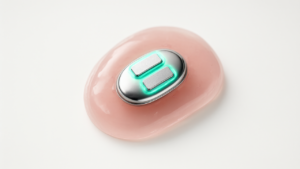
- Sensor Housing: A lateral-flow strip attached via double-sided adhesive and enclosed in translucent Plexiglas.
- Workflow: A QR code on the aircraft links to a reporting webpage for transmitting results to laboratory personnel, supported by YOLOv5-based image analysis.
Background & Context
The lateral-flow sensor comprises a sample pad, conjugate pad, nitrocellulose membrane, and absorbent pad. In the assay, dengue antigen separates the DNA aptamer from its gold-nanoparticle conjugate; the released nanoparticles then bind to immobilized lysozyme on the test line. Researchers optimized the system at pH 7 and tested antigen concentrations ranging from 1 to 100 micrograms per milliliter.
Significance & Outlook
This study serves as a proof-of-concept for decentralized dengue screening, aiming to transport diagnostic strips to collection points via drone and transmit results through a digital workflow. While characterized in laboratory and limited field conditions, the system has not yet been demonstrated for autonomous surveillance during an active outbreak.
Source: https://bioengineer.org/drone-integrated-biosensor-detects-dengue-antigen-in-five-seconds/
Get our weekly technology intelligence — free
Receive an infographic that lets you judge at a glance whether each field’s analysis report is worth reading.
Subscribe Free — Weekly Tech Intelligence
By subscribing, you’ll receive Troy-Technical’s weekly technology intelligence newsletter.
- Your email and selected fields are used only to deliver the newsletter.
- We never share your information with third parties.
- You can unsubscribe anytime via the link in each email.
See our Privacy Policy for details.
Takes about a minute · Unsubscribe anytime