

Key Findings
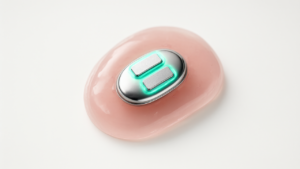
A research team led by Srikanth Singamaneni at Washington University in St. Louis, in collaboration with Texas A&M University and Washington University School of Medicine, has developed a minimally invasive microneedle patch for the early detection of kidney disease. The patch captures biomarkers from dermal interstitial fluid and provides measurements that closely correlate with blood plasma levels. In human tests, the patch was applied for 5 minutes, resulting in no bleeding and full skin recovery within 30 minutes.
Technical Details
The sensors are shaped like traffic cones to penetrate only the outer layers of the skin, avoiding pain and the need for trained personnel. To ensure stability, the microneedles are coated with a metal-organic framework (MOF) specifically using zeolitic imidazolate framework-8. This MOF shell encapsulates and preserves neutrophil gelatinase-associated lipocalin (NGAL) antibodies, which serve as the early biomarker for acute kidney injury. This encapsulation allows the antibodies to remain functional for up to four weeks at 50 C (122 F) without the need for a cold chain.
Background & Context
NGAL is a glycoprotein that increases in the blood within hours of kidney injury. While clinically validated, its current detection requires blood draws and cold chain logistics, limiting its use to laboratory settings. The team previously developed polystyrene-based microneedle patches with plasmonic fluor nanolabels for low-abundance proteins, but the current iteration focuses on higher sensitivity, a broader range, and environmental resilience.
Significance & Outlook
The study, published August 5 in Advanced Materials, is the first to demonstrate that encapsulating biomolecules on microneedles preserves their biological functions. This technology provides a scalable path for decentralized diagnostics and remote health monitoring. Future research will focus on adapting the method to detect other metabolites, nucleic acids, and proteins, as well as characterizing the diffusion kinetics of protein markers in interstitial fluid relative to blood.
Get our weekly technology intelligence — free
Receive an infographic that lets you judge at a glance whether each field’s analysis report is worth reading.
Subscribe Free — Weekly Tech Intelligence
By subscribing, you’ll receive Troy-Technical’s weekly technology intelligence newsletter.
- Your email and selected fields are used only to deliver the newsletter.
- We never share your information with third parties.
- You can unsubscribe anytime via the link in each email.
See our Privacy Policy for details.
Takes about a minute · Unsubscribe anytime