


Key Findings
The study reveals a striking analyte-specific performance pattern among three precious-metal blacks embedded in MWCNT composite electrodes. For hydrogen peroxide detection at +0.85 V vs Ag|AgCl in pH 7.4 phosphate-buffered saline, the palladium black (PdB) composite achieved the highest sensitivity at 0.013 μA μM⁻¹, surpassing platinum black (PtB) at 0.008 μA μM⁻¹ and ruthenium black (RuB) at 0.003 μA μM⁻¹. Conversely, for nitrite sensing, the PtB composite was the superior catalyst with a sensitivity of 0.0022 μA μM⁻¹, followed by PdB (0.0012 μA μM⁻¹) and RuB (0.0003 μA μM⁻¹).
Technical Details
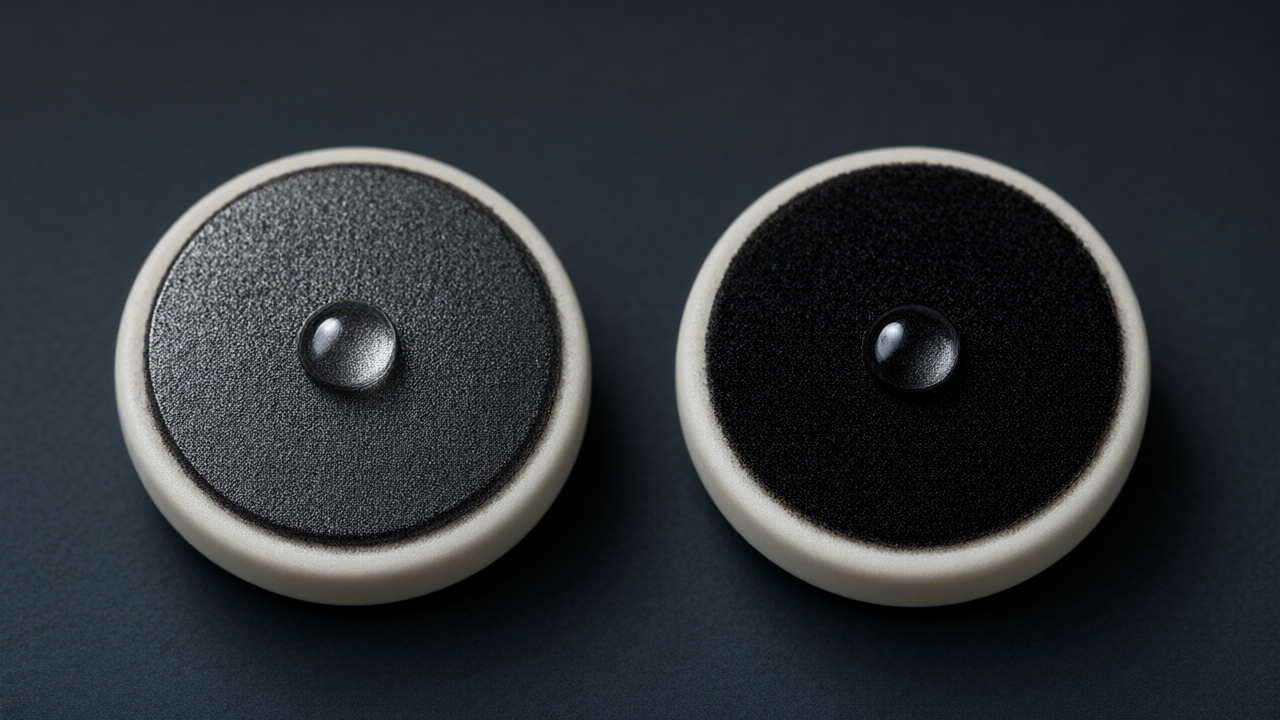
The team fabricated bulk composite electrodes using 15 wt% MWCNTs, 10 wt% of the chosen precious-metal black (PtB, PdB, or RuB), and 75 wt% epoxy resin. The composites were packed into 3D-printed PLA cylindrical casings with a 2 mm internal diameter recess, cured for 48 hours, and polished to create flat disc electrodes. This bulk incorporation provides a mechanically robust architecture compared to surface-modified films.
- Capacitance: PtB exhibited the highest capacitance, followed by PdB and RuB; all were higher than unmodified MWCNT electrodes.
- Charge-Transfer Resistance: Unmodified MWCNTs showed the highest resistance, while all precious-metal black composites showed improved interfacial electron transfer.
- Electrochemical Behavior: PdB and PtB reduced peak-to-peak potential separation (∆E), suggesting reduced contact resistance, whereas RuB significantly reduced normalized probe current.
Background & Context
Hydrogen peroxide and nitrite are critical markers in biological and environmental monitoring. Hydrogen peroxide is a key reactive oxygen species in metabolic processes and a product in oxidase-based biosensors. Nitrite is an intermediate in nitric oxide metabolism and a regulated contaminant in drinking water. Direct detection on carbon electrodes is typically difficult due to slow electron-transfer kinetics and high overpotentials.
Significance & Outlook
These results challenge the assumption that a single universal catalyst can meet all sensing requirements. By identifying that different precious metals excel at detecting different analytes, the research provides a framework for designing next-generation multi-analyte sensors with optimized, material-specific catalytic activity.
Get our weekly technology intelligence — free
Receive an infographic that lets you judge at a glance whether each field’s analysis report is worth reading.
Subscribe Free — Weekly Tech Intelligence
By subscribing, you’ll receive Troy-Technical’s weekly technology intelligence newsletter.
- Your email and selected fields are used only to deliver the newsletter.
- We never share your information with third parties.
- You can unsubscribe anytime via the link in each email.
See our Privacy Policy for details.
Takes about a minute · Unsubscribe anytime